

The world of vaping has grown from a niche corner to a ubiquitous trend that’s echoed across continents. This phenomenon, however, isn’t just about flavored smoke and sleek devices. The real story is in the journey of vaping, from small circles to mainstream society, and the reactions it’s sparked in every corner of the world.
This blog aims to pull back the smoke and provide a clear-eyed view of how vaping has taken hold across the globe. We’ll delve into where it’s caught on like wildfire, where it’s faced pushback, and where it might be headed next. We’ll also dissect the factors that have fuelled its rise or stymied its spread.
Vaping Hotspots: Where Is Vaping Most Popular? 📈
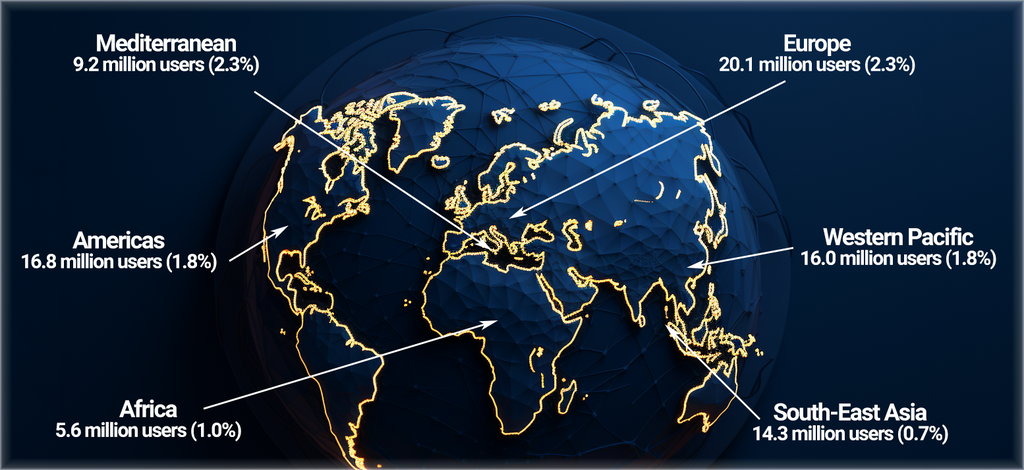
Vaping has seen its most enthusiastic acceptance in North America, Europe, and certain regions of Asia. According to the World Health Organization (WHO) report from 2021, the UK, US, and France emerge as global leaders, with the highest numbers of vapers.
These regions, each with their unique cultural and regulatory frameworks, have embraced vaping as a part of their societal fabric. But what does this acceptance look like in numbers, regulations, and societal attitudes? Let’s delve into each of these hotspots to better understand why vaping has found fertile ground in these areas.
The United States

The United States has a significant position in the global vaping landscape. With an estimated 13 million vapers, the US had one of the largest e-cigarette markets in the world, albeit with regulatory debates and shifting public opinion.
In terms of regulations, the Food and Drug Administration (FDA) oversees the manufacture, import, packaging, labelling, advertising, promotion, sale, and distribution of electronic nicotine delivery systems, which include e-cigarettes. In 2016, the FDA extended its regulatory power to e-cigarettes, requiring manufacturers to submit premarket tobacco product applications for their products. This rule also applies to vape shops that mix their own e-liquids. Furthermore, as of 2020, the legal age to buy tobacco products, including e-cigarettes, was raised to 21 nationwide.
The culture surrounding vaping in the U.S. is diverse. Some people use e-cigarettes as a means to quit smoking traditional cigarettes, while others use them recreationally. There are also numerous communities and social media groups dedicated to vaping, where users share experiences, advice, and reviews of different products.
As for prevalence, the Centers for Disease Control and Prevention (CDC) reported in 2019 that about 4.5% of U.S. adults were current e-cigarette users. Among high school students, the prevalence of current e-cigarette use was significantly higher, at 19.6%. However, these numbers may have changed since my last update. For the most current information, I would recommend checking the latest reports from the CDC or FDA.
The United Kingdom

The UK also emerged as a key player with an estimated 3.6 million vapers. Interestingly, Public Health England maintained a supportive stance on e-cigarettes, asserting them as 95% less harmful than conventional smoking and a valid aid to quit smoking.
In the United Kingdom, e-cigarettes and vaping products are regulated under the Tobacco and Related Products Regulations 2016, which transposes the European Union’s Tobacco Products Directive into UK law. These regulations set standards for the safety and quality of all e-cigarettes and refill containers (otherwise known as e-liquids).
The regulations also include requirements for nicotine concentration, packaging, and labelling, as well as a ban on certain ingredients. Advertising of e-cigarettes is also restricted.
Vaping culture in the UK is quite significant. Many people use e-cigarettes as a tool to quit smoking, and Public Health England has endorsed the use of e-cigarettes as a smoking cessation aid. There are also vaping communities and social media groups where users share experiences, advice, and reviews of different products.
According to a report by Action on Smoking and Health (ASH), an estimated 3.6 million people in the UK were using e-cigarettes in 2019. This represents about 7.1% of the adult population. The majority of these users are ex-smokers, with the main reason for using e-cigarettes being to stop smoking.
Again, these numbers may have changed since my last update. For the most current information, I would recommend checking the latest reports from Public Health England or ASH.
France

In France, with about 2 million vapers, the health authorities have taken a more cautious approach, accepting vaping as a lesser evil than traditional tobacco smoking but not actively promoting it as a smoking cessation aid.
In France, the use and sale of e-cigarettes are regulated under the Health Code (Code de la santé publique) and the Consumer Code (Code de la consommation). These regulations include restrictions on advertising, requirements for health warnings on packaging, and a ban on vaping in certain public places.
The sale of e-cigarettes and e-liquids is prohibited to minors under the age of 18. The nicotine concentration in e-liquids is also regulated, with a maximum limit of 20mg/ml.
Vaping culture in France is quite significant. Many people use e-cigarettes as a tool to quit smoking, and there are numerous vaping shops and online communities where users can share experiences, advice, and reviews of different products.
According to a report by Santé Publique France, the national public health agency, in 2019, about 2.7 million people in France were using e-cigarettes, representing about 5.4% of the adult population. The majority of these users are smokers or ex-smokers.
Russia

In Russia, the market for e-cigarettes and vaping has been growing, due in part to a rising middle class and growing health consciousness. The regulation of e-cigarettes and vaping is less stringent compared to many Western countries. There are no federal laws specifically governing the use or sale of e-cigarettes.
The sale of e-cigarettes to minors is generally prohibited, and in some regions, there are restrictions on vaping in public places. However, these rules are not always strictly enforced.
Canada

Canada is another country with a growing number of vapers. With regulations that strike a balance between harm reduction and prevention of youth uptake, the Canadian vaping market has seen a steady increase. According to the Canadian Tobacco and Nicotine Survey (CTNS) in 2019, about 15% of Canadians aged 15 and older reported having ever tried an e-cigarette, and about 5% reported using an e-cigarette in the past 30 days.
In Canada, the use and sale of e-cigarettes are regulated under the Tobacco and Vaping Products Act (TVPA), which came into effect in May 2018. The TVPA aims to protect young people from nicotine addiction and tobacco use while allowing adults to access vaping products as a less harmful alternative to tobacco.
Under the TVPA, it is illegal to sell or give vaping products to anyone under the age of 18. The Act also places restrictions on the promotion of vaping products, including restrictions on lifestyle advertising, advertising appealing to young people, and the use of certain flavours that are appealing to youth.
Germany

Germany has one of the highest numbers of vapers in Europe. The government’s relatively liberal stance on vaping products, coupled with high tobacco taxes, may be contributing to a shift towards e-cigarettes.
In Germany, the use and sale of e-cigarettes are regulated under the Tobacco Products Act and the Ordinance on the Implementation of the Tobacco Products Act. These regulations are in line with the European Union’s Tobacco Products Directive. They include restrictions on advertising, requirements for health warnings on packaging, and a ban on certain ingredients in e-liquids. The sale of e-cigarettes and e-liquids to minors under the age of 18 is prohibited.
According to a report by the Federal Centre for Health Education (BZgA), in 2019, about 3.7% of adults in Germany were using e-cigarettes. However, the prevalence of vaping is significantly higher among younger adults, with about 10.4% of 18-25 year-olds reporting e-cigarette use.
Struggling to Take Root: Where Is Vaping Less Popular? 📉
In contrast to these vaping hotspots, some regions show resistance, primarily due to strict regulatory frameworks or cultural preferences.
Australia

In Australia, the laws and regulations regarding e-cigarettes vary by state and territory. However, at the federal level, the Therapeutic Goods Administration (TGA) oversees the regulation of nicotine-containing e-cigarettes. As of October 1, 2021, Australians need a doctor’s prescription to legally access nicotine-containing e-cigarettes and liquid nicotine.
The sale of nicotine e-cigarettes and liquids is illegal in all states and territories without a medical prescription. The use and possession of nicotine e-cigarettes are also illegal in some states and territories even with a prescription.
Brazil

In Brazil, the sale, import, and advertising of e-cigarettes are banned under a resolution by the National Health Surveillance Agency (ANVISA). This ban has been in place since 2009 due to concerns about the safety and efficacy of e-cigarettes as smoking cessation aids.
Despite the ban, there is a vaping culture in Brazil, with some people using e-cigarettes. However, because of the ban, users often have to rely on black market sources for their supplies, which can lead to issues with product quality and safety.
Italy

The vaping trend in Italy has seen ups and downs. Initially, there was a significant growth in vaping; however, following the implementation of a tax on liquid nicotine in 2017, the market saw a slump. Despite this, Italy still has a sizable number of vapers.
In Italy, the use and sale of e-cigarettes are regulated under the Italian Presidential Decree 6/2016, which transposes the European Union’s Tobacco Products Directive into Italian law. These regulations include restrictions on advertising, requirements for health warnings on packaging, and a ban on certain ingredients in e-liquids. The sale of e-cigarettes and e-liquids to minors under the age of 18 is prohibited.
India

In India, the use, sale, production, import, and distribution of e-cigarettes are banned under the Prohibition of Electronic Cigarettes (Production, Manufacture, Import, Export, Transport, Sale, Distribution, Storage and Advertisement) Act, 2019. This ban was implemented due to concerns about the potential health risks of e-cigarettes and the risk of young people becoming addicted to nicotine.
Prior to the ban, there was a growing vaping culture in India, particularly in urban areas. However, since the ban, the use of e-cigarettes has become less common. Despite the ban, some people continue to use e-cigarettes, often sourcing them through illicit channels.
South Korea

In South Korea, the use and sale of e-cigarettes are legal but regulated. The Ministry of Health and Welfare oversees the regulation of e-cigarettes. Regulations include restrictions on advertising, requirements for health warnings on packaging, and a ban on the sale of e-cigarettes to minors. In addition, e-cigarettes are subject to the same public smoking restrictions as traditional cigarettes.
According to a report by the Korea Centers for Disease Control and Prevention, in 2018, about 3.4% of South Koreans were using e-cigarettes. However, the prevalence of vaping is significantly higher among younger adults and current smokers.
Japan

In Japan, the sale of nicotine-containing e-cigarettes is strictly regulated under the Pharmaceutical Affairs Law. As such, e-cigarettes that contain nicotine are classified as “medical devices” and are not readily available for sale. However, non-nicotine e-cigarettes are legal and can be purchased without restrictions.
Despite the restrictions on nicotine-containing e-cigarettes, there is a vaping culture in Japan. Heat-not-burn tobacco products, which are different from e-cigarettes but offer a similar experience, are particularly popular. These products, such as IQOS by Philip Morris, heat tobacco to a temperature that produces an aerosol but does not cause combustion, which is believed to be less harmful than traditional cigarettes.
Philippines

In the Philippines, there is a growing market for e-cigarettes, despite the implementation of several regulations on these products.
In the Philippines, the use and sale of e-cigarettes are legal but regulated. In 2020, the President signed into law the Republic Act No. 11467, which increased the excise tax on heated tobacco and vapor products. The law also mandates that all e-cigarette liquids, solutions, or gels should be registered with the Food and Drug Administration.
The sale of e-cigarettes to minors under the age of 21 is prohibited, and the use of e-cigarettes is not allowed in places where smoking is banned.
Where Could Vaping Spread In the Future?
Countries with high tobacco use and relatively relaxed regulatory environments may see increased vaping prevalence. Potential future vaping growth regions could include Central and Eastern Europe, Southeast Asia, and parts of Africa.
In these regions, if e-cigarettes are marketed successfully as smoking cessation aids, vaping could gain more acceptance. However, much depends on the regulatory landscape, public perception, and accessibility of these products.
Influencing Factors
Vaping prevalence largely depends on factors like cultural attitudes towards smoking, marketing strategies, public perception, availability of alternatives, and, most importantly, regulatory policies.
While the perception of vaping as a less harmful alternative to traditional smoking can increase its prevalence, negative press, such as potential health risks and its attractiveness to minors, may lead to stringent regulations, limiting its growth.
Other Popular Nicotine Replacements
Nicotine replacement therapy (NRT), in forms such as patches, gums, lozenges, inhalers, and nasal sprays, has traditionally been a popular option for smokers trying to quit. In certain regions where vaping is less accepted or legal barriers exist, these traditional NRTs remain more popular.
Innovative smokeless products like Snus in Scandinavia or heated tobacco products in Japan also have a substantial user base.
Conclusion
The landscape of vaping is diverse across the world, influenced by a multitude of factors. It continues to evolve with changing perceptions, emerging research, and shifting regulatory landscapes.
As we move into the future, the popularity of vaping and its alternatives will be intriguing to watch, as countries balance public health concerns with the potential benefits these products might offer for harm reduction.
