

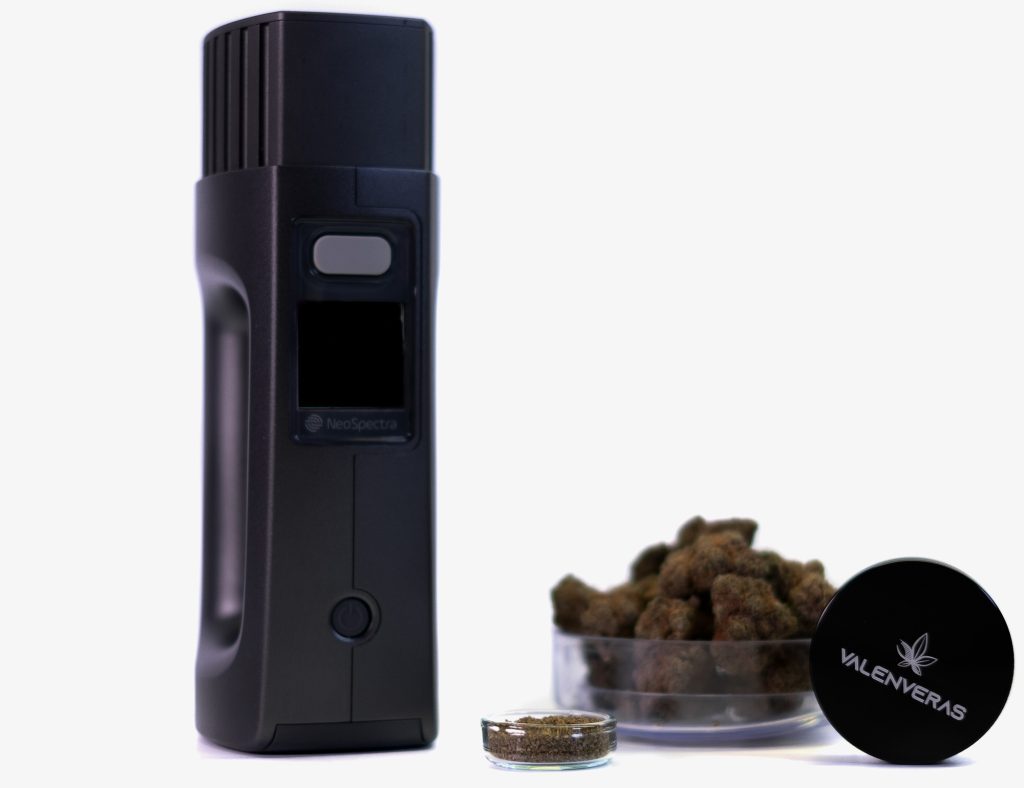
A Spanish engineer who has spent sixteen years scanning flower explains how the industry got here — and what it would take to get out.
In November 2024, Justin Singer, CEO of the Denver edibles manufacturer Ripple, got fed up with the lack of control over the industry he himself participates in and sent staff into Denver-area dispensaries with instructions to buy the flower, shake and pre-rolls they’d normally buy for themselves, then shipped the fifteen products, unmarked and unaltered, to a state-licensed laboratory. He later shared the contamination results with Colorado Public Radio: four products would have failed state limits for yeast and mold, four carried high coliform levels, four showed chemical components of pesticides.
Only two of the fifteen came back compliant with Colorado law on every measure. On potency alone, twelve of them reported THC content outside the 15% margin the state allows. On average, the labels claimed 34.2% more THC than the products contained. For shake, the gap was 59.1%.
That is, in a nutshell, what the industry calls THC inflation: the drift between the potency printed on a package and the potency inside it. What follows is an attempt to understand what that drift does to price in cannabis markets, and to ask a question with no obvious answer: what can be done about it?
Natural Limit to Total THC
If you love the plant, then you might already know that THC is not distributed through the flower. It is produced almost entirely in the trichomes, the resin glands coating the surface.
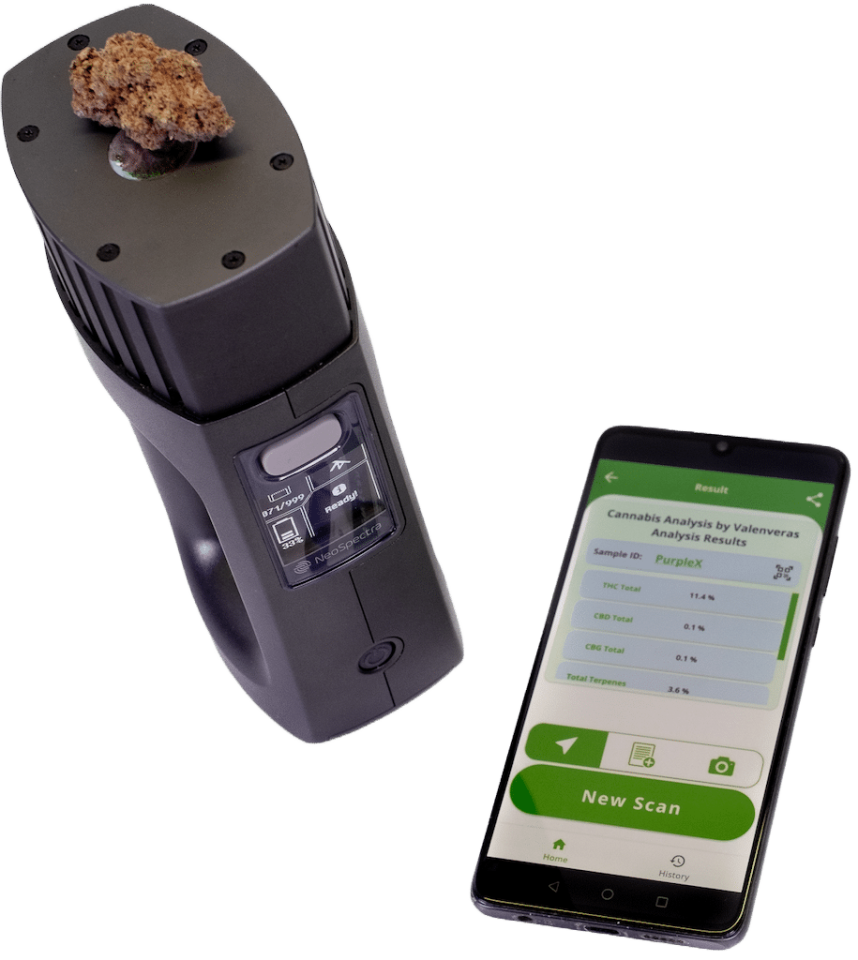
Rubén Valenzuela, an agronomic and industrial engineer specializing in near-infrared spectroscopy, also loves the plant and has spent sixteen years in the cannabis market, so he’s a bit more technical. He is also co-founder of a company that manufactures portable analyzers for cannabis testing, a commercial interest detailed at the end of this article.
“Everything else — plant tissue, small stems, structural water, waxes, chlorophyll — produces no cannabinoids, and that’s roughly half the dry weight of the flower or more. So even if you had perfect genetics with record trichome density, the numbers don’t work. An entire flower above 33–34% total THC is biologically implausible.”
Independent testing agrees. Researchers at CU Boulder recently Updated the largest label audit yet conducted — 277 products bought from 52 Colorado dispensaries by a purchaser blind to the results, analyzed by HPLC in triplicate. Labeled flower potency ran as high as 39.0%. The highest value they actually measured was 33.0%. It is a ceiling that independent analysts have been pointing at for years.
Valenzuela offered High Times one first-hand data point that sits right at the edge.
At the Mary Jane Berlin fair, Germany’s largest cannabis expo, his team scanned an uninfused flower sample at 37.27% THC, the highest reading they have recorded in years of scanning across European markets. “An absolute exception every many years,” he says. “Meanwhile, on some dispensary menus that kind of number shows up every week.”
That threshold splits the THC mislabeling and general information mismanagement problem cleanly in two.
Total THC in flower
Where the plant stops, and where the labels keep going.
Highest value CU Boulder actually measured
33.0%
Biological ceiling, per Valenzuela
33–34%
Record scan, Mary Jane Berlin

37.27%
Highest label CU Boulder found on a shelf
39.0%
Uninfused flower advertised in some states
42%
Above it, you are no longer looking at flower. Concentrating trichomes off a bud is a legitimate manufacturing process — it is how hash is made, and you can really multiply the potency of a product by naturally extracting THC. For instance, one solventless study took the same starting material from 24.8% total cannabinoids to 60.7% simply by sifting the resin glands away from the plant. It’s the same principle behind pre-rolls built from high-density trichome leaf. One problem is that a jar sold as flower at very high THC level is not describing what it contains. “In some states they’re offering flowers at 42% THC without being added to or infused with extracts,” Valenzuela says. “A biologically impossible number, printed on a legal label.”
Misleading, yes, but not necessarily a lie.

Below the threshold is a different territory, because that is where the numbers are, in fact, fake.
There is a legitimate reason flower results are messy, and it is worth separating from the illegitimate ones.
That same CU Boulder audit found 96% of concentrates landing within Colorado’s ±15% tolerance, against just 56.7% of flower. Concentrates are homogenized in production, so every sample drawn is effectively the same sample. They have the consistency of industrial processes. But buds are not that homogeneous.
For dried flower, potency is reported on a dry-weight basis, with no federal standard for what “dry” means, so a drier submission reads higher THC level. In most states, the producer selects which buds go into the bag, which invites picking the fattest and frostiest. In a bolder move, samples can be dusted with kief before they reach a bench. And at the lab, grinding the flower and sieving out low-potency plant material raise the reported figure well above what a customer will experience.
Later in 2024, Ripple ran a harder version of its experiment: six blinded samples sent to six of the state’s seven licensed labs. Identical material came back with spreads of up to 38%. One flower sample scored anywhere from 15.8% to 22.8% depending on who opened the bag. A sample returned to the same lab over time produced results from 17.9% to 22.8%.
One flower sample, blinded
Reported THC, same material, Colorado licensed labs.
Across six different labs
15.8%22.8%
Same lab, same sample, different days
17.9%22.8%
Scale runs 0 to 30%. Source: Ripple blinded lab study, 2024.
“These results show a rot much deeper than interlab consistency,” Singer told MJBizDaily. “The same labs applying the same methods to the same samples across time are also failing to replicate results.”
California has been pursuing the deliberate end of this. Since December 2023 its Department of Cannabis Control has pulled the permits of four testing laboratories: NCALC, ProForma Labs, California Cannabis Testing Labs and Verity Analytics. Department notices obtained by MJBizDaily through public records requests tie all four to potency inflation, with Verity accused of overstating THC by as much as 32%.
Enforcement has its own limits. This month, an administrative law judge found the DCC had shown insufficient evidence in its potency and pesticide case against a fifth lab, BelCosta, and called the agency’s actions unduly punitive. The lab had already closed.
Valenzuela traces all of it to one structural flaw.
“The dispensary won’t buy flower below a certain number because the consumer won’t take it off the shelf. The producer, sitting on a stalled harvest with payroll to pay, needs that number to sell. And the laboratory knows that if it reports 24% when the lab across the street reports 29% on the same sample, next month it loses the client.”
The practice is called lab shopping, and its documented effect is that honest laboratories lose market share to generous ones.
“The one who pays for the analysis is the same one who benefits from the result. No other serious sector works this way. It’s as if the athlete paid for and chose his own doping test.”
Rubén Valenzuela
The Rationale Behind the THC Inflation Circle
None of this would work if consumers weren’t buying potency. And for once orthodox economists are right and consumers are not being stupid.
When researchers at Washington State University gave regular users either high-potency flower or concentrates at 60%-plus, the concentrate group took significantly fewer puffs and reported the same high. People self-titrate. So, if a 30% flower gets you where you’re going on two-thirds of the material, paying more per gram is the correct decision.
Which means potency is genuinely worth paying for, and the market prices it accordingly, though more modestly than most people assume. A 2025 analysis in the International Journal of Drug Policy, covering 710,588 flower products from 3,693 dispensaries across thirty states, put the THC elasticity of price at 0.17. In practice, jumping from 20% to 30% labeled potency raises the price of a gram by only about 7%. The stronger product is nearly 30% cheaper by the milligram.
That is exactly what makes inflated numbers so profitable. A grower who genuinely reaches 30% has spent money on genetics, inputs, time and risk to earn a 7% premium. A laboratory that reports 30% without the underlying product actually reaching that level captures the same premium without bearing the cost of producing it.
Why the lie pays better than the work
- Moving a label from 20% to 30% raises the price of a gram by about 7%.
- Per milligram of THC, the stronger jar is roughly 29% cheaper, so buying it is the rational move.
- A grower who actually reaches 30% pays for genetics, inputs, time and risk to earn that 7%.
- A lab that simply reports 30% earns the same 7% at no cost.
“The one who pays for the lie is the consumer,” Valenzuela says, “who buys a 32% that is really a 22%.” In the longer run, he argues, the legal market pays too, “because it’s burning its only real asset: the credibility of the label.”
What California Thinks Honesty Costs
In June, California’s Department of Cannabis Control opened a rulemaking whose stated objectives include preventing lab shopping and potency inflation. The notion is that every party to a transfer would have to approve it before the tracking system generates a shipping manifest, which makes quietly running a batch past a friendlier lab considerably harder. Retailers would have to hand over the certificate of analysis on request.
As part of the debate, the state had to price its own proposal.
The DCC puts the consumer benefit from reducing potency inflation at $10.57 million a year. On the cost side it projects a $47.7 million annual decrease in retail gross output, $10.5 million less in state tax revenue, 857 jobs and 47 businesses gone.
| What California expects the fix to do | Per year |
|---|---|
| Consumer benefit from less potency inflation | $10.57 million |
| Decrease in retail gross output | $47.7 million |
| Lost state tax revenue | $10.5 million |
| Jobs gone | 857 |
| Businesses gone | 47 |
California expects to lose roughly four and a half times more in retail sales than its consumers stand to gain, just because a meaningful share of legal cannabis revenue is currently priced on THC.
In order to keep the revenue and the jobs, the market will have to find something else to price up on.
“It’s a circle; that’s why it’s so hard to break,” explained Valenzuela.
As you realize that the incentives to keep THC inflation running are all there and every link to the bud chain is getting a part of the pie, one can understand why Colorado failed to regulate against it. Senate Bill 26-161, introduced in April 2026, would have moved lab oversight to the state health department, required regulators to pull samples off dispensary shelves, made results public, and replaced the 15% retail sales tax with a potency tax charged by the milligram, which would have inverted the incentive entirely, turning every inflated point into a cost rather than a premium. Concentrate manufacturers said it would eat their margins, while safety groups wanted a hard potency cap instead.
The trade association opposed it, Governor Jared Polis warned about over-regulation, and the Senate Finance Committee killed it 8–0 within two weeks.
Two states have tried a hard ceiling instead. Vermont caps flower at 30% THC and solid concentrates at 60%. Connecticut started in the same place and has since moved up, to 35% on flower and 70% on concentrates, with a high-potency warning label required on anything over 30%. Both states have spent this year arguing about whether to keep the caps at all. Connecticut lawmakers voted to scrap them, then reinstated them in a compromise. Vermont’s Senate voted to drop the flower cap on the argument that the limit pushes tolerant consumers toward unregulated sellers, and the House stripped the provision back out after testimony from public health officials and school prevention coordinators. Needless to say, a ceiling constrains what can legally be sold, but it does nothing about whether the number underneath it is real.
Past the Number
“When I started, there were very few HPLCs — the chromatographs used to measure potency — and in the black market practically nobody analyzed THC. Flower was valued for what it was: aroma, flavor, effect, experience. That changed when the legal programs arrived. Dispensaries began factoring the THC percentage directly into price, and from that point on the whole system lined up behind the number. I’ve watched it happen gradually: varieties kept increasing their THC, and they’re still increasing it, for the sole purpose of printing a higher number on the label, with no regard for smokability or the user’s experience,” said Valenzuela.
His own proposals are to have the sampling done by the regulator, some of it bought anonymously off the retail shelf, because a perfect protocol is worthless if the producer chooses which buds go into the bag. Laboratories assigned at random and rotated, with blind inter-lab comparisons — “if the producer can’t choose who analyzes it, lab shopping dies that same day.” And the percentage demoted from the front of the label, replaced as the headline signal by potency ranges alongside cannabinoid and terpene profiles. “When the exact number stops defining the price, the reward for inflating it disappears.”
He also thinks the market is drifting that way regardless.
“This industry is still very young. Little by little users are realizing that THC isn’t the only thing that matters. We see it in our own results: flowers with good myrcene content end up being perceived as more potent, a stronger user experience, even at lower THC levels.”
His team is now working on water activity, and on the caloric content of flower, looking for measurable properties that track how smoking something actually feels. It is an exploratory program with a commercial angle. He expects the eventual shelf to carry terpene content, volatile compounds, smokability and several other things nobody currently prints.
Wouldn’t that be something?
Rubén Valenzuela is co-founder of Valenveras SL, which manufactures portable NIR analyzers for cannabis testing and would benefit commercially from wider adoption of rapid potency screening. The 37.27% Berlin reading was produced on his company’s equipment. He was interviewed in Spanish; quotations are translated.
