

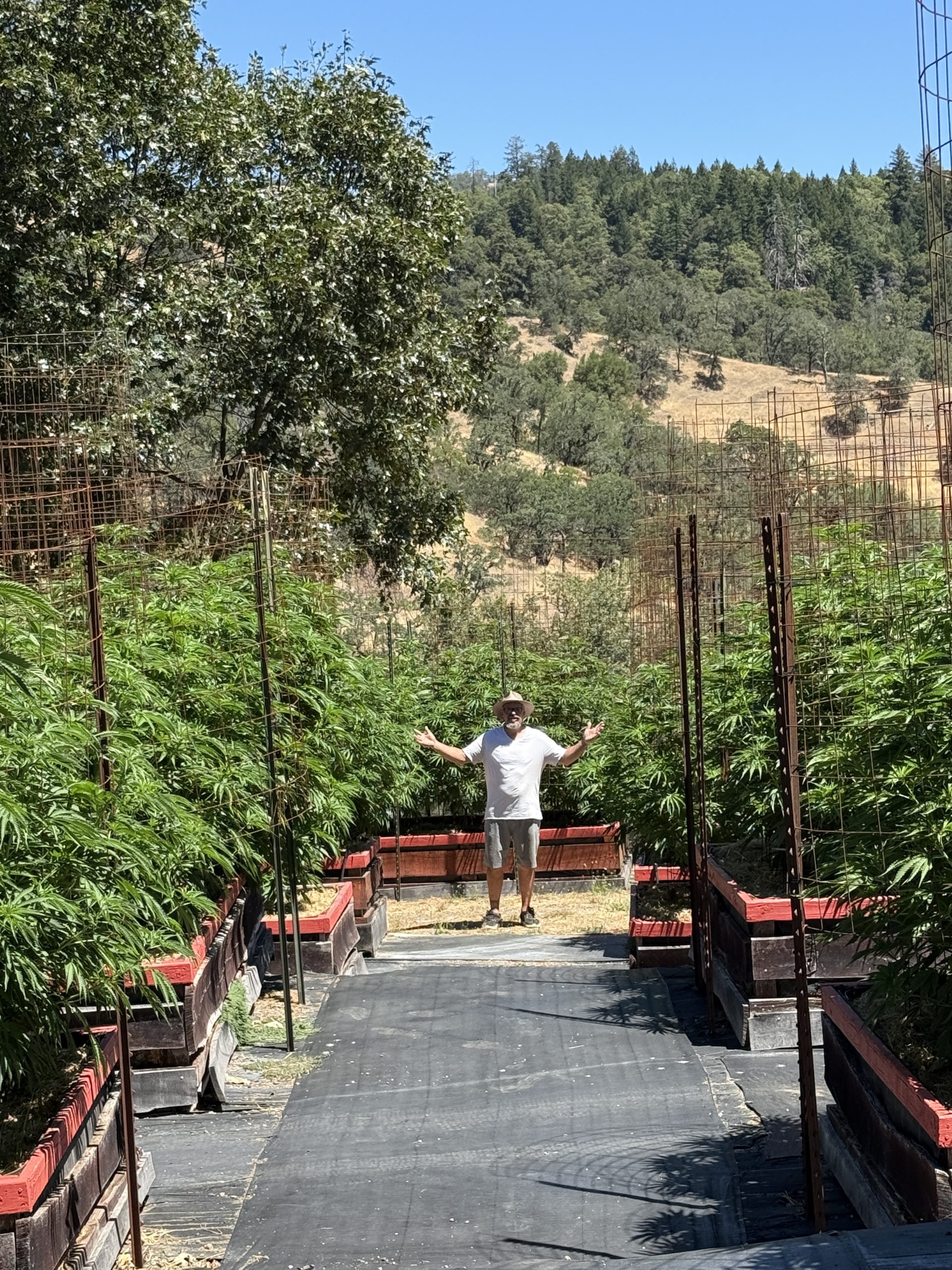
Cannabis Wine Tours founder Charles Kimball argues that farmer-hosted experiences can connect visitors with the land while giving small Northern California growers another way to be seen and supported.
After years of working in Northern California hospitality, one thing I’ve learned is that people rarely remember only what they drank or ate. They remember the drive through the countryside, the garden they walked through, the person who welcomed them, and the story behind what they experienced.
I think cannabis has that same ability to connect people with a place. Through my work with Cannabis Wine Tours, arranging private, farmer-hosted experiences in Mendocino and Sonoma counties, I’ve watched people who have enjoyed cannabis for years stand next to a mature cannabis plant for the first time. They smell it growing in the sun, see how large the plants can become, and start asking questions.
Many have never really thought about the farmer, the land, the weather, or everything that has to happen before that cannabis ends up in a package at a dispensary. For me, that is where cannabis tourism gets interesting. It stops being only about the product and starts becoming about the people and the place it came from.
Cannabis Tourism Starts With the Farmer
Mendocino County is a natural place for this kind of experience because cannabis is such an important part of its agricultural history. These are real farms, and many are small family operations trying to survive in an industry that has become extremely difficult.
Spencer Stribling, owner and farmer of McNab Cannabis in southern Mendocino County, told me that some of the biggest challenges are simply reaching customers and surviving a constantly changing marketplace.
“Being able to welcome guests to our farm is an integral part to getting our story out to the nation,” Stribling said.
That makes a lot of sense when you see what happens during a visit. Stribling says visitors are often astonished by the size of mature plants and by seeing significant amounts of cannabis up close. Many have come from states where cannabis laws and attitudes are completely different.
But to me, the real value isn’t just seeing a huge plant. It is having time with the farmer, asking questions, and hearing how and why that cannabis was grown the way it was.
Stribling also pointed out one of the biggest differences between cannabis and wine tourism. A winery can meet somebody visiting from another state, sell them wine that day, put them into a wine club, and continue shipping bottles to their home for years. Cannabis farmers generally don’t have anything close to that kind of direct relationship with the customer.
As Stribling put it, “Sharing our stories, practices, and concerns, is the closest we can get to our customers.”

He hopes farm visits eventually become far more common, and I understand why. For a small farmer who can’t compete with a huge operation on volume or price, meeting people face to face may be one of the best opportunities they have to explain why their farm and their product are different.
Mike Harden, founder and CEO of Sonoma Hills Farm, sees much the same thing from the farmer’s side. Sonoma Hills Farm is certified through CCOF under OCal, California’s comparable-to-organic cannabis standard. Harden says the real strength of a small farm is something a large grow simply cannot duplicate.
“They win on scale and price, and it’s easy to get lost next to that,” he told me.
What small farms can compete on, he said, is “the place, the people, and being here.”
That really struck me because it describes what I see when people visit a farm. Harden says, “When someone stands in the field, sees how we grow, and meets the people doing it, they never look at cannabis the same way.”
His hope for the future is pretty straightforward: that visiting a cannabis farm can someday feel as normal as visiting a winery. I don’t think cannabis should become wine, and neither does Harden. As he told me, “We’re not trying to be a winery, it’s a different plant and a different culture,” but there is something worth learning from the way Wine Country has welcomed people onto agricultural land and allowed the place itself to become part of the story.
Cannabis Hospitality Still Plays by Different Rules
Leigh Anne Baker, CEO of JANE Dispensary, brought up another side of the issue that I think is very important.
“The cannabis industry is often compared to the wine industry, but it still isn’t allowed to operate like the wine industry,” she told me. There is plenty of interest from travelers. Some people want to meet cultivators and see how cannabis is grown, while others are looking for a comfortable and legal place to enjoy cannabis socially while they are traveling.
But cannabis operates under a much more complicated regulatory structure. A cultivation license does not automatically make a farm a public retail destination, and what individual farms can offer depends on their licenses and local approvals. California regulates cultivation and retail as separate commercial activities, while cities and counties may impose additional permitting requirements.
The private farm experiences I arrange are focused on meeting the farmer, seeing the farm, and learning about cultivation. We do not make retail cannabis sales or consumption part of the farm experience. Guests can instead visit a local licensed dispensary and lounge, where they may be able to purchase products grown by the farm they have just visited, when available. I actually like that connection. Once you have met the farmer and walked the land, seeing that farmer’s product on a dispensary shelf means something completely different.
Baker believes dispensaries have an important part to play in that relationship too. She calls dispensaries “ambassadors for the region” because, for many travelers, a dispensary may be their first, and sometimes their only, personal introduction to Northern California cannabis. A good dispensary can do more than sell something. It can tell you who grew it, where it was grown, and why that farmer matters.
Baker also makes an important point about what happens after the vacation is over. A winery can stay connected to a visitor for years through direct shipping and wine clubs. Cannabis businesses generally cannot maintain that same interstate relationship through direct product sales under the current state and federal framework. That makes the time a visitor actually spends with a farmer or a knowledgeable dispensary even more valuable.

Jamie Peters, partner relations and communications manager for Visit Mendocino County, has a refreshingly simple way of looking at cannabis: “It’s agriculture.”
Visit Mendocino County has supported cannabis as part of the region’s tourism identity since legalization, including cannabis farm experiences, hospitality listings, and the Cannabis Trail. Peters sees opportunities for more intimate cannabis experiences, weekend getaways, and partnerships with food, lodging, recreation, and wellness businesses.
She mentioned possibilities ranging from farm experiences to meditation, forest bathing, and stargazing. But something else she told me stayed with me even more.
“The cannabis farmers are just like everyone else – trying to make a living, take care of their families and be successful in their chosen profession.”
Sometimes that gets forgotten in all the discussions about legalization, licensing, taxation, and cannabis culture. There are families behind these farms. Mendocino is part of the Emerald Triangle, and generations of cannabis knowledge came out of this region. The farmers who are still there are trying to carry that heritage forward while competing in a marketplace that has changed dramatically around them.

Tourism Cannot Save Small Farms, but It Can Help
Hospitality is not going to solve every problem facing small cannabis farmers. I don’t want to pretend that it will. There are taxes, regulations, compliance expenses, competition from very large growers, and limits on how farmers can sell and stay connected with customers. But hospitality can give a farmer something else of value.
A small farm has the farmer, the land, the knowledge, and the story of being there. When somebody spends time walking through a garden with the person who actually grows the plants, asks questions, and understands how much work is involved, that knowledge has value.
I believe farmers should be fairly compensated for the time and experience they share with visitors. That income may not save an industry by itself, but it can be one more way to support small cultivators and, just as importantly, let consumers understand who is behind the cannabis they buy.
Cannabis doesn’t need to become wine. I actually hope it doesn’t. It has its own history, personality, struggles, and culture. But Wine Country did get one thing right: It figured out that people want to know where something comes from. They want to meet the person who made it, walk through the land, and leave with a story.
That is what I see happening with cannabis. Once somebody has walked through a cannabis garden, stood next to the plants, and talked with the person who grew them, cannabis becomes more than something they saw in a package.
It has a place, it has a farmer, and it has a story. To me, that is the real future of cannabis tourism.
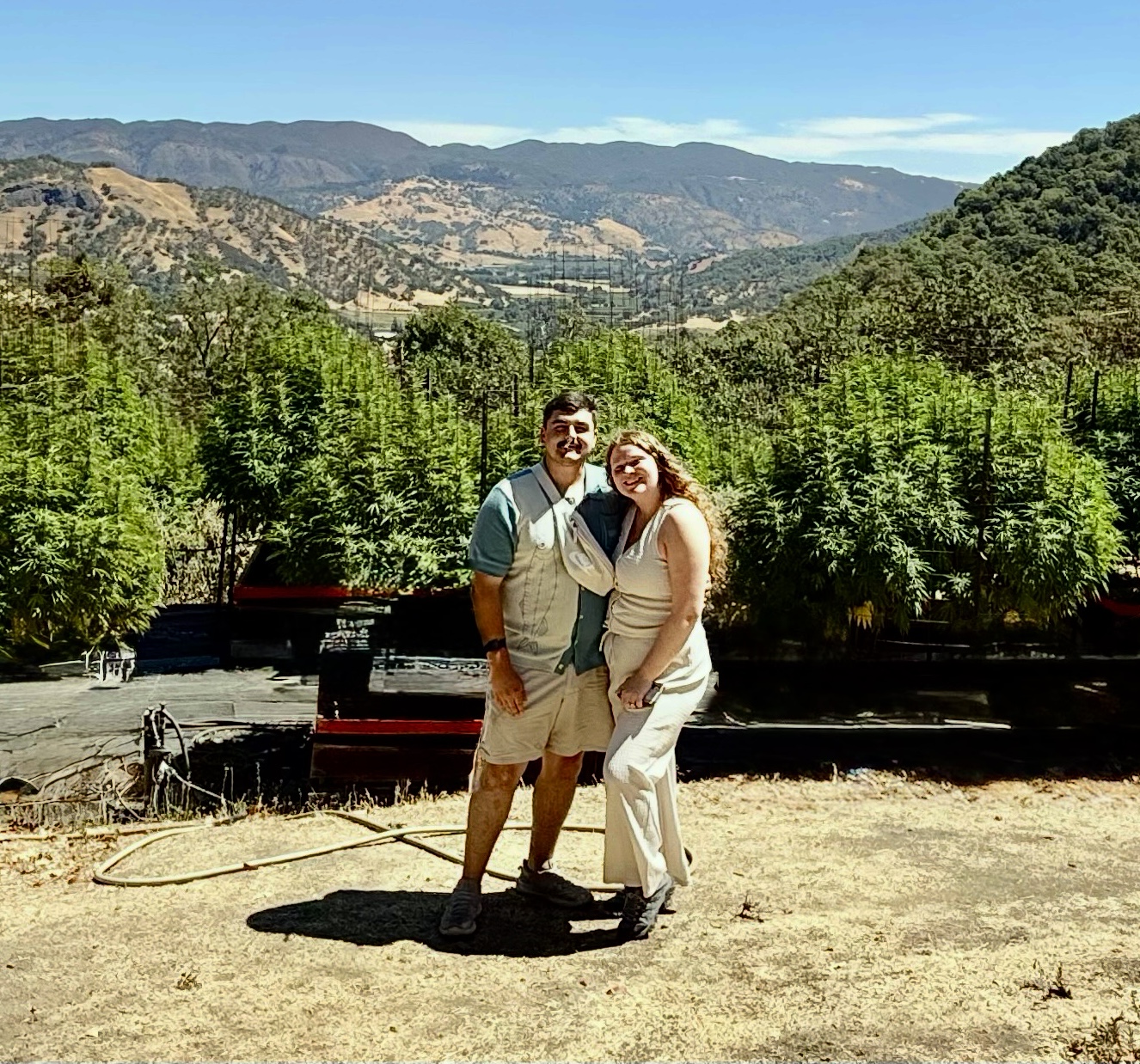
Scenes from McNab Cannabis, a small family-owned farm in southern Mendocino County. Photos by Charles Kimball.
Contributed Content Disclosure: Charles Kimball is the founder of Cannabis Wine Tours, a Northern California hospitality business that arranges the private, farmer-hosted cannabis experiences discussed in this article. He has a commercial interest in the growth of cannabis tourism. This essay reflects his professional perspective and was submitted as an unpaid contribution. It does not represent independent reporting by High Times.
