

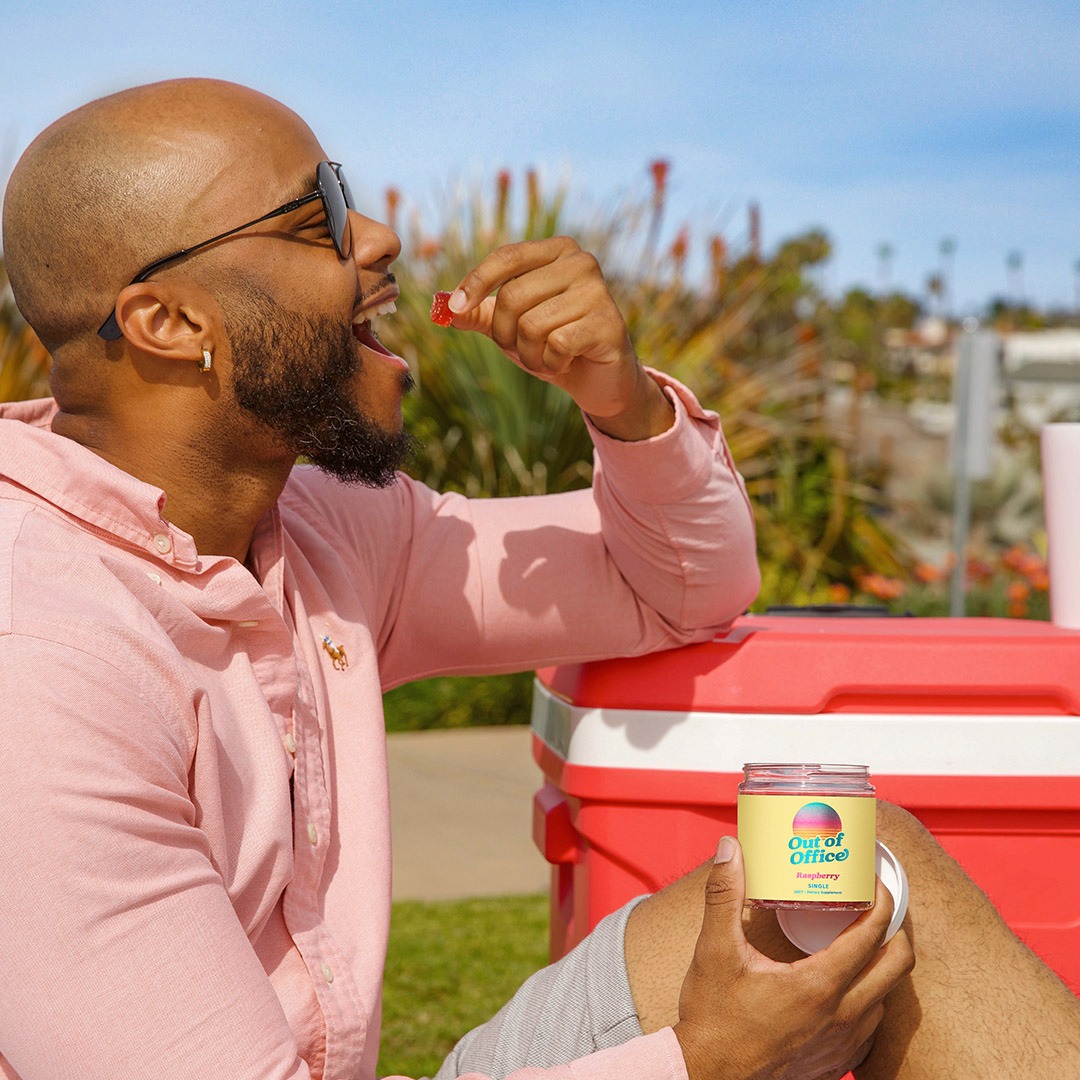
They come from the same plant. What separates them is a distinction in federal law that many consumers don’t fully understand.
Picture two THC gummies sitting side by side. Both contain five milligrams of THC, produce the same effect, and would appear identical under laboratory analysis. Yet one can only be purchased inside a licensed dispensary, subject to state taxation and seed-to-sale tracking, while the other can be ordered online and shipped directly to a consumer’s home—in states where no dispensary exists at all.
The plant itself does not account for that difference. The chemistry is effectively the same. The distinction was established through federal legislation rather than biology, and for the growing number of Americans purchasing THC products online for the first time, it has become one of the most confusing aspects of the market.
That confusion is precisely the problem Edibles.com set out to solve.
Launched in 2025 and based in Atlanta, the wellness-focused marketplace was built around consumer education first, on the premise that people entering the modern THC market deserve to understand what they are buying before they buy it. Operating under a “health, not high” philosophy, the platform organizes hemp-derived products by the outcome they support—sleep, recovery, energy, relaxation, or social occasions—rather than by strain or potency.
But before a shopper can choose an outcome, they often have to get past the market’s most basic point of confusion.


Hemp and Marijuana Are the Same Species
For many consumers entering the category, understanding the difference between hemp and marijuana is the first lesson. It is also one of the most widely misunderstood.
Hemp and marijuana are not two different plants. They are both classifications of Cannabis sativa L.—the same species categorized under two different legal definitions.
That legal distinction comes down largely to a single measurement. Under current federal law, cannabis containing no more than 0.3% Delta-9 THC by dry weight is defined as hemp. Cannabis that exceeds that threshold is classified as marijuana and regulated as a controlled substance, even in states where adult-use cannabis is legal.

As a result, two plants can look identical, share a similar aroma, and produce comparable effects while being governed by entirely different regulatory systems. What is being regulated here is a molecule and a threshold, not the plant itself.
The determining factor is not the plant. It is the law.
How One Plant Ended up With Two Markets
The current framework traces back to the 2018 Farm Bill, which legalized hemp at the federal level and, in the process, helped establish a new cannabinoid economy built around hemp-derived Delta-9 THC gummies, beverages, and a range of newer compounds sold across state lines.
Products such as THCA flower have further blurred the line. THCA is non-psychoactive until heat converts it into THC, which means a product can meet the federal definition of hemp at the point of sale—the law measures Delta-9 content as the product ships, not after a lighter touches it.
At the same time, state-regulated cannabis has continued to operate on a separate track, with its own licensing, taxation, and retail systems. The result is a marketplace that can appear contradictory. A hemp-derived beverage ordered online and an edible purchased at a local dispensary may originate from the same species yet fall under two distinct sets of rules.
Those rules continue to evolve. Congress has folded hemp restrictions into broader legislation, while individual states pursue their own approaches, ranging from Kentucky’s move to regulate Delta-8 to Florida’s effort to restrict hemp cannabinoids , or Georgia’s codifying of hemp sales where Edibles.com is based. Proposed federal revisions would redefine hemp based on total THC rather than Delta-9 alone, a change that could significantly reshape the market once again.


Many hemp consumers who are not in legal cannabis markets don’t have the same shopping distinctions as those who go to dispensaries. Hemp has reached a broader market where cannabis policy, functionally, doesn’t exist. These consumers are more interested in access, outcomes, and efficacy for alternative approaches to wellness. Accordingly, the hemp-versus-cannabis distinction matters far less than it does to regulators.
A shopper looking for a product to support better sleep is generally less concerned with whether a cannabinoid is hemp-derived or marijuana-derived than with whether the product works, whether it has been tested, and whether the label accurately reflects the contents.
That gap between how products are legally classified and how consumers actually shop is central to the Edibles.com model.
Rather than organizing products around the traditional indica, sativa, and hybrid framework, the marketplace sorts them by the solution they support and stocks established names in the category, including Wyld, Wana, and Camino. For much of the country, it represents one of the first times industry-leading brands can be ordered and shipped directly to the door, outside of a dispensary.
“Our goal is to demystify the access point,” the company explains, “to help people understand what they’re buying, why it’s legal, and how to shop by outcome rather than just potency. We want consumers to shop the outcomes, not the THC alone.”
The approach is designed with a specific consumer in mind: the canna-curious or canna-familiar shopper approaching the category with intention rather than established tolerance. For these consumers, a marketplace that vets and curates in advance does the sorting work that an open, national market otherwise leaves to the shopper.
Why Testing Matters More Than the Label
Both markets are tested. What differs is who mandates it and where the results live.
State cannabis programs fold testing into licensing and seed-to-sale tracking, and the results stay inside a closed system—the state has already read them by the time a product reaches the shelf. Compliant hemp is verified against the federal 0.3% standard by accredited third-party labs, and those results travel with the product.

Which is why a certificate of analysis, or COA, is the single most useful document a THC consumer can learn to read. It verifies cannabinoid content, confirms total-THC calculations, and screens for contaminants including pesticides, residual solvents, and heavy metals. In a dispensary, someone has read it on your behalf. Online, you read it yourself—and the good operators make that easy to do.
Third-party testing and product vetting are central to the Edibles.com model, which delivers vetted, lab-tested products discreetly to the consumer’s door, each one curated to fit a wellness-backed outcome.
As hemp products increasingly resemble dispensary cannabis in both potency and consumer expectations, transparency—rather than a product’s legal origin—is what distinguishes a confident purchase from an uncertain one.


Family, Not Competitors
The distinction at the center of the hemp debate may not remain as sharp as it is today. Lawmakers continue to revisit the rules, and the line between the two markets narrows with each new product and each new piece of legislation.
For now, consumers are left to navigate two versions of the same plant, sold under different names and governed by different regulations. The most useful starting point is also the simplest. Hemp and cannabis are not competitors. They are the same plant, separated by legislation rather than biology.
Photos courtesy of Edibles.com Instagram
Sponsored Content Disclaimer: This article was published as part of a paid commercial arrangement with Edibles.com. It is not independent editorial content. References to cannabinoids, formulations, product features, consumer use cases, or company claims reflect the sponsor’s perspective unless otherwise noted and have not been independently verified by High Times.
