

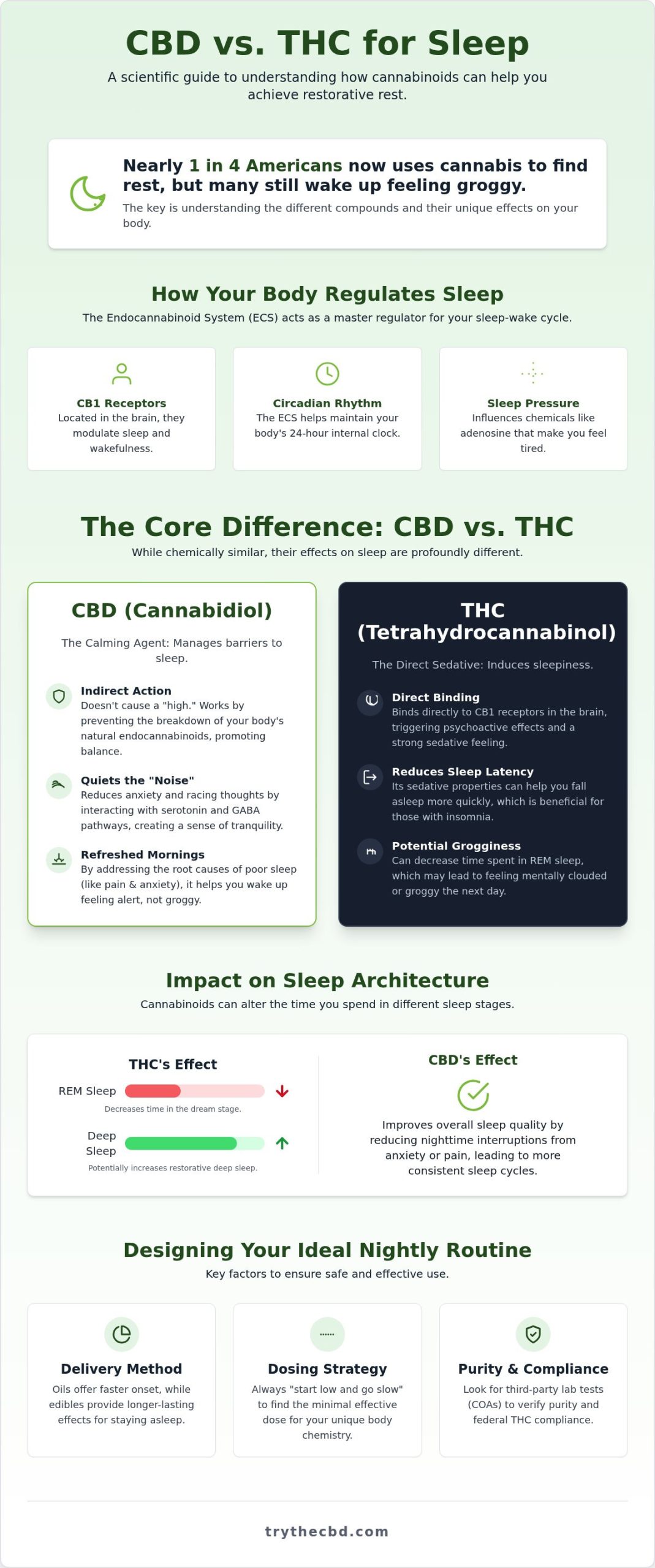
Nearly one in four Americans now turns to cannabis to find rest, yet many are still waking up feeling more groggy than restored. If you’ve spent your nights staring at the ceiling with racing thoughts or find yourself frustrated by the lingering side effects of traditional medications, you aren’t alone. Choosing between cbd vs thc for sleep involves more than just picking the strongest option; it requires understanding how these specific compounds interact with your unique biology. While THC is often sought for its immediate sedative properties, recent meta-analyses of thousands of studies suggest that CBD and CBN are more consistently associated with improved sleep quality.
You deserve a nightly routine that leads to faster sleep onset and uninterrupted rest without the fear of an unwanted “high.” This guide clarifies the scientific differences between these two cannabinoids, specifically looking at how they manage the barriers to sleep like anxiety and physical tension. We’ll explore the latest 2026 federal regulations regarding total THC limits, the emerging evidence supporting higher-dose CBD formulations, and how to select transparently tested products that deliver reliable results. By the end, you’ll know exactly how to customize your natural support for a truly refreshed morning.
Key Takeaways
- Understand how the endocannabinoid system coordinates with your circadian rhythm to naturally signal your body when it’s time to transition into deep rest.
- Explore the scientific differences in cbd vs thc for sleep, where CBD targets the mental barriers to rest and THC provides a more direct sedative effect.
- Compare delivery methods like oils and edibles to determine which onset time and duration best match your specific sleep challenges throughout the night.
- Learn a methodical “start low and go slow” dosing strategy to integrate cannabinoids into your nightly routine safely and effectively for long-term success.
- Identify the critical role of third-party lab testing and Certificates of Analysis (COAs) in verifying the purity and federal compliance of your chosen sleep aids.
Understanding the Endocannabinoid System’s Role in Human Sleep Cycles
Your body possesses a complex internal signaling network known as the Endocannabinoid System (ECS). This system acts as a master regulator, maintaining balance across various physiological processes including mood, appetite, and your nightly rest. To understand the Endocannabinoid System’s Role in Human Sleep, we must look at how it interacts with the brain’s arousal centers. It uses two primary receptors, CB1 and CB2, to monitor internal conditions. CB1 receptors are densely packed in the central nervous system and play a vital role in modulating sleep and wakefulness. When you introduce external cannabinoids, you effectively provide a “nudge” to this system, helping it signal to the body that it’s time to power down for the evening.
The ECS also communicates directly with your circadian rhythm, the internal clock that dictates your 24 hour sleep-wake cycle. Analyzing cbd vs thc for sleep requires a look at how these molecules influence adenosine, a chemical in the brain that builds up during the day to create sleep pressure. While your body naturally produces endocannabinoids like anandamide to manage this process, external factors like stress or blue light can disrupt this harmony. Supplementing with high-quality hemp extracts can help bridge the gap, encouraging a more seamless transition from wakefulness to rest.
The Science of Sleep Architecture
Sleep architecture is the structural organization of sleep stages throughout the night. It isn’t just about the quantity of hours you spend in bed, but the quality of the cycles you complete. Sleep latency refers to how quickly you drift off, while sleep maintenance describes your ability to stay asleep without interruption. Research indicates that cannabinoids can shift these stages significantly. For example, THC is known to decrease the time spent in REM (Rapid Eye Movement) sleep while potentially increasing deep sleep duration. When comparing cbd vs thc for sleep, finding the right balance is essential to ensure you wake up feeling restored rather than mentally clouded from a lack of dreaming.
CBD vs. THC: The Chemical Difference
While they share a similar molecular structure, these two compounds interact with your biology in vastly different ways. THC binds directly with CB1 receptors in the brain; this triggers the well known psychoactive “high” and provides a direct sedative effect. In contrast, CBD is non-intoxicating because it doesn’t bind to these receptors in the same way. Instead, it works indirectly to prevent the breakdown of your body’s own endocannabinoids. This chemical nuance is why many people prefer hemp-derived Delta-9 gummies or CBD oils. Currently, hemp-derived products containing less than 0.3% THC are federally legal under the 2018 Farm Bill, though upcoming 2026 regulations are expected to shift definitions toward “total THC” limits of 0.4 milligrams per container.
CBD for Sleep: Managing the Obstacles to a Restful Night
While some people seek a heavy sedative effect, others simply need to remove the barriers preventing them from drifting off naturally. CBD functions as an indirect sleep aid by addressing the underlying causes of wakefulness rather than forcing the body into a state of unconsciousness. If you’re comparing cbd vs thc for sleep, it’s helpful to view CBD as a tool for “quieting the noise.” It doesn’t bind directly to the brain’s arousal receptors like THC does. Instead, it interacts with serotonin and GABA pathways to promote a sense of tranquility. This makes it a preferred option for those who want to wake up feeling alert and refreshed, without the lingering “brain fog” or morning grogginess often associated with stronger sedatives.
Physical discomfort is another major hurdle to quality rest. CBD’s role in pain management helps prevent middle-of-the-night wake-ups caused by tension or joint stiffness. By supporting the body’s inflammatory response, CBD allows for more sustained, uninterrupted periods of deep sleep. For a foundational understanding of this compound, you can read our guide on what CBD stands for to see how its non-intoxicating nature fits into a daily wellness routine.
Anxiety and the Cortisol Connection
One of the most significant disruptors of sleep architecture is elevated cortisol. This stress hormone should naturally drop in the evening, but a “racing mind” often keeps these levels high, leading to stress-induced insomnia. Research into the neurobiological basis of cannabis suggests that CBD may help lower nighttime cortisol secretions. This provides a “calm without the high,” making it an ideal entry point for beginners who fear the psychoactive effects of THC. By modulating the stress response, CBD helps you transition into a biological state where sleep can occur naturally.
Best CBD Formats for Sleep Support
Choosing the right delivery method depends on whether you struggle more with falling asleep or staying asleep. When evaluating cbd vs thc for sleep, the format dictates the timing of your relief.
- CBD Tinctures: These offer fast absorption when taken sublingually, making them perfect for immediate relaxation before bed.
- CBD Edibles: These are processed through the digestive system, providing a slow-release effect that can sustain you through the entire night.
Starting with high-quality CBD oils and tinctures allows you to precisely control your serving size until you find your ideal balance. If you’re ready to explore how these natural extracts can enhance your nightly routine, you can browse our full range of lab-tested products to find the right fit for your needs.
THC for Sleep: The Mechanism of Sedation and Sleep Latency
THC acts as a potent, direct sedative by binding to CB1 receptors in the brain. This interaction mimics the effects of anandamide but with significantly higher intensity. One of the primary ways it aids rest is by modulating adenosine, the chemical responsible for “sleep pressure” that builds up throughout your day. By accelerating this process, THC effectively shortens sleep latency, which is the time it takes for you to transition from being awake to being asleep. For those who lie awake for hours with a brain that won’t turn off, this direct intervention is often the deciding factor when choosing between cbd vs thc for sleep.
However, the impact on sleep architecture is distinct and involves a specific trade-off. While THC can increase the duration of Stage 3 deep sleep, the phase responsible for physical restoration and immune function, it typically reduces the time spent in REM (Rapid Eye Movement) sleep. This is the stage where dreaming and cognitive processing occur. While this reduction can be beneficial for those suffering from vivid nightmares or frequent nighttime interruptions, it’s a detail that highlights why a balanced approach is often best for long-term wellness. Understanding this mechanism helps you decide if a direct sedative is what your body truly needs.
Delta-9 THC Gummies: A Modern Solution
Hemp-derived Delta-9 THC has emerged as a game-changer for accessibility across the United States. Unlike traditional methods that can be harsh or unpredictable, Delta-9 THC Gummies offer a level of precision that smoking simply cannot match. Each gummy contains a measured milligram amount, ensuring your nightly routine remains consistent and predictable. For a deeper dive into the legal landscape and safety standards of these products, you can explore our guide on what is Delta 9. This transparency allows you to focus on your rest rather than questioning the purity of your support.
Managing Potential Side Effects
Finding the right balance is key to avoiding the “THC hangover,” a feeling of lingering grogginess the next morning. This usually happens when the dose is too high or taken too late in the evening. We recommend a “start low and go slow” approach, often beginning with microdoses to gauge your sensitivity. Proper timing is equally vital. Because edibles must pass through the digestive system, taking your gummy approximately 30 to 60 minutes before bed ensures the effects peak just as you’re ready to drift off. When weighing cbd vs thc for sleep, remember that THC’s strength is its directness, but it requires more careful management than its non-intoxicating counterpart to ensure you wake up feeling refreshed.

CBD vs. THC for Sleep: A Direct Comparison of Effects
Choosing between cbd vs thc for sleep requires a clear understanding of how different delivery methods and chemical profiles impact your night. Onset times vary significantly based on the product format you select. Tinctures and oils, when taken sublingually, typically enter the bloodstream within 15 to 30 minutes, providing a rapid transition toward relaxation. In contrast, gummies and other edibles must pass through the digestive system, which extends the onset to 60 or 90 minutes but offers a longer duration of effect. While a tincture might help you drift off, an edible is often better suited for those who struggle to stay asleep, as its influence can last six to eight hours.
Psychoactivity is the most notable dividing line for many users. CBD remains entirely non-intoxicating, allowing you to enjoy the restorative benefits of hemp without any alteration in perception. THC provides a distinct “high” that acts as a powerful sedative, though it carries the risk of morning grogginess if the dose isn’t carefully managed. Many people find that the “Entourage Effect” provides the most comprehensive results. This phenomenon occurs when CBD and THC are used together, allowing the compounds to work synergistically to enhance each other’s therapeutic properties while potentially mitigating the intensity of THC’s psychoactive effects.
Which One Should You Choose?
Your ideal choice depends on your specific “sleep profile” and the primary obstacles standing between you and rest. If you identify as a “Mind-Racer,” someone whose thoughts spin the moment the lights go out, CBD is likely your best fit. Its ability to modulate the stress response helps quiet mental clutter without causing sedation. If you’re a “Toss-and-Turner” dealing with physical restlessness or discomfort, the direct sedative properties of THC can provide the heavy-duty support needed for physical stillness. For a truly comprehensive strategy, many users prefer a custom blend of sleep products that incorporates both cannabinoids to address both mental and physical barriers simultaneously.
Safety and Lab Testing
Integrity in sourcing is the foundation of any effective wellness routine. Because the hemp plant is a bioaccumulator, it can pull heavy metals or pesticides from the soil, which is why choosing “clean” Colorado-grown hemp is essential. You should never purchase a sleep aid that doesn’t provide easy access to a Certificate of Analysis (COA). A COA is a verified document providing a full cannabinoid profile and safety screening for contaminants. This transparency ensures that the product you’re using for your health is free from harmful residues and contains exactly what is listed on the label. We prioritize this meticulous detail so you can trust the purity of every drop or gummy in your nightly routine.
Designing Your Ideal Nightly Routine with Try The CBD
Creating a successful evening ritual involves more than just choosing between cbd vs thc for sleep; it’s about building a structured environment where your body feels safe to power down. We always recommend a “start low and go slow” approach to help you identify your unique threshold for rest without overshooting your needs. Since every individual’s endocannabinoid system responds differently, experimenting with CBD Bundles is an effective way to discover your perfect ratio of cannabinoids. Consistency is the foundation of long-term sleep health, as regular use helps maintain a steady endocannabinoid tone that supports your body’s natural ability to regulate its own sleep-wake cycles.
Integrating hemp extracts into a broader sleep hygiene plan can amplify their benefits. This includes maintaining a regular bedtime, limiting blue light exposure, and ensuring your physical environment is conducive to rest. When you approach your nightly routine as a partnership between lifestyle habits and natural supplements, you create a sustainable path toward waking up feeling genuinely restored. We prioritize transparency in our sourcing and testing so that you can focus entirely on your wellness journey without worrying about the integrity of your products.
A Sample Nightly Schedule
Timing is everything when it depends on biological absorption. At T-minus 60 minutes, consider taking a Delta-9 gummy to allow ample time for physical relaxation to take hold as it passes through your digestive system. Follow this at T-minus 30 minutes with a sublingual CBD tincture drop to help quiet your mind and ease any lingering mental clutter from the day. To maximize the efficacy of these cannabinoids, ensure your bedroom is a dark, cool sanctuary. This combination addresses both the physical and mental barriers of cbd vs thc for sleep, guiding you into a deeper state of rest.
Trusting the Try The CBD Standard
Our commitment to quality begins with non-GMO, organic hemp grown in the high-altitude fields of Colorado. This environment produces robust plants that we process with meticulous care to ensure every bottle and jar meets our rigorous standards. We provide nationwide shipping across the US, delivering premium sleep support directly to your door with the reassurance of third-party lab verification. For those seeking specific product recommendations, our guide to the Best CBD Tinctures of 2026 offers an in-depth look at the top-performing formulations currently available for potency and purity.
Step Into a Restorative Future of Sleep
Navigating the choice between cbd vs thc for sleep is a personal journey that relies on understanding your own biology and the specific obstacles to your rest. You don’t have to guess. Whether you need CBD to quiet a racing mind or the direct sedative power of hemp-derived Delta-9 to fall asleep faster, the right natural support can transform your nightly routine. We’ve explored how these compounds interact with your endocannabinoid system to regulate sleep architecture and why a methodical approach is the most reliable path to success.
Integrity matters when it comes to what you put in your body. Every product we offer is third-party lab tested with accessible COAs to ensure purity and federal compliance. We provide nationwide US shipping so you can access premium, Colorado-grown support regardless of your location. It’s time to stop settling for restless nights and start waking up feeling genuinely refreshed and restored. Shop Premium CBD and Delta-9 for Sleep at Try The CBD and discover your ideal nightly balance today. You deserve a night of rest that leaves you ready to take on the world tomorrow.
Frequently Asked Questions
Is CBD or THC better for insomnia?
The choice depends on the underlying cause of your sleeplessness. CBD is typically better for those whose insomnia is driven by anxiety or a racing mind, as it addresses the obstacles to sleep without causing intoxication. THC acts as a more direct sedative that shortens sleep latency, making it effective for those who struggle with the physical mechanics of falling asleep. Many users find a combination of both provides the most comprehensive support for their nightly routine.
Can I take CBD and THC together for sleep?
Yes, taking these cannabinoids together is often the most effective strategy due to the entourage effect. This synergy allows the compounds to enhance each other’s therapeutic benefits while CBD potentially mitigates the intense psychoactivity sometimes associated with THC. When comparing cbd vs thc for sleep, a balanced ratio helps manage both the mental and physical barriers to rest. Starting with a bundle allows you to experiment with different combinations safely to find your perfect balance.
Will Delta-9 gummies make me feel groggy in the morning?
Morning grogginess usually occurs if the serving size is too high or if the gummy is taken too late in the evening. Because edibles process through the digestive system, their effects last longer than other methods. To avoid a “THC hangover,” we recommend starting with a low dose and ensuring you have a full eight hours dedicated to rest. Proper timing and a conservative starting point are essential for waking up feeling refreshed rather than mentally clouded.
How much CBD should I take before bed?
There is no universal serving size, but most research suggests starting with 20 to 40 milligrams and adjusting based on your results. Your ideal amount depends on factors like body weight, metabolism, and the severity of your sleep challenges. We suggest keeping a sleep journal to track how different amounts affect your rest. Always start low and gradually increase the serving every few nights until you achieve your desired outcome for faster onset and uninterrupted rest.
Is hemp-derived Delta-9 THC legal to buy online in the US?
Hemp-derived Delta-9 THC is federally legal under the 2018 Farm Bill as long as it contains less than 0.3% THC by dry weight. While 2026 regulations are introducing stricter “total THC” limits of 0.4 milligrams per container, our products remain compliant with current federal standards. We ship nationally across the United States. You should always check your specific state laws, as local regulations can occasionally differ from federal guidelines regarding the sale of hemp extracts.
Does CBD or THC interfere with REM sleep?
THC has been shown to reduce the time spent in REM sleep while potentially increasing deep, restorative sleep. This can be beneficial for those who experience frequent nightmares but may lead to a “rebound” effect if discontinued abruptly. CBD does not appear to suppress REM sleep in the same way. In the debate of cbd vs thc for sleep, CBD is often preferred by those who want to maintain their natural sleep architecture without altering their dream cycles or cognitive processing.
How long before bed should I take a CBD tincture for sleep?
You should take a CBD tincture approximately 15 to 30 minutes before you plan to sleep. Because tinctures are absorbed sublingually under the tongue, they enter the bloodstream much faster than edibles or gummies. This rapid onset makes them an excellent tool for those who need immediate relaxation. Holding the oil under your tongue for at least 60 seconds before swallowing ensures maximum absorption and more predictable results for your established nightly sleep hygiene plan.
Can I build a tolerance to THC used as a sleep aid?
It is possible to build a tolerance to the sedative effects of THC with frequent, high-dose use over time. To prevent this, many people use a “cycling” approach or stick to the lowest effective serving size possible. Incorporating CBD into your routine can also help balance the system and reduce the need for higher THC amounts. Maintaining a consistent sleep hygiene plan alongside your supplements helps ensure long-term efficacy without needing to constantly increase your daily intake.
