

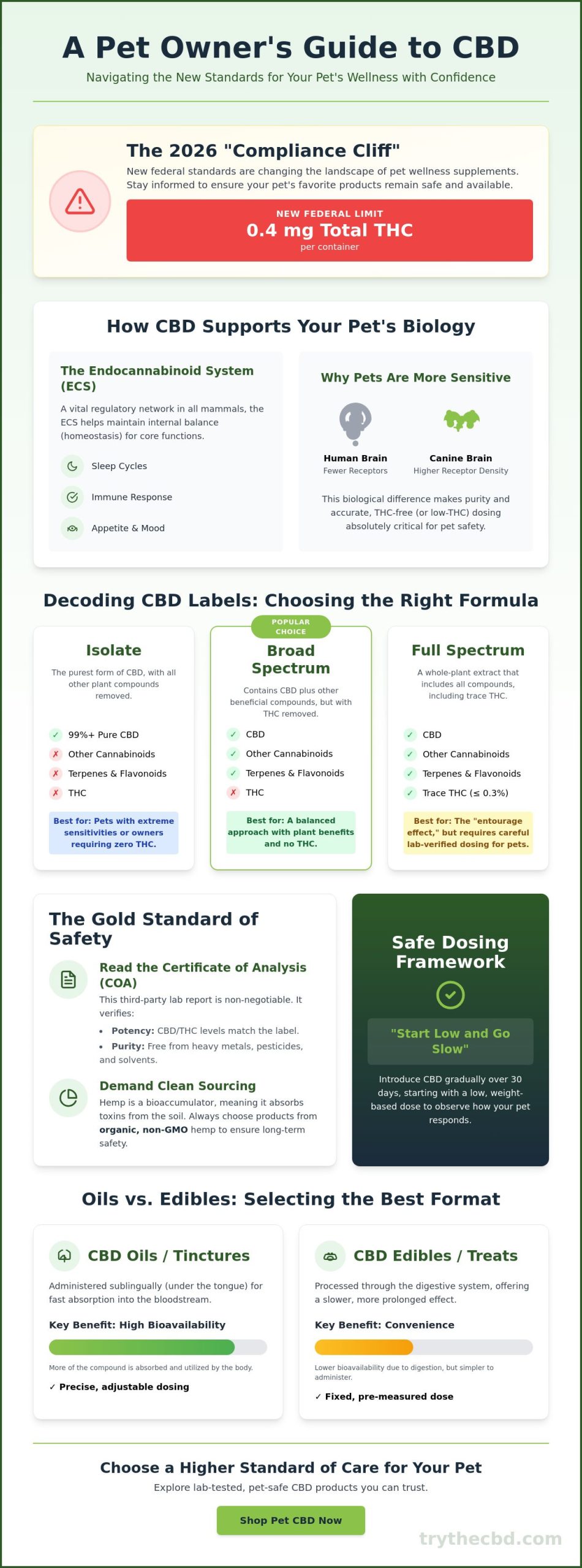
Could the 2026 “compliance cliff” suddenly remove your pet’s favorite wellness supplement from the shelves? It’s understandable if you feel overwhelmed by the shifting legal landscape of cbd for pets, especially as new federal standards now limit total THC to just 0.4 mg per container. You want to support your companion’s vitality, but the fear of accidental toxicity or the struggle to decode a complex lab report can make the process feel like a gamble.
Join us in exploring a higher standard of care that prioritizes transparency over trends. We’re here to provide the scientific clarity and rigorous safety protocols you need to integrate hemp-derived wellness into your pet’s routine with absolute confidence. This guide explores the unique nuances of pet biology, explains how to verify the NASC Quality Seal, and provides a practical dosing framework rooted in the latest 2026 clinical insights. By the end, you’ll have the tools to act as a knowledgeable guardian for your pet’s health.
Key Takeaways
- Understand how the endocannabinoid system functions as a vital regulatory network for your pet’s nervous and immune health.
- Learn to navigate the 2026 “total THC” limits by decoding labels to choose between isolates, broad-spectrum, and full-spectrum options.
- Discover how to read a Certificate of Analysis (COA) to ensure your chosen cbd for pets meets the highest standards of purity and potency.
- Implement a weight-based “start low and go slow” dosing framework to introduce hemp-derived wellness safely over the first 30 days.
- Compare the high bioavailability of sublingual oils with the practical convenience of fixed-dose edibles for travel or stressful events.
Understanding the Science: How CBD Interacts with Your Pet’s Biology
Every mammal, from the smallest feline to the largest canine, shares a sophisticated internal network called the Endocannabinoid System (ECS). This system acts as a universal regulatory framework, overseeing vital functions like sleep, appetite, and immune response. By understanding How CBD Interacts with Your Pet’s Biology, you can better appreciate why hemp-derived compounds have become a cornerstone of modern animal wellness. It’s a partnership between plant science and animal physiology designed to support a higher quality of life.
The ECS operates through two primary types of receptors: CB1 and CB2. CB1 receptors are primarily located in the central nervous system and brain, while CB2 receptors are found in the peripheral organs and immune cells. It’s vital to recognize that pets, particularly dogs, possess a significantly higher density of these receptors in their brains compared to humans. This biological trait makes them much more sensitive to cannabinoids, which is why the purity of cbd for pets is paramount. While CBD is non-psychoactive and offers a gentle approach to wellness, THC can be toxic to animals. High concentrations of THC often lead to ataxia, disorientation, or physical distress, making laboratory verification of every product a necessity for safety.
The Role of Homeostasis in Pet Health
The primary goal of the ECS is to achieve homeostasis. Homeostasis in pets is the maintenance of internal stability. When external stressors or physical discomfort disrupt this balance, CBD interacts with receptors to encourage a return to a steady state. This support helps your pet maintain a calm mood and physical comfort, even when their environment becomes unpredictable. Choosing a high-quality cbd oil for pets ensures that these interactions remain safe and effective for long-term use.
Why Hemp-Derived CBD is the Standard
The 2018 Farm Bill transformed the industry by federally legalizing hemp-derived products, provided they contain no more than 0.3% THC. This threshold is a critical safety benchmark for animals, ensuring that the therapeutic benefits of the plant are accessible without the risks of intoxication. Beyond legal compliance, the distinction between “pet-grade” and “human-grade” sourcing involves rigorous cleaning and extraction processes that remove heavy metals or pesticides. A serious provider treats pet wellness with the same meticulous detail as human health, ensuring every drop is verified for integrity and agricultural excellence.
Full Spectrum vs. THC-Free: Decoding CBD Labels for Animals
Selecting the right cbd for pets requires more than just looking at the milligram count on the bottle. You’ll encounter three primary formulations: isolate, broad spectrum, and full spectrum. Each of these categories represents a different level of refinement and chemical complexity. Understanding these differences allows you to tailor your pet’s wellness routine to their specific biological needs and sensitivities. It’s about finding the precise balance that supports their unique system without introducing unnecessary compounds.
The 2026 regulatory environment has introduced stricter definitions for these labels. Under the current “total THC” standards, products must be incredibly precise in their formulations to remain compliant with the new 0.4 mg per container limit. This shift makes the choice between a pure isolate and a full-spectrum product even more significant for the consumer. Owners must now be more diligent than ever about checking that their chosen supplements meet these rigorous new safety benchmarks. Hemp is a bioaccumulator. This means it absorbs both nutrients and toxins from the soil where it grows, so organic, non-GMO sourcing is a non-negotiable standard for long-term use. By choosing products derived from clean soil, you’re ensuring that your companion isn’t exposed to heavy metals or pesticides.
Full Spectrum CBD: The Power of the Whole Plant
Full spectrum options are designed to mirror the natural composition of the hemp plant. These extracts contain a wide array of terpenes, flavonoids, and minor cannabinoids that work in tandem with CBD. This synergy, often called the “entourage effect,” suggests that the compounds are more effective when used together rather than in isolation. Many pet parents opt for Full Spectrum CBD Oil to provide a more comprehensive support system. It’s a holistic choice for animals that can safely tolerate the legal trace amounts of THC while benefiting from the complete botanical profile.
THC-Free and Broad Spectrum Alternatives
Broad spectrum products offer a middle ground for those who want the benefits of the entourage effect without any THC. This is particularly important for pets who are exceptionally sensitive or for owners who feel more comfortable with a zero-THC profile. Using a THC-Free CBD Oil provides peace of mind while still delivering a range of beneficial plant compounds. High-quality manufacturers use advanced chromatography to remove THC while leaving other cannabinoids intact.
Verification remains your most powerful tool as a guardian of your pet’s health. Because The Safety Standard: Why Laboratory Testing and COAs Are Non-Negotiable, you should always look for proof that “THC-free” truly means non-detectable levels on a lab report. This level of transparency ensures that what you see on the label is exactly what ends up in your pet’s bowl. If you’re ready to explore these different formulations, you can view our complete collection of hemp-derived solutions designed with animal safety in mind.
The Safety Standard: Why Laboratory Testing and COAs Are Non-Negotiable
In an industry where regulations are still catching up to consumer demand, third-party laboratory testing is the only way to verify what’s inside the bottle. A recent evaluation by Cornell University highlights the stakes; researchers found that out of 29 products tested, four contained heavy metal contamination. This is why a Certificate of Analysis (COA) is the “Gold Standard” for safety. It’s a document provided by an independent lab that confirms the product’s chemical makeup. Reliable wellness providers don’t just claim quality; they prove it through accessible, transparent data. It’s about ensuring the cbd for pets you choose is free from hidden dangers like pesticides, mold, or residual solvents that can accumulate in an animal’s system over time.
Transparency acts as a bridge between a brand and a pet parent. When a company voluntarily submits its products for rigorous evaluation, it demonstrates a commitment to integrity that goes beyond a marketing slogan. These tests check for the presence of harmful substances and verify that the cannabinoid levels match what’s printed on the label. For a provider to be truly reliable, they must make these reports easily accessible, usually via a QR code on the packaging or a dedicated section on their website. This level of openness ensures that you are acting as a meticulous guardian for your companion’s health.
How to Read a Pet CBD Lab Report
Reading a lab report might feel daunting at first, but it’s simpler than it looks. First, locate the cannabinoid profile. This section verifies the potency of the cbd for pets you’re purchasing. According to current 2026 standards, the actual CBD content should be within 10% of the amount stated on the label. Next, look for the “Contaminants” or “Safety” section. You want to see a clear “Pass” for heavy metals, pesticides, and microbial growth like lead or mold. A COA date should be within the last 12-18 months to ensure batch relevance. This ensures the data reflects the specific bottle you have in your hand rather than a years-old sample.
CO2 Extraction: The Cleanest Method
The extraction method is just as important as the testing itself. Most premium providers use CO2 extraction, which utilizes pressurized carbon dioxide to pull cannabinoids from the hemp plant. This method is significantly safer than using chemical solvents like ethanol or butane, which can leave behind toxic residues in the final oil. CO2 extraction is the cleanest choice for products intended for animal consumption because it leaves no trace of the process behind. Sourcing hemp from high-altitude Colorado farms further enhances this purity, as the clean air and soil quality contribute to a superior raw material. When you choose a product like our cbd oil for pets, you’re opting for a supplement that has undergone these exact rigorous checks to ensure safety and efficacy.

Dosing and Administration: Finding the Right Balance for Dogs and Cats
Administering cbd for pets isn’t a one-size-fits-all endeavor. It requires a blend of scientific calculation and intuitive observation. The “Start Low and Go Slow” philosophy is the foundation of a successful routine, especially during the first 30 days of integration. This initial period allows your pet’s endocannabinoid system to adjust to the new supplement without overwhelming their receptors. Most experts recommend a conservative starting dosage based on the pet’s weight, typically ranging from 0.1 to 0.2 mg of CBD per pound of body weight. By maintaining a consistent daily schedule, you create a steady baseline that makes it easier to track subtle improvements in your pet’s overall well-being.
Consistency is the secret to long-term success. Unlike some traditional interventions that provide immediate but fleeting results, hemp-derived wellness works best when it builds up in the system over time. You should monitor your pet’s behavior closely during the first two weeks, looking for signs that the dosage is meeting their needs. If you don’t see the desired response after seven days of consistent use, you can gradually increase the amount in small increments. This methodical approach ensures you find the “sweet spot” where your pet experiences maximum comfort without unnecessary lethargy.
Step-by-Step Administration Techniques
Efficiency often depends on how you deliver the supplement. Direct oral administration using tincture drops is the gold standard for fast absorption. When applied under the tongue or along the gums, the cannabinoids bypass the digestive tract and enter the bloodstream directly. If your pet is a picky eater, try mixing the oil with a small portion of wet food or a porous treat that absorbs the liquid. For those just beginning this journey, the Best Friends CBD Starter Kit provides a structured way to introduce these wellness tools into your home with ease.
Species-Specific Considerations
Cats and dogs process compounds differently. Felines have unique metabolic pathways that make them more sensitive to certain plant terpenes, which is why flavor-neutral oils are often preferred to avoid aversiveness. Senior dogs frequently benefit from CBD tinctures for pain support, as these can be precisely adjusted based on their daily mobility and comfort levels. As you refine the dosage, keep a simple log of the following behaviors to guide your adjustments:
- Sleep patterns: Are they resting more soundly or appearing overly lethargic?
- Mobility: Do they seem more willing to climb stairs or jump onto the couch?
- Appetite: Have there been any noticeable changes in their interest in mealtime?
Finding the right balance is a partnership between you and your companion. If you’re ready to start your pet’s wellness journey with a trusted partner, you can browse our full range of lab-tested pet solutions today to find the perfect fit for your family.
Selecting the Best Format: CBD Oils, Tinctures, and Edibles for Pets
Choosing the right delivery method for cbd for pets involves balancing biological efficiency with your animal’s unique preferences. While oils provide rapid absorption through the mucous membranes, edibles must navigate the digestive tract, which naturally delays the onset of effects. This difference in bioavailability means that sublingual oils generally allow a higher percentage of cannabinoids to reach the bloodstream. Edibles, however, offer a level of convenience that’s hard to match, especially during travel or sudden stressful events like thunderstorms. Understanding these trade-offs helps you select a format that fits both your pet’s metabolic needs and your daily lifestyle.
Proper storage is just as vital as the format itself to maintain the integrity of the hemp compounds. Heat, light, and air are the primary enemies of cannabinoid stability. You’ll find that most tinctures and edibles maintain their potency for 12 to 24 months when kept in a cool, dark, and dry environment. It’s also essential to view these products as a complementary tool within a broader wellness strategy. While hemp-derived supplements support homeostasis, they don’t replace the expert guidance of a veterinarian. Openly discussing your pet’s routine with a professional ensures that CBD integrates safely with any other health protocols your companion might require.
Oils and Tinctures: Precision and Potency
Oils remain the preferred choice for pet parents who value absolute precision. The graduated dropper allows you to micro-dose and adjust the amount drop by drop, which is particularly beneficial for very small animals or those with fluctuating needs. Most high-quality tinctures utilize MCT or hemp seed oil as a carrier. These fats don’t just improve the taste; they actually aid in the digestion and absorption of the CBD molecules. If you’re undecided on which path to take, you can explore our detailed CBD Tincture vs. Edibles guide for a deeper comparison of these methods.
CBD Edibles: Convenience and Taste
For pets that are sensitive to the texture of oil or simply refuse to sit still for a dropper, CBD edibles are an excellent alternative. These fixed-dose treats eliminate the guesswork and make administration as simple as giving a reward. When selecting an edible, you must be vigilant about the ingredient list. While hemp-specific products won’t contain them, you should always double-check that no human-grade additives like xylitol, which is toxic to dogs, have found their way into the recipe. As we look toward the future of pet wellness in 2026, the industry continues to move toward these cleaner, more transparent formulations that prioritize animal safety above all else.
The journey toward hemp-derived wellness is one of partnership and patience. By choosing the format that best suits your pet’s personality and biological requirements, you’re taking a proactive step in supporting their long-term vitality. If you’re ready to find the perfect addition to your companion’s routine, you can browse our full collection of lab-verified solutions to ensure you’re providing the highest standard of care available today.
Empowering Your Pet’s Wellness Journey Through Science
You’ve now gained the clarity needed to navigate the evolving landscape of cbd for pets with confidence. From understanding the biological role of the endocannabinoid system to mastering the technical details of a Certificate of Analysis, you’re equipped to act as a knowledgeable guardian for your companion. It’s about more than just a supplement; it’s about a commitment to integrity and quality that respects your pet’s unique physiology.
We invite you to explore our lab-tested CBD for Pets collection and find the perfect match for your furry friend. Every product in our range is crafted from pure, Colorado-grown hemp and backed by third-party lab results available for every batch. Whether you prefer the comprehensive support of a full-spectrum extract or the precision of a THC-free isolate, you can move forward knowing you’ve chosen a standard of care that prioritizes safety and transparency. Your journey toward a more balanced, vibrant life for your pet starts with a single, informed choice.
Frequently Asked Questions
Can CBD make my pet feel ‘high’ or lethargic?
No, CBD will not make your pet feel “high” because it lacks the psychoactive properties associated with THC. While extreme lethargy is uncommon, some pets might experience mild sleepiness if their initial dose is higher than their metabolism requires. This is why starting with a conservative amount is vital to ensure your companion remains alert and comfortable while their system adjusts to the new supplement.
How long does it take for CBD to start working in dogs and cats?
You can typically expect to see effects within 30 to 60 minutes for sublingual oils, while edibles may take up to two hours to fully process through the digestive tract. The exact timing varies based on your pet’s size, metabolic rate, and whether they’ve recently eaten. For predictable stressors like fireworks or travel, administering the supplement at least an hour in advance provides the most reliable support.
Is it safe to give my pet CBD every single day?
Daily administration is considered safe and is often the most effective way to support long-term wellness. Maintaining a consistent schedule helps keep a steady level of cannabinoids in your pet’s system, which supports the endocannabinoid system’s role in regulating internal balance. Most pet parents find that a regular routine yields more significant results than using the product only on an occasional basis.
What should I do if my pet accidentally consumes too much CBD?
Remain calm and monitor your companion for signs of temporary disorientation, stumbling, or excessive sleepiness. While cbd for pets has a high safety profile, consuming an entire package may cause physical discomfort or mild digestive upset. It’s best to contact your veterinarian immediately if you notice severe lethargy or if the product contained ingredients like chocolate or xylitol that are toxic to animals.
Are there any known drug interactions between CBD and pet medications?
CBD can interact with certain medications by affecting how the liver metabolizes other pharmaceuticals through the cytochrome P450 enzyme system. This interaction might alter the concentration of other drugs in your pet’s bloodstream, potentially changing their efficacy. You should always consult with your veterinarian before introducing hemp-derived supplements if your pet is currently taking prescriptions for heart, liver, or seizure conditions.
How do I know if the CBD oil I’m buying is actually organic and non-GMO?
Verification is found by reviewing the third-party lab reports and sourcing statements provided by the manufacturer. Look for brands that utilize Colorado-grown hemp and provide a Certificate of Analysis for every batch to confirm the absence of synthetic pesticides or heavy metals. A reliable provider acts as a transparent partner, making these agricultural details easily accessible to ensure you’re choosing a clean, natural product.
Can I use the same CBD oil I use for myself for my pet?
It’s safer to use a formula specifically designed for animals to avoid additives that are dangerous to their systems. Many human-grade tinctures contain essential oils, artificial sweeteners like xylitol, or flavorings that can cause toxicity in dogs and cats. Additionally, pet-specific products are formulated with appropriate concentrations to allow for the precise, low-milligram dosing that smaller animals require for safety.
What is the difference between hemp seed oil and CBD oil for pets?
Hemp seed oil is a nutritional supplement rich in omega fatty acids but contains no active cannabinoids, whereas CBD oil is extracted from the plant’s flowers and leaves to provide therapeutic benefits. While hemp seed oil is excellent for skin health and coat shine, it won’t interact with your pet’s endocannabinoid system to support physical comfort or a calm mood. Always verify the label to ensure the product contains actual cannabidiol rather than just hemp seeds.
