

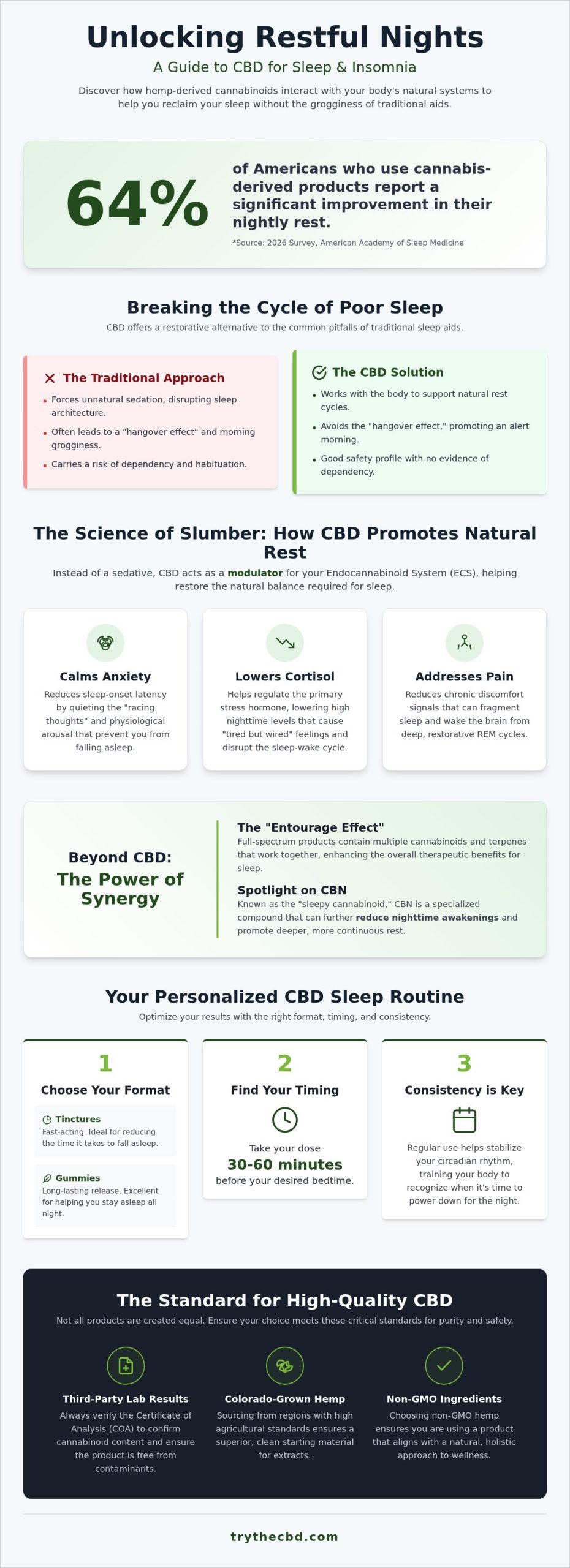
Did you know that 64% of Americans who use cannabis-derived products report a significant improvement in their nightly rest according to a 2026 survey from the American Academy of Sleep Medicine? If you’re struggling with chronic insomnia or the frustration of anxiety-driven racing thoughts at bedtime, you’ve likely realized that standard solutions often fall short. It’s common to feel trapped between the cycle of restless nights and the heavy morning grogginess that follows traditional over-the-counter medications. You deserve a solution that works with your body’s natural systems rather than forcing them into submission. Understanding the science of cbd for sleep and insomnia is the first step toward reclaiming your nights without the fear of dependency.
In this guide, you’ll discover how hemp-derived cannabinoids interact with your sleep cycle and learn how to build a personalized routine for deeper, more restorative rest. We’ll explore the latest 2026 clinical findings on dosage, including how specific concentrations of CBD and CBN can reduce nighttime awakenings. We also break down the upcoming November 2026 federal regulatory shifts to ensure you can confidently source high-quality, Colorado-grown extracts. From fast-acting tinctures to long-lasting gummies, we provide the technical clarity needed to help you wake up feeling refreshed and alert.
Key Takeaways
- Understand how CBD functions as a modulator within your endocannabinoid system to support circadian rhythm homeostasis rather than acting as a simple sedative.
- Learn why using cbd for sleep and insomnia offers a restorative alternative to traditional aids by avoiding the “hangover effect” and potential dependency issues.
- Explore the synergistic benefits of the “entourage effect” and how specialized cannabinoids like CBN can further reduce nighttime awakenings.
- Discover how to optimize your results by dosing 30–60 minutes before bed and choosing the right format to match your specific sleep challenges.
- Identify the critical standards for purity, including how to verify third-party lab results and the importance of sourcing Colorado-grown, non-GMO hemp.
The Science of Slumber: How CBD Interacts with Your Sleep Cycle
Understanding how your body regulates rest requires a look at the endocannabinoid system (ECS), a complex network of receptors that maintains internal balance. Cannabidiol (CBD) acts as a phytocannabinoid modulator within this system. Unlike substances that force sedation, it works by encouraging your body’s natural rhythms to return to a state of homeostasis. This is particularly vital for those exploring cbd for sleep and insomnia, as the goal is often to fix the underlying imbalance rather than just masking the symptoms of a restless night.
The ECS relies on two primary receptors, CB1 and CB2, to manage various physiological processes. While CB1 receptors are heavily concentrated in the central nervous system and influence the sleep-wake cycle, CB2 receptors often deal with peripheral inflammation and immune response. By interacting with these pathways, CBD helps regulate the release of cortisol, our primary stress hormone. High nighttime cortisol levels are a frequent culprit behind “tired but wired” feelings; CBD helps lower these levels to prepare the brain for a natural transition into slumber.
CBD and the Endocannabinoid System (ECS)
Think of the ECS as a series of locks and keys. Your body produces its own “keys” (endocannabinoids), and cannabinoids like those found in full-spectrum CBD oil act as external keys that can influence the system. This interaction is crucial for the sleep-wake transition. When ECS tone is low, people often experience chronic insomnia because the body fails to signal that it’s time to power down. Supporting this system helps stabilize your circadian rhythm, ensuring you feel alert during the day and weary at night.
Addressing the Root Causes: Anxiety and Pain
CBD significantly reduces sleep-onset latency by calming the racing thoughts and physiological arousal that often characterize bedtime anxiety. It serves as a non-sedative relaxation agent, meaning it doesn’t knock you out like a pharmaceutical; instead, it removes the barriers preventing you from falling asleep on your own. Chronic discomfort is another major factor in sleep fragmentation. When pain signals constantly fire, they wake the brain from deep REM cycles. By addressing these physical and mental stressors, CBD creates the quiet environment necessary for uninterrupted, restorative rest.
CBD vs. Traditional Sleep Aids: Benefits and Considerations
Many people turn to cbd for sleep and insomnia because they’re tired of the “hangover effect” associated with over-the-counter antihistamines or prescription benzodiazepines. While traditional sedatives often force the brain into a state of unconsciousness, they frequently leave users feeling sluggish and mentally clouded the following morning. CBD offers a different path. It doesn’t typically cause this residual grogginess; instead, it supports the body’s natural transition into rest by lowering physiological barriers like stress.
Safety is a primary concern for anyone modifying their nighttime routine. The World Health Organization (WHO) has reported that CBD is generally well-tolerated with a good safety profile, showing no evidence of public health-related problems associated with the use of pure CBD. This stands in stark contrast to many pharmaceutical options that carry risks of dependency. According to clinical research on CBD for anxiety and sleep, users often find relief from sleep disturbances without the heavy side effects of conventional drugs. You can even combine CBD with melatonin for a synergistic effect, as they target different pathways to help you drift off faster.
The Problem with Conventional Sedatives
Traditional sleep medications often come with a hidden cost: the disruption of your REM sleep architecture. While you might fall asleep quickly, the quality of that sleep is frequently compromised, leading to long-term fatigue. In 2026, we’ve seen a massive shift toward natural alternatives as consumers become more aware of the risks of habituation and chemical dependency. People want to wake up feeling alert, not tethered to a pill that dictates their morning energy levels. Natural cannabinoids provide a way to address restlessness without the high stakes of pharmaceutical intervention.
CBD as a Non-Habit Forming Alternative
One of the most significant advantages of using hemp extracts is the absence of “rebound insomnia.” When people stop taking prescription sedatives, their sleep issues often return with increased intensity, but CBD does not create this cycle of dependency. If you’re new to cannabinoids, it’s wise to start with pure CBD oil to gauge how your body responds to the compound. While side effects are rare and mild, some users may experience dry mouth or slight changes in appetite. These are generally temporary and far less intrusive than the risks posed by habit-forming drugs. To find a solution tailored to your needs, you can explore our range of high-quality formulations designed for restorative rest.
Beyond CBD: The Role of CBN and Delta-9 in Sleep
While many people start their journey with pure cannabidiol, the hemp plant offers a complex profile of compounds that often work better together than they do alone. This synergy is known as the “entourage effect,” where various cannabinoids and terpenes amplify each other’s therapeutic potential. For those specifically exploring cbd for sleep and insomnia, moving beyond a single compound to a more diverse cannabinoid profile can provide the comprehensive support needed for a full night of rest.
Choosing the right spectrum is essential for your personal comfort and goals. Broad-spectrum products contain a range of beneficial compounds but have the THC removed, making them a preferred choice for those who want to avoid THC entirely. Full-spectrum formulas, on the other hand, retain the complete profile of the plant, including trace amounts of THC. Many users find that these trace amounts are the key to “unlocking” the full potential of the extract, providing a more robust sense of calm than an isolate could achieve on its own.
Why CBN is the New Frontier for Rest
Cannabinol, or CBN, is frequently referred to as the “sleepy cannabinoid.” It forms naturally as THC ages, losing its psychoactive intensity but gaining unique properties that support tranquility. Unlike other compounds, CBN is specifically prized for its ability to help users stay asleep throughout the night. By combining CBD with CBN Oil, you create a dual-action routine that addresses both the initial racing thoughts and the fragmentation that causes middle-of-the-night wakefulness. A 2024 randomized trial found that 20mg of CBN nightly reduced nighttime awakenings and overall sleep disturbance compared to a placebo, confirming its role as a powerful tool for restorative rest.
The Power of Delta-9 Gummies for Relaxation
For those seeking a deeper level of physical relaxation, hemp-derived Delta-9 THC gummies offer a legal and accessible way to leverage microdosing. These products contain small, controlled amounts of THC that interact with the ECS to induce a grounded, heavy feeling in the body. This physical release is often what’s missing for people who struggle with tension-based insomnia. Because these gummies are derived from hemp and contain less than 0.3% THC by dry weight, they are federally legal and available for nationwide US shipping. Using these in micro-doses can help deepen sleep cycles without the intense experience associated with higher-potency cannabis, allowing you to wake up feeling alert rather than foggy.

How to Use CBD for Sleep: Dosage, Timing, and Routine
Success with cbd for sleep and insomnia isn’t just about the quality of the extract; it’s about the protocol you follow. Timing is everything. If you dose too late, you may find yourself lying awake waiting for the effects to kick in. Ideally, you should administer your CBD 30 to 60 minutes before you intend to turn out the lights. This window allows the cannabinoids to reach peak concentration in your system just as your body begins its natural descent into rest.
Your chosen method of consumption dictates how quickly you’ll feel the results. Tinctures are designed for fast absorption through the sublingual glands, making them excellent for those who struggle with a racing mind at bedtime. In contrast, gummies and edibles must pass through the digestive system. While they take longer to start working, they provide a slow, sustained release that’s often more effective for people who find themselves waking up in the middle of the night. Consistency is the final piece of the puzzle. Using CBD as a daily supplement helps maintain your “ECS tone,” which is far more effective than using it as an occasional rescue dose when you’re already exhausted.
Finding Your Ideal CBD Dosage
There is no universal milligram count that works for everyone. We recommend the “Start Low and Go Slow” method, beginning with a modest dose of 15 to 25mg and adjusting your intake weekly until you find your “sweet spot.” Your body weight, metabolism, and individual chemistry all play a role in how you absorb cannabinoids. It’s also vital to understand the biphasic effect, where low doses might feel slightly alerting or focused for some individuals, while higher doses tend to produce the deep, heavy sedation required for sleep.
Creating a Synergistic Sleep Environment
CBD works best when it’s part of a broader sleep hygiene strategy. Integrating CBD oil tinctures into a digital detox routine helps signal to your brain that the day is over. Dim the lights, lower the room temperature to around 65 degrees, and put away blue-light-emitting screens at least an hour before bed. To truly master your routine, keep a sleep journal to track your dosage, timing, and how you feel the next morning. This data allows you to fine-tune your routine with scientific precision. If you’re ready to build your personalized regimen, you can browse our full selection of sleep-focused hemp products to find the format that fits your lifestyle.
Selecting High-Quality CBD: The Try The CBD Standard
When you’re using cbd for sleep and insomnia, the purity of the product is just as important as the dosage you take. Contaminants like heavy metals or residual solvents can cause physiological stress, which is the exact opposite of what your body needs to enter a restorative state. High-quality hemp acts as a bioaccumulator, meaning it naturally pulls substances from the soil it grows in. This is why we prioritize clean, non-GMO sourcing to ensure your nighttime routine is as pure as possible and free from agricultural runoff.
We believe in full transparency and consistent results. One way to ensure you’re getting a comprehensive wellness routine is to explore CBD Bundles, which allow you to combine formats like oils and gummies while maintaining the same high standard of quality across your entire routine. We utilize CO2 extraction, the industry gold standard, to pull cannabinoids from the plant without using harsh chemical solvents. This pressurized process is meticulously controlled to preserve the delicate terpenes and minor cannabinoids that are often lost in cheaper extraction methods. These compounds are essential for the entourage effect, helping you achieve a deeper state of relaxation before bed.
Why Colorado-Grown Hemp Leads the Market
Colorado has established some of the most rigorous agricultural standards for hemp in the United States. The state’s high-altitude environment and specific soil composition create a unique set of conditions that encourage plants to produce a more robust cannabinoid profile. Our commitment to pesticide-free, organic practices means you don’t have to worry about synthetic residues interfering with your body’s natural chemistry or your sleep architecture. By choosing Colorado-grown hemp, you’re supporting a legacy of agricultural integrity and ensuring that your supplement is as clean as the mountain air where it was grown.
Reading Lab Reports Like a Pro
A label can claim anything, but a Certificate of Analysis (COA) provides the verifiable truth. When you look at a lab report, start with the cannabinoid profile to verify that the CBD and CBN levels match exactly what’s on the bottle. For those seeking a “THC-Free” experience, this must be confirmed by the lab results rather than just the marketing copy. Beyond potency, check the sections for heavy metals, microbials, and pesticides to ensure the product is clean. For a deeper dive into this process, check out our How to Read a COA guide. This level of scrutiny ensures that your journey toward better rest is built on a foundation of safety and trust. Using high-quality cbd for sleep and insomnia means you can rest easy knowing exactly what’s in your dropper.
Reclaiming Your Nights with Scientific Precision
Reclaim your rest by moving away from habit-forming sedatives and embracing your body’s natural regulatory systems. By understanding how cannabinoids like CBD and CBN interact with your endocannabinoid system, you can build a sustainable routine that addresses the root causes of restlessness. Choosing high-quality cbd for sleep and insomnia ensures you avoid the heavy morning grogginess often associated with synthetic alternatives. Our commitment to Colorado-grown hemp and rigorous third-party lab testing provides the transparency you need to trust every drop. With over seven years of industry expertise, we’re here to facilitate your journey toward deeper, more restorative sleep. Every formulation we offer is backed by our meticulous standards for purity and potency. It’s time to wake up feeling truly refreshed and alert, supported by the best that nature and science have to offer.
Find your perfect night’s rest with Try The CBD’s curated sleep collection and experience the difference of premium extracts delivered with fast nationwide shipping.
Frequently Asked Questions
Is CBD or CBN better for sleep and insomnia?
CBN is often considered more specifically sedative, while CBD is better for addressing the anxiety and racing thoughts that prevent sleep onset. Many users find a combination of both is most effective for cbd for sleep and insomnia. While CBD helps you relax, CBN targets nighttime awakenings. This synergy allows you to fall asleep faster and stay asleep longer without the grogginess of traditional medications.
How many mg of CBD should I take for sleep?
A standard starting dose is typically 15 to 25mg taken about an hour before bed. Because everyone’s metabolism and body weight differ, you may need to adjust this amount over several weeks. High doses are generally more sedating, while lower doses might feel more focused or alerting. It’s best to track your results in a journal to find the specific milligram count that supports your unique circadian rhythm.
Will CBD for sleep make me fail a drug test?
It depends on the spectrum you choose. Broad-spectrum and isolate products are designed to be THC-free, which significantly reduces the risk of a positive test. However, full-spectrum products contain trace amounts of THC, which can accumulate in your system over time. If you’re subject to strict workplace testing, we recommend sticking to verified THC-free options. Always check the third-party lab reports to confirm the cannabinoid profile before starting any new routine.
Can I take CBD for sleep every night?
You can safely use CBD every night to support your endocannabinoid system’s natural balance. Unlike pharmaceutical sleep aids, CBD is non-habit forming and doesn’t lead to the “rebound insomnia” often seen with traditional drugs. Consistent use helps maintain steady levels in your body, making it easier for your system to regulate the transition from wakefulness to rest. This long-term approach promotes a more sustainable and healthy sleep cycle.
How long does it take for CBD gummies to start working for sleep?
CBD gummies typically take between 45 and 90 minutes to take effect because they must pass through your digestive system. This slower absorption rate is actually beneficial for sleep, as it provides a sustained release of cannabinoids throughout the night. If you need faster relief, tinctures are a better choice for quick onset. For the best results, plan your gummy intake well before your intended “lights out” time to align with your body’s wind-down phase.
What is the difference between full-spectrum and broad-spectrum CBD for sleep?
The presence of THC is the primary difference. Full-spectrum CBD contains all the cannabinoids, terpenes, and trace amounts of THC found in the hemp plant to maximize the entourage effect. Broad-spectrum products include these same beneficial compounds but undergo a process to remove the THC entirely. Both options are effective for cbd for sleep and insomnia, but full-spectrum is often considered more potent for deep relaxation. Your choice should depend on your personal comfort with trace THC levels.
Can I give my pet CBD for sleep or anxiety?
You can give your pet CBD to help manage situational anxiety or restlessness, provided you use products specifically formulated for animals. Our CBD for pets is designed with appropriate concentrations and flavors that are safe for their smaller systems. Never give pets human CBD products that might contain xylitol or high levels of THC, as these can be toxic. Start with a very low dose based on their weight and monitor their behavior closely.
Are there any drug interactions I should be aware of when using CBD for sleep?
CBD may interact with certain medications, particularly those that carry a “grapefruit warning” on the label. It can affect how your liver processes these drugs, potentially changing their concentration in your bloodstream. This includes some blood thinners, anticonvulsants, and certain antidepressants. We always recommend consulting with your healthcare provider before adding cannabinoids to your routine if you’re currently taking prescription medications to ensure there are no contraindications.
