

Your premium CBD gummies are a sophisticated biological delivery system suspended within a heat-sensitive matrix. It’s disheartening to reach for your daily dose of calm only to find a fused, sticky mass or to worry that humidity has stripped away the active cannabinoids. You deserve to know that your wellness investment is protected from the moment it arrives. Learning how to store cbd gummies correctly is the best way to safeguard their molecular integrity and ensure you receive a precise serving every time.
We understand the confusion surrounding whether to use the pantry or the refrigerator, especially with the strict new 2026 packaging mandates designed for safety and transparency. This guide provides the definitive, scientist-backed protocol to help you master environmental factors like light, temperature, and oxygen. By following these steps, you can maintain maximum potency and texture for up to 24 months. We’ll examine the science of cannabinoid degradation, provide a checklist for the ideal storage environment, and show you how to identify the subtle signs of spoilage before your supplements lose their effectiveness.
Key Takeaways
- Protect your wellness investment by understanding how environmental factors like UV light and humidity can degrade cannabinoid potency over time.
- Master the “Dry, Dark, and Cool” rule to learn exactly how to store cbd gummies for up to 24 months of peak freshness and texture.
- Discover why a kitchen pantry is superior to the bathroom for moisture control and when refrigeration becomes a necessary tool for high-humidity climates.
- Learn to identify the subtle sensory and visual cues, such as darkening colors or off-putting scents, that indicate your edibles have reached their expiration.
- Gain specialized insights for preserving the integrity of Delta-9 THC and pet-specific gummies to ensure safety and efficacy for every member of your household.
The Science of Gummy Degradation: Understanding the ‘Big Three’ Threats
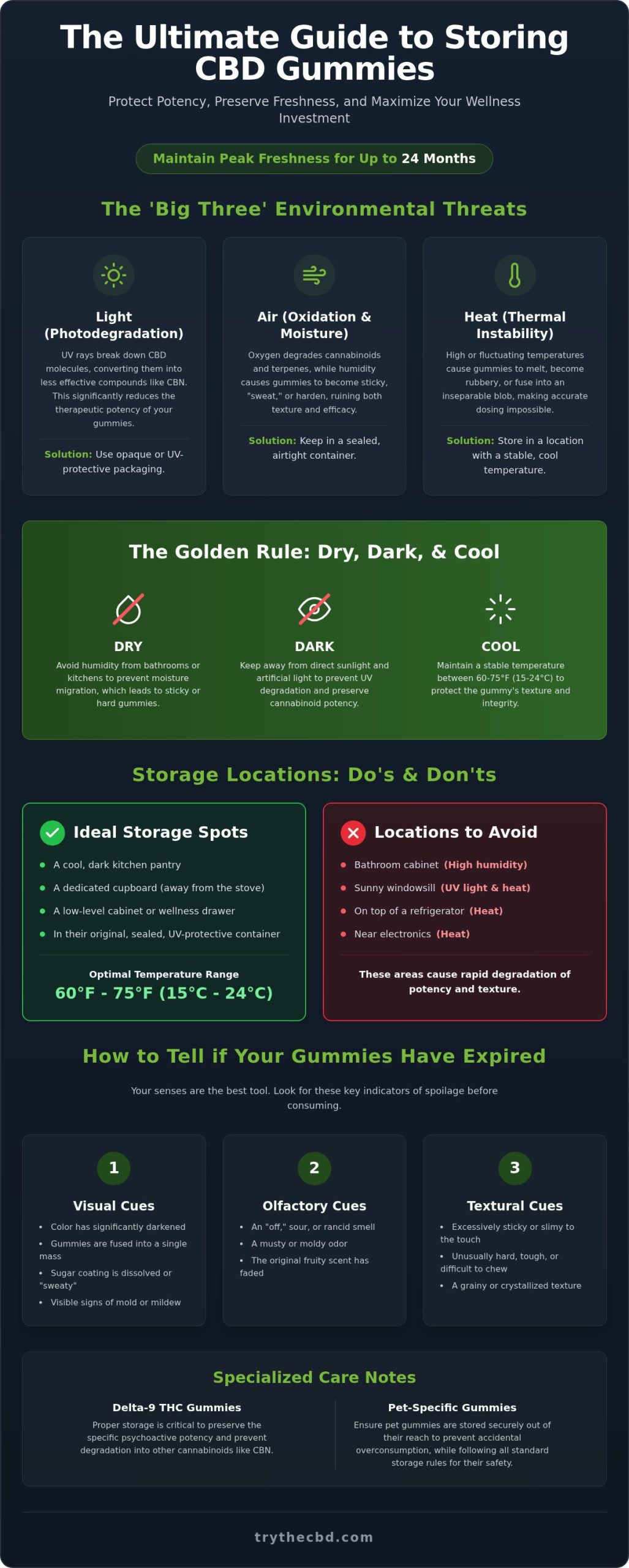
Understanding the shelf life of a cannabis edible requires looking past the printed date on the bottle. While industry standards for 2026 suggest a molecular shelf life of 12 to 18 months for premium hemp products, that timeline assumes ideal conditions. Your wellness supplements are constantly under siege from the “Big Three” environmental threats: light, air, and heat. If you want to master how to store cbd gummies, you must first understand the chemical reactions that occur when these elements are ignored.
Photodegradation is the primary cause of potency loss in edibles. When UV light penetrates a container, the light energy excites electrons within the CBD molecules, leading to molecular bond breakage. This process doesn’t just make the CBD disappear; it often converts it into CBN (cannabinol). While CBN is useful for sleep, it lacks the specific therapeutic profile you likely sought when purchasing your CBD gummies. Clear jars are the ultimate enemy because they offer no defense against these high-energy light waves.
Oxidation is the second major threat. This chemical reaction occurs when oxygen interacts with the hemp extract, slowly reducing the efficacy of the terpenes and minor cannabinoids. This leads to a diminished entourage effect, meaning your gummies won’t work as well as they did on day one. Finally, thermal instability ruins the physical experience. Fluctuating temperatures cause the gummy base to melt or become rubbery, often resulting in a single, inseparable blob at the bottom of the container.
UV Exposure and Cannabinoid Breakdown
Light energy is surprisingly destructive to organic compounds. Photodegradation occurs because UV rays carry enough energy to disrupt the stable bonds of the CBD molecule. When these bonds break, the chemical structure changes, and the potency drops. This is why professional providers use UV-protective or opaque packaging. If you’ve been keeping your gummies on a sunny windowsill, you’re essentially allowing the sun to “cook” the potency right out of your supplement.
Moisture Migration and Texture Loss
Air exposure triggers a process known as moisture migration, where water molecules either enter or leave the gummy matrix. In high-humidity environments, gummies can “sweat,” causing sugar coatings to dissolve and creating a breeding ground for spoilage. Conversely, in very dry air, the moisture inside the gummy evaporates, leaving it tough and hard to chew. Maintaining an airtight seal with a child-resistant lid is the most effective way to prevent this. These lids, which are now federally mandated as of 2026, serve a dual purpose: they keep the product safe from children and provide the moisture barrier necessary for long-term stability. Learning how to store cbd gummies properly ensures that the last gummy in the bottle is just as soft and effective as the first.
The Best Places to Store CBD Gummies for Maximum Freshness
Once you understand the chemical threats of light and air, the next step in mastering how to store cbd gummies is finding the perfect spot in your home. The industry gold standard is the “Dry, Dark, and Cool” rule. This means avoiding any area where humidity or temperature fluctuates wildly throughout the day. While it’s tempting to keep your wellness routine in the bathroom cabinet for convenience, the steam from your morning shower creates a high-moisture environment that invites mold and texture breakdown. Humidity is a silent killer for the structural integrity of a gummy.
Search for a kitchen pantry or a dedicated cupboard away from the stove instead. According to guidelines from the National Confectioners Association, jellied candies thrive when kept in moderate, stable conditions. You should also be wary of hidden “heat zones” that many people overlook. The top of a refrigerator, the space next to a gaming console or Wi-Fi router, and sunny windowsills can all reach temperatures that compromise the integrity of hemp extracts. Always keep your gummies in their original, UV-protective packaging to maintain that crucial light barrier provided by the manufacturer.
Ideal Household Storage Locations
Choosing a low-level kitchen cabinet or a dedicated wellness drawer works best because these areas remain insulated from rising heat. Aim to maintain a consistent temperature between 60°F and 75°F for the best results. If you’re just starting your journey, you can explore our premium CBD edibles collection to find products already sealed in airtight, light-blocking containers. Consistency is the goal here. If you can keep the environment stable, you’ve won half the battle in learning how to store cbd gummies effectively.
Travel and On-the-Go Protection
Taking your supplements on the road requires a bit more planning than home storage. If you’re commuting in the summer or taking a long flight, consider using an insulated pouch to shield your bottle from ambient heat. Cars are particularly dangerous; a vehicle’s interior can reach over 100°F in minutes, even on a mild day. Don’t leave your CBD in a hot glove box for more than 15 minutes if you want to avoid a melted mess. For those who travel frequently, it’s wise to browse our full range of products to find formats that might be even more resilient to temperature shifts during your adventures.
To Refrigerate or Not? The Cold Storage Debate for Edibles
Deciding whether to use the refrigerator often depends on your local climate and how quickly you consume your supply. While cold storage can technically slow the natural degradation of hemp extracts, the refrigerator introduces a specific set of risks that could inadvertently shorten the life of your product. It’s not always the better choice. If your home stays consistently below 75°F, a dark pantry is usually sufficient. However, for those living in high-heat regions, the fridge becomes a vital tool to prevent your supplements from merging into a single, sticky mass.
The primary drawback of refrigeration is the change in texture. Cold temperatures cause the gelatin or pectin to tighten, resulting in a gummy that feels unpleasantly hard or rubbery. More importantly, the transition from a cold fridge to a warm room creates condensation. If you open a chilled jar immediately, moisture from the air will settle on the gummies. This “sweating” creates a breeding ground for bacteria. To prevent this, follow the 20-minute rule: let your jar sit on the counter and acclimate to room temperature before you break the seal. This simple habit protects the internal environment of the container, aligning with professional FDA supplement storage regulations regarding moisture and temperature control.
Managing Condensation and Humidity
Moisture inside the jar is the leading cause of mold growth in pectin-based gummies. When you’re figuring out how to store cbd gummies in tropical or coastal areas, humidity is your constant opponent. You can combat this by keeping the silica gel packet that comes in the bottle; don’t throw it away. These small desiccant bags are specifically designed to pull excess moisture out of the air, keeping your gummies dry and preventing the sugar coating from dissolving into a murky syrup.
Freezing CBD Gummies: Is It Safe?
Freezing is generally safe for cannabinoid stability, but it often ruins the physical experience. Extreme cold can cause sugar crystallization, leaving your gummies with a gritty, unappealing crunch. We only recommend the freezer for long-term bulk storage of six months or more. If you’ve taken advantage of Try The CBD bundles to stock up for the year, freezing a portion of your supply can be a smart move. Just ensure they’re in an airtight, vacuum-sealed bag to prevent freezer burn. Once you’re ready to use them, move the bottle to the fridge for 24 hours, then to the counter, ensuring a slow and safe thaw that preserves the molecular integrity of the hemp extract. Mastering how to store cbd gummies for the long haul requires this kind of methodical patience.

How to Tell if Your CBD Gummies Have Expired
Even if you follow every protocol on how to store cbd gummies, no organic product lasts forever. Most high-quality gummies have a shelf life of 12 to 18 months, but environmental factors can accelerate this timeline. You should perform a quick audit of your supply every few months to ensure the active cannabinoids are still viable and the carrier ingredients haven’t spoiled. Safety and efficacy go hand in hand; consuming an expired product is rarely dangerous, but it’s certainly less effective for your wellness routine.
Visual cues are your first line of defense. A fresh gummy should have a consistent color and a slightly translucent or vibrant appearance. If you notice a significant darkening of the color, it’s often a sign of advanced oxidation. While a slight color shift is normal for natural extracts, a murky or cloudy look suggests the ingredients are breaking down. Look closely for any white, fuzzy spots or unusual crystalline structures. These aren’t sugar crystals; they’re often mold spores caused by moisture trapped inside the container. If you see mold, discard the entire bottle immediately.
Texture changes also provide vital clues. Fresh gummies are bouncy and easy to chew. When they reach the end of their life, they often become brittle and hard, or conversely, they may become excessively sticky and “weep” moisture. This change in the physical matrix often mirrors a loss in potency. If your usual daily serving no longer provides the calm or relief you expect, the CBD molecules have likely degraded into less effective compounds. This is why mastering how to store cbd gummies is so important for your long-term investment.
The Smell and Taste Test
Your nose is a powerful tool for quality control. It’s important to distinguish between the natural, grassy earthiness of hemp and a truly “off” scent. If you’ve read our guide on what does CBD stand for, you know that hemp contains complex terpenes that provide a specific aroma. However, a sour, metallic, or rotten smell indicates that the oils or flavorings have gone rancid. If the taste has shifted from pleasant fruit to something bitter or soapy, the product’s integrity is compromised.
Using COAs to Verify Product Freshness
The most accurate way to verify freshness is by checking the Certificate of Analysis (COA). Many brands hide this data, but Try The CBD prioritizes transparency by making third-party lab reports accessible for every batch. To verify your product, look for the batch number printed on the bottom or side of your bottle. You can then match this batch number to the corresponding online report to see exactly when the product was tested. This “Batch Date” is the true starting point for your gummy’s shelf life. Checking the COA ensures you aren’t buying a product that has already spent months sitting in a hot warehouse. If you want to ensure you’re getting the freshest possible extracts, you can browse our latest lab-tested CBD batches to start your routine with confidence.
Format-Specific Care: Delta-9, Pet Gummies, and High-Potency Edibles
While the fundamentals of light and temperature control apply to all hemp products, certain formulations require a more nuanced approach. If you’ve invested in high-potency formulas, specifically those containing 1000mg or more per bottle, the stakes are significantly higher. A small percentage of degradation in a high-concentration product results in a much larger loss of active milligrams compared to standard doses. Mastering how to store cbd gummies with these elevated profiles means being even more diligent about airtight seals and avoiding shared wellness cabinets where cross-contamination could occur.
Cross-contamination isn’t just about the cannabinoids; it’s also about the aromatics. Terpenes are volatile organic compounds that can migrate between containers if they aren’t sealed properly. Keeping your Delta-9, Broad Spectrum, and Pet-specific products in separate, clearly labeled zones prevents accidental ingestion and preserves the unique flavor profile of each batch. This organization is especially critical in 2026 households with children or pets, where safety must be the primary concern alongside potency preservation.
Preserving Delta-9 THC Potency
Delta-9 THC is notably more sensitive to thermal degradation than CBD. When exposed to heat, Delta-9 can convert into CBN much faster, which significantly alters the intended psychoactive and therapeutic effects. This is why Delta-9 gummies should never be placed near household electronics that vent heat, such as gaming consoles, Wi-Fi routers, or television sets. For a deeper look at the chemistry of these products, our What is Delta 9 guide explains how these molecules behave under current standards. Keep these edibles in the coolest part of your pantry to ensure the experience remains consistent from the first bite to the last.
Safety for Pet CBD Products
Storing supplements for your furry companions requires a different strategy. While human gummies often use fruit-based pectin, pet CBD products frequently incorporate animal-derived flavorings like salmon, bacon, or beef. These ingredients are highly attractive to animals and can spoil more rapidly if exposed to moisture or fluctuating temperatures. Always choose a “high-shelf” location that is completely inaccessible to curious paws. Accidental ingestion of a whole bottle can be distressing for an animal, so physical security is just as vital as environmental control. You can find more safety tips in our CBD for pets guide. Learning how to store cbd gummies for animals ensures their treats stay fresh, potent, and, most importantly, out of reach until it’s time for their scheduled dose.
Mastering Your Wellness Longevity
You now possess the scientific blueprint for preserving the molecular potency and physical texture of your hemp-derived supplements. Consistency is your greatest ally. By mastering how to store cbd gummies within a dry, dark, and cool environment, you shield delicate cannabinoid bonds from the destructive forces of UV light and oxidation. These simple habits ensure that every serving remains as effective as the first. Always prioritize transparency by utilizing batch-specific COAs to verify the age and purity of your extracts before they reach your cabinet.
If you’re ready to experience the difference that professional-grade sourcing makes, Shop Fresh, Lab-Tested CBD Gummies at Try The CBD. Our offerings are housed in airtight, UV-protective packaging and sourced from organic, high-altitude Colorado hemp to guarantee peak integrity. We take the guesswork out of freshness so you can focus on your personal journey toward well-being. Your commitment to quality deserves a product that stands the test of time.
Frequently Asked Questions
Can I store my CBD gummies in the freezer to make them last longer?
Freezing is a viable option for long-term bulk storage, but it isn’t ideal for daily use. While extreme cold preserves cannabinoid stability for over six months, it often causes sugar crystallization that creates a gritty, unpleasant texture. If you choose this method, ensure the container is vacuum-sealed to prevent freezer burn and allow for a slow thaw in the refrigerator before opening the jar.
What happens if my CBD gummies melt into one big blob?
Your gummies remain safe to consume if they melt, but the precision of your serving size is compromised. When the gelatin or pectin matrix loses its structure, the infused hemp extract may no longer be evenly distributed throughout the mass. We don’t recommend trying to cut a melted block into smaller pieces; instead, focus on prevention by keeping your supply in a temperature-controlled environment away from heat sources.
Is it okay to leave CBD gummies in my car during the day?
You should never leave your supplements in a vehicle, as interior temperatures can exceed 100°F within minutes. This rapid heat gain is the most common reason people search for how to store cbd gummies after finding a melted mess in their glove box. High heat causes immediate texture failure and accelerates the chemical conversion of CBD into less effective cannabinoids like CBN, which reduces the therapeutic value of your investment.
How long do CBD gummies stay fresh after the seal is broken?
Once the airtight seal is broken, most gummies stay fresh for approximately 6 to 9 months if you maintain a stable environment. Introducing oxygen and ambient humidity starts a countdown for both the hemp extract and the food-grade ingredients. Learning how to store cbd gummies by tightening the child-resistant lid after every single use is the simplest way to reach the full 18-month potential of the product.
Do sugar-free CBD gummies spoil faster than regular ones?
Sugar-free formulations can be more sensitive to environmental changes because alternative sweeteners like maltitol or erythritol are often highly hygroscopic. These ingredients attract moisture from the air more aggressively than traditional cane sugar, which can lead to a sticky texture or “sweating” in the jar. If you use sugar-free options, staying diligent about moisture control and using silica desiccant packets is even more important for maintaining quality.
Can I eat CBD gummies that have changed color over time?
A slight darkening of the gummy is usually a sign of natural oxidation and is generally safe to consume. However, if the color change is accompanied by a murky appearance or visible fuzzy spots, the product has likely spoiled. Trust your senses; if the vibrant hue has turned dull and the aroma has shifted from fruity to sour or metallic, the integrity of the hemp extract is gone.
Why did my gummies get hard and difficult to chew?
Hardening is typically the result of moisture migration where the water content in the gummy matrix evaporates into the air. This happens when the container isn’t sealed properly or is stored in an excessively dry area like a cupboard near a heater. While the CBD potency might still be intact, the physical experience becomes unpleasant. You can prevent this by ensuring the child-resistant lid is fully engaged after every serving.
Should I keep the original box my gummies came in?
Retaining the original outer packaging is a smart move for an extra layer of UV protection. Even if the jar is made of amber or opaque plastic, the box acts as a secondary barrier against light-induced degradation and minor temperature shifts. It also keeps all the batch-specific information and QR codes for your Certificates of Analysis easily accessible for your future reference and peace of mind.
