

What if the three letters you see on every corner aren’t a shortcut to a “high,” but a gateway to botanical balance? It’s easy to feel lost in a sea of industry jargon and conflicting legal updates, especially with new federal regulations shifting the industry in November 2026. You want natural, reliable solutions for your wellness routine, but you don’t want to worry about safety or accidental intoxication. We understand that transparency is the only way to build real trust in this growing market as it moves toward stricter THC limits.
This guide clarifies exactly what does cbd stand for and provides the technical “why” behind its interaction with your body. Our goal is to act as a knowledgeable facilitator, helping you understand the scientific meaning of cannabidiol and how it differs from THC. You’ll gain the tools to identify high-quality hemp products that prioritize purity and rigorous testing standards. We’re moving from broad curiosity to specific evidence of quality so you can feel confident in your personal journey toward well-being and steady lifestyle enhancement.
Key Takeaways
- Understand that what does cbd stand for is just the beginning; it represents cannabidiol, a non-intoxicating compound derived from hemp that supports your body’s natural balance.
- Explore the technical “how” of the Endocannabinoid System, the internal regulatory network that allows CBD to mimic natural compounds and maintain homeostasis.
- Distinguish between the physiological effects of CBD and THC to ensure you can enjoy the benefits of botanical wellness without the fear of an unwanted “high.”
- Gain confidence in navigating the legal landscape by learning why industrial hemp is the only legal source for domestic products under the 2018 Farm Bill.
- Identify the best delivery methods for your specific goals, whether you’re prioritizing sleep, physical recovery, or daily wellness through meticulous sourcing.
What Does CBD Stand For? Decoding the Acronym and Its Origins
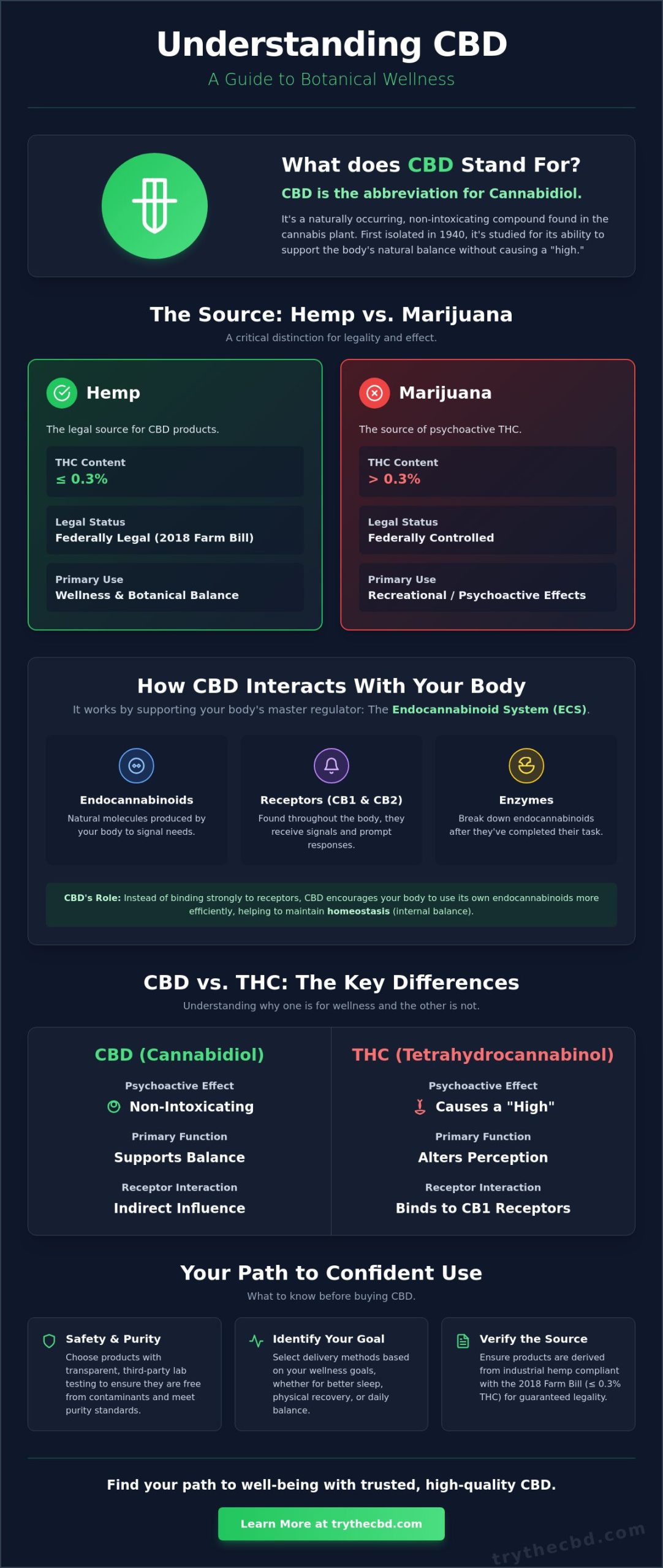
To understand the modern hemp industry, we must first answer the fundamental question: what does cbd stand for? CBD is the abbreviation for cannabidiol, a naturally occurring compound found within the resinous flowers of the cannabis plant. While its popularity has surged in the last decade, Cannabidiol was actually first isolated by American chemist Roger Adams in 1940. This discovery predates the identification of THC by more than twenty years. It shows that science has been studying these botanical secrets for a long time, even if the public is just now catching up. Knowing what does cbd stand for helps demystify the product and separates scientific fact from marketing hype.
The Etymology of Cannabidiol
The word cannabidiol is more than just a name; it describes the molecule’s very structure. The prefix “canna” links it to the genus Cannabis, while the suffix “diol” tells us it’s an organic compound containing two hydroxyl groups. We classify it as a phytocannabinoid, which simply means it’s a cannabinoid produced by a plant rather than one created inside a human or animal body. Cannabidiol is a non-intoxicating compound found primarily in the hemp plant. By focusing on these specific plant-based origins, we can ensure that the extracts used in wellness routines meet high standards for purity and natural integrity.
Hemp vs. Marijuana: Clearing the Botanical Confusion
Many people find themselves overwhelmed by the distinction between hemp and marijuana. While they share the same genus, they’re legally and chemically different. The 2018 Farm Bill established a clear boundary; hemp is defined as any Cannabis sativa plant that contains 0.3% or less THC on a dry weight basis. Anything above that threshold is legally considered marijuana. This strict limit is why industrial hemp is the only legal source for domestic production of pure cbd oil. It’s a botanical difference that carries significant legal weight.
Choosing hemp-derived products allows you to access the beneficial properties of the plant without the psychoactive effects associated with marijuana. The market has moved away from the old stigma, replacing it with a focus on agriculture and holistic health. Today, we view these plants as reliable solutions for lifestyle enhancement rather than substances to fear. By distinguishing between these varieties, you can feel confident that your wellness routine is built on a foundation of safety and legal compliance. We prioritize this transparency because it establishes a partnership in your journey toward better health. It’s about being meticulous with the details so you don’t have to worry about the results.
The Science of Cannabidiol: How CBD Interacts With Your Body
Once we clarify what does cbd stand for, the next logical question involves how it actually functions within the human frame. It isn’t just a passive substance. Instead, it engages with a complex internal network called the Endocannabinoid System (ECS). This system exists in all mammals and acts as a master regulator for critical functions like sleep, mood, appetite, and physical recovery. By supporting this network, cannabidiol helps your body maintain a state of homeostasis, which is the scientific term for internal balance. Understanding this process is vital for anyone looking to integrate botanical solutions into their daily routine.
Understanding the Endocannabinoid System (ECS)
The ECS relies on three primary pillars to function effectively. These components work in harmony to monitor your body’s internal environment and make adjustments as needed. The pillars include:
- Endocannabinoids: These are molecules produced naturally by your body that signal various systems to take action.
- Receptors: Found throughout the body, specifically CB1 (mostly in the central nervous system) and CB2 (mostly in the peripheral organs and immune cells).
- Enzymes: These biological catalysts break down endocannabinoids once they’ve fulfilled their purpose.
While we’ve established what does cbd stand for, it’s vital to recognize that CBD doesn’t just flood these receptors. It encourages the body to use its own endocannabinoids more efficiently, acting as a steady hand for your internal chemistry.
Receptor Interaction: Why CBD Doesn’t Cause a High
Think of receptors as locks and cannabinoids as keys. THC is a key that fits perfectly into the CB1 “lock” in the brain, triggering the well-known psychoactive high. CBD interacts with these locks differently. It doesn’t bind directly to the CB1 receptor in the same way, which is the primary reason it doesn’t cause intoxication. CBD does not produce impairment because it does not bind to CB1 receptors in the brain.
This biological distinction is a cornerstone of the Safety and legality of CBD as we understand it today. Because it supports the system from the sidelines rather than overwhelming it, you can experience relief without mental fog. The effectiveness of this interaction often depends on how you introduce the compound to your system. Whether you prefer the fast acting nature of tinctures or the sustained release of edibles, choosing the right format is key to your wellness journey. You can explore a variety of natural CBD options to find the delivery method that best supports your specific lifestyle goals.
CBD vs. THC: Navigating the Key Differences in 2026
While we’ve established what does cbd stand for, it’s impossible to fully grasp its role in wellness without comparing it to its famous sibling, THC (tetrahydrocannabinol). Both are cannabinoids, yet they behave like opposites once they enter your system. They actually share the exact same molecular formula: 21 carbon atoms, 30 hydrogen atoms, and 2 oxygen atoms. A microscopic difference in how those atoms are arranged determines whether a compound will cloud your mind or support your balance. This structural nuance is why understanding what does cbd stand for is so vital for the modern consumer who values mental clarity.
Many researchers believe that cannabinoids work most effectively when they aren’t isolated. This synergy is known as the “Entourage Effect,” where terpenes and minor cannabinoids boost the overall impact of the extract. For those who want to experience the plant’s full botanical potential, full spectrum cbd oil offers the complete array of these compounds. The science of cannabidiol suggests that these trace elements can enhance the wellness benefits of the primary compound, providing a more robust experience than purified alternatives.
Psychoactivity and the ‘High’ Factor
The primary concern for many new users is the fear of feeling “high.” THC is psychoactive and binds directly with receptors in the brain to create an intoxicating effect. CBD is non-intoxicating, meaning it doesn’t impair your cognitive function or daily productivity. This is why many people prefer using cbd drops for daytime focus and recovery. By law, hemp-derived products must contain 0.3% or less THC, a threshold designed to ensure the product remains non-intoxicating while still allowing for the benefits of the whole plant.
Full Spectrum, Broad Spectrum, and Isolate Explained
Choosing the right cannabinoid profile depends on your personal comfort level and wellness goals. We categorize these profiles into three main types to help you make an informed decision:
- Full Spectrum: Contains the complete range of cannabinoids, terpenes, and essential oils found in the hemp plant, including the legal trace amount of THC.
- Broad Spectrum: Includes all the beneficial plant compounds and cannabinoids but undergoes an extra step to filter out the THC entirely.
- CBD Isolate: The purest form of the compound, refined into a crystalline powder that is 99% or more pure cannabidiol with no other plant parts.
By selecting the profile that aligns with your needs, you can tailor your wellness routine with precision. We act as a steady hand in this specialized market, ensuring that every extract meets rigorous standards for consistency. Whether you choose the complex profile of a full spectrum oil or the simplicity of an isolate, the goal remains the same: a natural, reliable solution for your lifestyle enhancement.

Safety, Legality, and Quality: What You Need to Know Before Buying
Understanding what does cbd stand for is only half the battle; knowing where it comes from is just as critical for your safety. The 2018 Farm Bill serves as the cornerstone of hemp legality in the United States. This legislation removed hemp from the Controlled Substances Act, provided the plant contains 0.3% or less THC. Because of this, industrial hemp became the only legal source for domestic CBD sales. We prioritize sourcing from high-quality farms to ensure our hemp cbd oil meets the strictest extraction standards in the industry today. By learning what does cbd stand for in terms of quality standards, you protect yourself from low-grade alternatives that lack proper oversight.
Quality control doesn’t stop at the farm. Third-party lab testing acts as a trusted guardian between the manufacturer and your home. Without these tests, you have no way of knowing if the concentration on the label matches what is inside the bottle. Transparency is non-negotiable when it comes to your health. A brand that hides its lab results is a brand that doesn’t respect the intelligence of its audience.
How to Read a Certificate of Analysis (COA)
A Certificate of Analysis is your primary tool for verification. A COA is a document from an accredited lab that verifies the label’s accuracy. You should always look for three main data points: cannabinoid potency, the presence of heavy metals, and residual solvents from the extraction process. If a brand cannot or will not provide a recent COA for their batch, it’s best to look elsewhere. This meticulous attention to detail ensures that your path to wellness isn’t compromised by hidden contaminants or inaccurate dosing.
Potential Side Effects and Interactions
While generally well-tolerated, some users may experience mild side effects. These can include dry mouth, changes in appetite, or slight drowsiness. It’s also important to be aware of the “Grapefruit Rule.” Like grapefruit, CBD can interfere with how your liver metabolizes certain prescription pharmaceuticals. If your medication has a warning about grapefruit, consult your doctor before starting a CBD routine. Sourcing from organic, non-GMO hemp significantly reduces the risk of exposure to pesticides and heavy metals that the hemp plant naturally absorbs from the soil. We believe in providing natural, reliable solutions that you can trust.
You can browse our rigorously tested CBD products to ensure your wellness routine starts with a foundation of integrity and safety.
Finding Your Path to Wellness: Choosing the Right CBD Product
We invite you to consider your specific wellness objectives before making a final selection. Whether you seek improved sleep or physical recovery, understanding what does cbd stand for in a practical sense means matching the compound to your lifestyle. It’s often best to start with a lower concentration and gradually adjust based on your body’s feedback. This steady progression ensures you achieve the desired results while maintaining full control over your experience. By listening to your body, you transform a simple supplement into a personalized tool for homeostasis.
The quality of your experience depends heavily on the origins of the hemp. We prioritize high-altitude, Colorado-grown hemp because the unique climate produces superior cannabinoid profiles. This meticulous sourcing is paired with CO2 extraction, a clean method that ensures your final product is pure and free of harsh solvents. We act as a bridge between these complex production processes and your daily routine, providing the technical “why” behind every bottle we produce. When you know what does cbd stand for in terms of rigorous standards, you can feel confident in its reliability.
Matching CBD Formats to Your Lifestyle
Different delivery methods offer unique benefits depending on how quickly you need results and how long you want them to last. We offer several formats to suit your preferences:
- Tinctures: CBD oils and tinctures are fast-acting and provide the most flexibility. They’re easy to customize for precise dosing, making them a staple for those who want to fine-tune their intake.
- Edibles: CBD Edibles offer a familiar and convenient format. They provide long-lasting effects as the compound is released slowly through the digestive system.
- Topicals: CBD Topicals provide targeted support for specific areas of the body. They’re ideal for physical recovery and direct application without entering the bloodstream.
The Try The CBD Commitment to Transparency
We believe that trust is earned through verification and consistency. Our commitment to transparency starts with our choice of Colorado-grown hemp and extends to our meticulous extraction methods. We don’t just sell products; we offer natural, reliable solutions for lifestyle enhancement. If you’re new to this journey, our CBD bundles are the ideal starting point. They allow you to explore different formats at a structured pace, helping you discover the most effective path toward your personal well-being. We’re here to serve as your steady hand in a specialized market, ensuring every step of your journey is supported by expertise.
Empower Your Wellness with Botanical Precision
You’ve moved beyond the basic question of what does cbd stand for to gain a technical understanding of how cannabidiol supports your body’s internal harmony. By exploring the science of the endocannabinoid system and the critical differences between hemp and marijuana, you’re now equipped to make informed decisions for your health. True wellness is a partnership between nature and science, requiring a commitment to meticulous standards and verified results at every stage of production.
We invite you to experience the difference that integrity makes in every bottle. Our offerings feature premium Colorado-grown hemp and utilize CO2 extraction for maximum purity, ensuring a clean and solvent-free final extract. Every batch is third-party lab tested with COAs available to guarantee the transparency you deserve. Explore our curated selection of premium CBD products and start your wellness journey today. Your path to a more balanced lifestyle is just beginning, and we’re honored to act as your steady hand in this specialized market. Stay consistent with your routine and trust in the natural power of high-quality botanicals.
Frequently Asked Questions
Is CBD the same as marijuana?
No, CBD is not the same as marijuana. While both originate from the Cannabis sativa family, they’re legally and chemically distinct varieties. Marijuana contains high levels of THC, whereas the CBD used in wellness products is extracted from industrial hemp. This botanical distinction is critical for legal compliance and ensures the product remains non-intoxicating.
Will taking CBD make me feel high?
Taking CBD will not make you feel high. It lacks the psychoactive properties found in THC, so it doesn’t impair your cognitive functions or daily productivity. Most users report a sense of calm or relaxation rather than a change in their mental state. It’s a reliable solution for those who want botanical support without any intoxicating effects.
Does CBD show up on a drug test?
Standard drug tests typically target THC metabolites rather than CBD itself. However, full-spectrum products contain trace amounts of THC that could potentially cause a positive result on a sensitive test. If you face regular testing, we suggest choosing a broad-spectrum or isolate product to minimize this risk. Always check the third-party lab results for complete transparency before use.
Is CBD legal in the United States?
Yes, hemp-derived CBD is federally legal in the United States under the 2018 Farm Bill. This law requires the plant to contain no more than 0.3% THC on a dry weight basis. While federal law is clear, some states have specific restrictions, so it’s wise to check your local regulations before purchasing any hemp-derived products.
What is the difference between CBD and hemp oil?
CBD oil and hemp seed oil are different products with different purposes. CBD oil is extracted from the entire hemp plant to capture its active cannabinoids. Hemp seed oil is pressed from the seeds alone and is primarily used for its nutritional value and healthy fats. When you ask what does cbd stand for, you’re looking for the active botanical compound found in the plant’s resinous flowers.
Can I give CBD to my pets?
You can give CBD to your pets because all mammals possess an endocannabinoid system. We provide specialized formulations designed specifically for animals to ensure the serving sizes are appropriate and safe for their smaller frames. It’s an excellent way to support your pet’s wellness journey, but we recommend consulting with a veterinarian before starting any new supplement.
How much CBD should I take for the first time?
We recommend starting with a low dose of approximately 10 to 20 milligrams for your first experience. This allows you to observe how your body responds before gradually increasing the amount over several days. Finding your ideal serving size is a personal process that requires a steady hand and a little patience to achieve the best results.
What is the most effective way to take CBD?
The most effective method depends on your lifestyle and specific wellness goals. Sublingual tinctures offer fast absorption into the bloodstream, while edibles provide a convenient, long-lasting effect throughout the day. When you understand what does cbd stand for and how it interacts with your body, you can choose the format that best fits your personal daily rhythm.
