

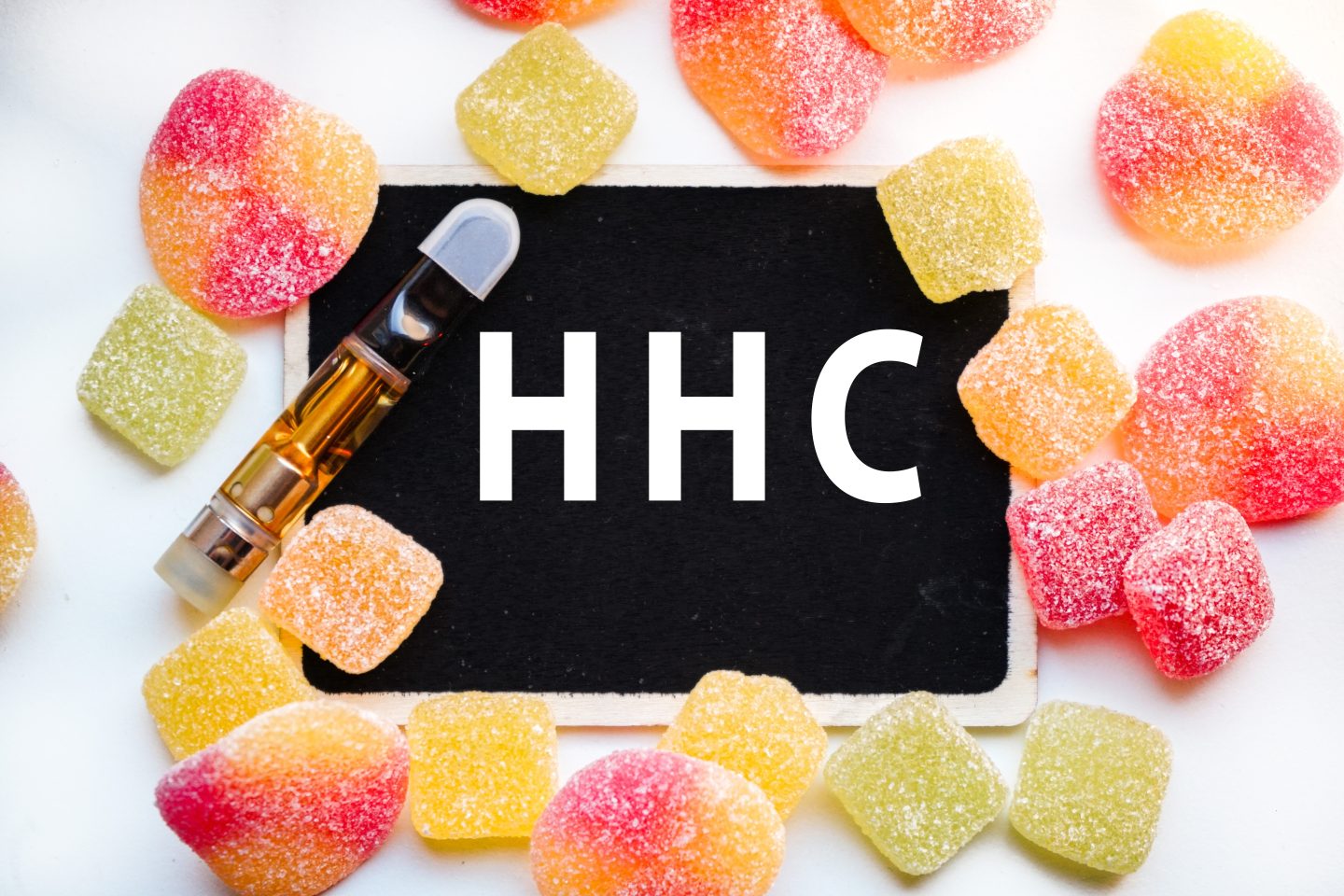
The DEA’s new Schedule I drug code for hexahydrocannabinol takes effect today, with no public comment period. The agency says HHC was always illegal. Cannabis attorneys say the rule may not survive a court challenge. And the bigger fight over hemp-derived cannabinoids is six months from a federal cliff.
The Drug Enforcement Administration finally came for hexahydrocannabinol.
In a final rule Updated today in the Federal Register, the DEA gave HHC its own specific listing in Schedule I of the Controlled Substances Act, complete with a brand new drug code: 7220. The rule takes effect immediately, with no notice-and-comment period. The DEA called it a “technical amendment.”
The technical framing matters. The DEA’s position is that HHC has been illegal all along, controlled under the broader Schedule I umbrella for tetrahydrocannabinols (drug code 7370). The new code just gives the agency a sharper administrative tool: production quotas, enforcement clarity and a cleaner line of sight on every manufacturer touching the molecule.
For the gas-station and smoke-shop economy that has built itself on HHC vapes, gummies and pre-rolls over the past three years, the rule is the loudest signal yet that the federal government considers their inventory illegal.
How HHC became the loophole
HHC exists in cannabis only in trace amounts. Almost everything sold under the HHC label is made in a lab by hydrogenating CBD, the same process used to convert vegetable oil into margarine. The result is a cannabinoid that produces effects similar to delta-9 THC, but one that operators have argued falls under the 2018 Farm Bill’s definition of legal hemp because it starts from a hemp-derived input.
The DEA has rejected that argument for years. In a February 2023 letter, Terrence Boos, chief of the agency’s Drug and Chemical Evaluation Section, wrote that HHC “does not occur naturally in the cannabis plant and can only be obtained synthetically, and therefore does not fall under the definition of hemp.” The new rule restates that position with regulatory force.
“Tetrahydrocannabinols produced through chemical conversion, even when hemp derived are considered synthetically produced for purposes of the CSA, do not qualify as ‘tetrahydrocannabinols in hemp’ under the AIA.”
The DEA, in the Federal Register filing, May 4, 2026
The courts have already disagreed
The DEA’s reading of the Farm Bill is not the final word, and federal courts have repeatedly said so. In AK Futures LLC v. Boyd Street Distro, LLC, the Ninth Circuit ruled that delta-8 THC qualifies as legal hemp under the plain text of the Farm Bill. In Anderson v. Diamondback Investment Group, LLC, the Fourth Circuit reached a similar conclusion on hemp-derived cannabinoids produced through conversion.
Cannabis attorney Paula Savchenko, founding partner at Cannacore Group and PS Law Group, told High Times the new rule is on shaky legal ground.
“The rule is vulnerable to challenge because it conflicts with recent appellate decisions such as AK Futures and Anderson v. Diamondback, which interpret the Farm Bill to include hemp-derived cannabinoids even if converted.”
Paula Savchenko, Cannacore Group / PS Law Group
Savchenko also flagged the procedural angle. The DEA bypassed the standard notice-and-comment rulemaking process, calling the rule a technical amendment. She said the agency may have “exceeded DEA authority, particularly after Loper Bright Enterprises v. Raimondo eliminated Chevron deference, by functioning as a substantive rule change without proper Administrative Procedure Act procedures.”
Translation: the same Supreme Court ruling that gutted federal agencies’ interpretive authority last year may give HHC operators a real opening to challenge the rule in court.
The HHC loophole, on borrowed time
From the Farm Bill that opened the door to the federal moves now closing it.
December 2018
Farm Bill legalizes hemp and its derivatives with under 0.3% delta-9 THC. The grey market is born.
2020 onward
HHC, delta-8, THC-O and other hemp-derived cannabinoids spread across smoke shops, gas stations and online.
February 2023
The DEA’s Terrence Boos writes that HHC “does not occur naturally in the cannabis plant” and is therefore not legal hemp.
2024
Federal appeals courts rule that delta-8 THC and other converted hemp cannabinoids qualify as legal hemp under the Farm Bill, contradicting the DEA. Supreme Court eliminates Chevron deference in Loper Bright.
March 2025
UN Commission on Narcotic Drugs schedules HHC under the 1971 Convention. The U.S. abstains from the vote.
May 4, 2026 (today)
The DEA gives HHC its own Schedule I drug code (7220), effective immediately. No public comment period.
November 12, 2026
Federal hemp THC cap of 0.4 mg per container takes effect, unless Congress delays it.
State law is a separate question
The federal rule does not preempt state law. Several states have either expressly permitted HHC or declined to prohibit it, and intrastate activity within those states does not automatically become illegal under the new federal listing.
Savchenko was clear about the limits of that protection: “HHC may still be permitted under the laws of certain states that have permitted it or not expressly prohibited it; however, such legality is limited to intrastate activity and does not mitigate the heightened risk of federal enforcement or restrictions on interstate commerce.”
The interstate commerce piece is the bigger near-term consequence. Brands that ship HHC across state lines, manufacturers that source from out-of-state, distributors that move product through national logistics networks, all of them now face heightened federal exposure regardless of what the destination state allows.
The cliff is six months out
Today’s rule lands inside a much larger reshuffling of federal cannabis policy.
Buried in the spending bill President Donald Trump signed late last year is a provision that will redefine federal hemp on November 12, 2026. After that date, the only legal hemp products will be those containing no more than 0.4 milligrams of total THC per container. Most of the hemp-derived cannabinoid market as currently constituted, including the delta-8 and THC-O products federal courts have ruled are legal, would not survive that cap. Some lawmakers are pushing to delay the effective date. Whether they succeed is open.
At the same time, the Trump administration last week announced steps to formally reschedule marijuana under the Controlled Substances Act, picking up the long-stalled process initiated under the previous administration. If rescheduling moves forward, plant-touching state-licensed operators get a tax break under 280E and a clearer path to banking. Smoke-shop hemp-cannabinoid operators get nothing of the sort. The federal cannabis industry is splitting into two tracks: regulated state-licensed operators on one side, the hemp grey market on the other, with very different regulatory weather coming for each.
HHC is the canary. The DEA’s new drug code is the first move in a coordinated federal squeeze on the hemp loophole, with the November 12 cliff coming behind it.
For now, smoke shops still have shelves of HHC product in stock. Manufacturers still have inventory in the pipeline. Cannabis attorneys are already drafting the legal challenges. The grey market keeps moving until somebody stops it. Today, somebody started.
