

The drug’s history of healing and experimentation stretches from ancient China to American counterculture — yet its promise remains trapped in a legal straitjacket.
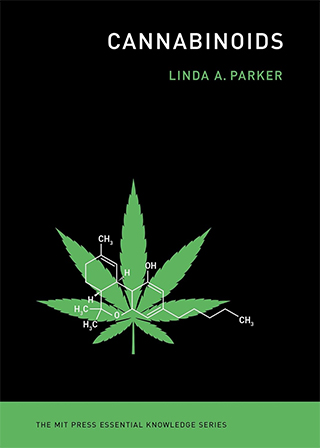
This article is adapted from The MIT Press Reader and reprinted with permission. It is adapted from Cannabinoids by Linda A. Parker, published by MIT Press.
An altered state of consciousness, euphoria, relaxation, increased enjoyment of food tastes and aromas, distortion in time perception, joviality, introspection, and a heightened sense of creativity: These are some of the reported “psychoactive effects” often experienced by cannabis users, and they are the same effects that the drug has had on people throughout the arc of human history.
The earliest evidence of cannabis cultivation dates to over 10,000 years ago in modern-day China, Mongolia, and Kazakhstan. It was likely used primarily as a fiber (for making ropes, nets, and other textiles), as a food (for protein from hemp seeds), and as a ritualistic drug (for ceremonial or psychoactive use).
But the systematic medicinal applications of cannabis for treating numerous pathologies were not documented until thousands of years later. The earliest of such applications we know of began with the legendary Emperor Shen Nung (2700 BCE), a quasi-legendary figure known as the “father” of Chinese medicine. He is said to have taught Chinese people to practice agriculture, cultivating not only cereals and tea, but also cannabis, which he apparently saw as an alternative to magic in fighting disease.
The first known Chinese pharmacopoeia — the “Shen Nung Pen Ts’ao Ching,” written in the first century BCE — lists all the traditional remedies that have been handed down orally for over 2,000 years, dating back to the mythical Emperor Shen Nung’s reign. In it, a concoction of female cannabis flowers was prescribed for all conditions associated with pain, constipation, malaria, and gynecological disorders. It was considered a safe, highly effective herb. In this ancient text, there is limited reference to psychoactive properties, except that too much cannabis could cause the person to “see demons” and allow a person to “communicate with the spirits.” It is likely that the psychoactive use of cannabis was limited to shamans at the time. However, by the time of the Shang dynasty, which placed restrictions on practices such as divination and ritual healing, many shamans had begun to leave China for India.
Most effects of cannabis that are only now being studied have been known throughout human history.
In ancient India, cannabis use spread rapidly as a source of drug-induced elation and was commonly used in religious rituals, as is reported in the sacred text “Atharva Veda,” an ancient collection of holy writings (around 2,000 BCE). The sacred bhanga, as the drug was called, was considered the optimal treatment for anxiety and was used to treat pain, produce anesthesia, reduce spasms and convulsions, and induce hunger. By around 800 BCE, cannabis was used for its intoxicating and therapeutic effects in Assyria and in ancient Persia, as well as in medieval Arab societies.
Despite cannabis’s long and widespread history of recreational use, it would take many, many millennia for the plant to come under official scientific scrutiny.
The first to study its pharmacological and toxicological properties was Irish chemist and physician William Brooke O’Shaughnessy, who researched the drug’s use in India from 1833 to 1840. After conducting a series of human and animal experiments to explore the drug’s therapeutic effects on pain, rheumatism, and convulsions, he brought his findings back to the European medical community. O’Shaughnessy concluded that cannabis was a useful analgesic, muscle relaxer, and the most useful treatment known for convulsions.
O’Shaughnessy was not alone: French psychiatrist Jacques-Joseph Moreau introduced cannabis to Europeans in the mid-1800s as a psychoactive drug based on observations made during travel in the Middle East. He used the scientific method to detail the drug’s psychoactive effects, which he believed offered a way for psychiatrists to better understand mental illness. Soon enough, in Paris, the drug’s psychotropic use extended beyond the therapeutic; numerous artists, such as Victor Hugo, Alexandre Dumas, and Charles Baudelaire, wanted to try cannabis. During monthly meetings, Moreau dispensed dawamesk (a mixture of hashish, cinnamon, cloves, nutmeg, pistachio, sugar, orange juice, butter, and cantharides) to eminent people who had assembled to ingest the drug.
“There are two modes of existence — two modes of life — given to man,” Moreau mused. “The first one results from our communication with the external world, with the universe. The second one is but the reflection of the self and is fed from its own distinct internal sources. The dream is an in-between land where the external life ends, and the internal life begins.”
With the aid of hashish, he felt that anyone could enter this in-between land at will. As Moreau studied hashish, he noted a relationship between the amount of the drug taken and its effects. A small dose produced a sense of euphoria and calm. With higher doses, however, attention wandered, ideas appeared at random, minutes seemed like hours, thoughts rushed together, and sensory acuity increased. As the dose increased further, dreams began to flood the brain, like hallucinations of insanity. Indeed, it is now understood that cannabinoids exhibit biphasic effects, in which low doses produce the opposite effects of high ones.
By the early 20th century, cannabis had become well-known throughout the world. It was the drug of choice for many early jazz musicians, such as Louis Armstrong, as well as reggae artists like Bob Marley. In the beatnik community, writers such as Jack Kerouac and Allen Ginsberg used it for creative inspiration. And by the ’60s, cannabis had become what some might consider the symbol of American counterculture.
A timeline of cannabis history
10,000 BCE
Earliest cultivation
China, Mongolia and Kazakhstan. Used as fiber, food and ritual drug.
2700 BCE
Emperor Shen Nung
First documented medicinal use in Chinese medicine. Prescribed for pain, malaria and gynecological disorders.
2000 BCE
Ancient India
Referenced in the Atharva Veda as treatment for anxiety, pain, spasms and appetite.
1833–1840
O’Shaughnessy
First Western pharmacological research. Cannabis concluded effective for pain, convulsions and muscle spasm.
1850s
Paris hashish club
Moreau introduces cannabis to Europe. Victor Hugo, Dumas and Baudelaire among those who participate.
1937
Marihuana Tax Act
Anslinger’s moral panic makes cannabis research cost-prohibitive. AMA appeals are ignored.
1961
Single Convention on Narcotic Drugs
International treaty places cannabis in Schedule I. Research restrictions go global.
2020
FDA approves CBD for epilepsy
42 years after it was first shown effective in clinical trials. The ancient world knew this centuries earlier.
Today, most of the effects of cannabis that are only now being studied are hardly new. For instance, it has been known for centuries that the drug is effective in treating seizures. We now know that CBD is the constituent of cannabis responsible for this effect. CBD was approved for the treatment of childhood epilepsy by the Federal Drug Administration (FDA) in the United States in 2020, yet it was shown in early clinical trials to be effective in treating epilepsy as early as 1978. Why has it taken so long to determine how this drug produces its effects? Prohibition, at least in America, has played a major role.
The fall of medicinal cannabis research — fueled by those like O’Shaughnessy and Moreau — came in 1937 with the enactment of the Marihuana Tax Act. Thanks in part to a moral panic stoked by Harry Anslinger, then the supervisor of the Federal Bureau of Narcotics, cannabis was made too cost-prohibitive and legally risky to research, despite appeals from the American Medical Association. In 1941, the drug was altogether removed from the United States Pharmacopeia-National Formulary, which helped shift public perception away from thinking of cannabis as a medicine.
Then came perhaps the largest setback: In 1961, an international treaty called the Single Convention on Narcotic Drugs placed psychoactive substances into four schedules. Schedule I, the most restrictive, contained drugs viewed to be particularly dangerous for abuse with little therapeutic value. At a subsequent 1971 UN Convention on Psychotropic Substances, the cannabis plant, its resin, extracts, and tinctures were all placed in Schedule I, which prohibited all use except for scientific purposes and very limited medical purposes by duly authorized persons. Phytocannabinoids other than THC (such as CBD) were excluded from this control by many countries, such as Britain. But the United States and Canada chose to restrict any constituent of cannabis under the same restrictive schedule as THC.
Cannabis is a drug worth studying, rather than one we should put in a legal straitjacket.
Since then, restricted access to cannabis and its constituents in America has had a negative impact on the scientific world and beyond. We could have spent decades conducting experiments on cannabis as a drug of both abuse and therapy, the results of which might have greatly informed the legalization of cannabis in several U.S. states. Indeed, well-powered, placebo-controlled investigations are still critically needed to disentangle pharmacologic efficacy from expectation.
However, these studies have been nearly impossible to conduct, partially because of the U.S. Drug Enforcement Agency’s (DEA’s) Schedule I labeling of the cannabis plant and its constituents. Removal of research barriers like this is currently under active discussion. Many lawmakers have suggested that cannabis should be descheduled and decriminalized entirely.
Whatever the case may be, thousands of years of history show us that cannabis is a drug worth studying, rather than one we should put in a legal straitjacket. We have merely scratched the surface of this drug’s potential for harm and good. Going forward, only quality science, with data that helps us assess the drug’s societal risks and benefits, will allow us to make responsible decisions about its use.
Linda A. Parker is University Faculty Emeritus and the former Canada Research Chair in Behavioral Neuroscience at the University of Guelph, Ontario, Canada. She has published over 200 scientific articles and written several books, including “Cannabinoids,” from which this article is adapted.
This article was originally published by The MIT Press Reader and is reprinted with permission.
