

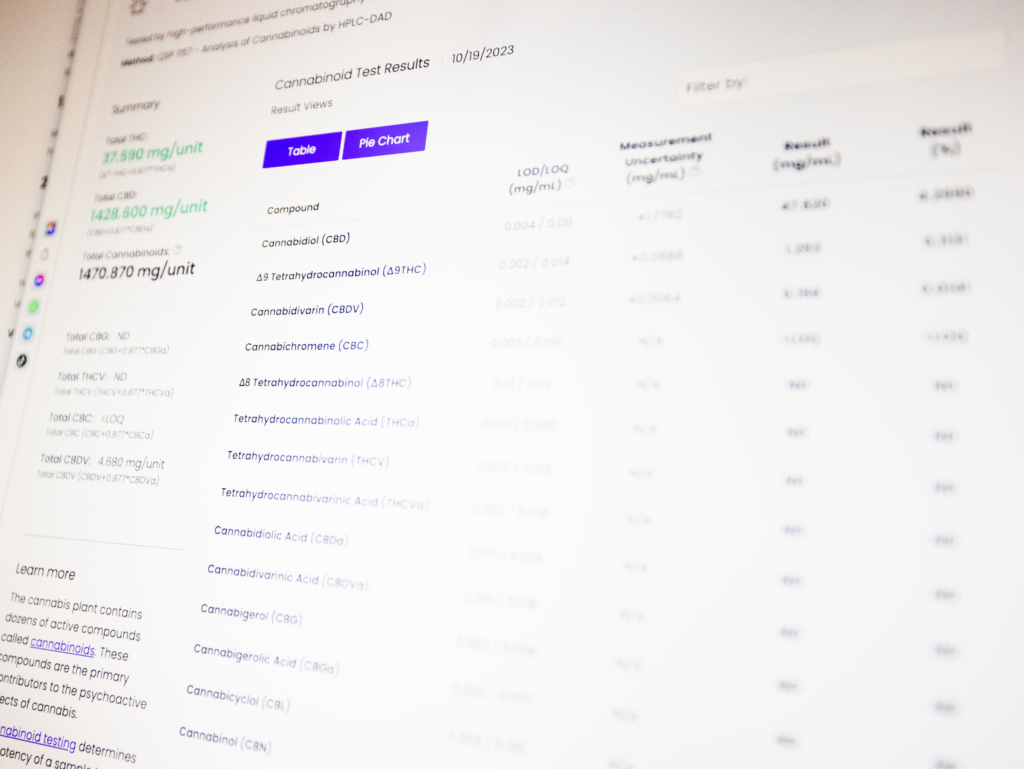
Have you ever thought about how you can ensure the quality and safety of the CBD product you are using? The answer lies in the CBD COA, which verifies the contents and purity of what you are consuming. With so many options in the market, a COA provides the necessary transparency to help you trust your choice. This article will guide you through a COA and highlight the important aspects of your health and peace of mind regarding CBD.
What You’ll Discover
- A Certificate of Analysis (COA) is essential for verifying the safety, legality, and label accuracy of CBD products.
- The COA provides essential information on product ingredients, such as cannabinoid and terpene profiles. Additionally, it tests products for harmful substances like pesticides and heavy metals to ensure consumer safety.
- Third-party lab testing is crucial for an unbiased verification of a CBD product’s contents, with transparency being a key factor in building trust for the product you are interested in trying.
CBD Certificate of Analysis (COA) Key Components.
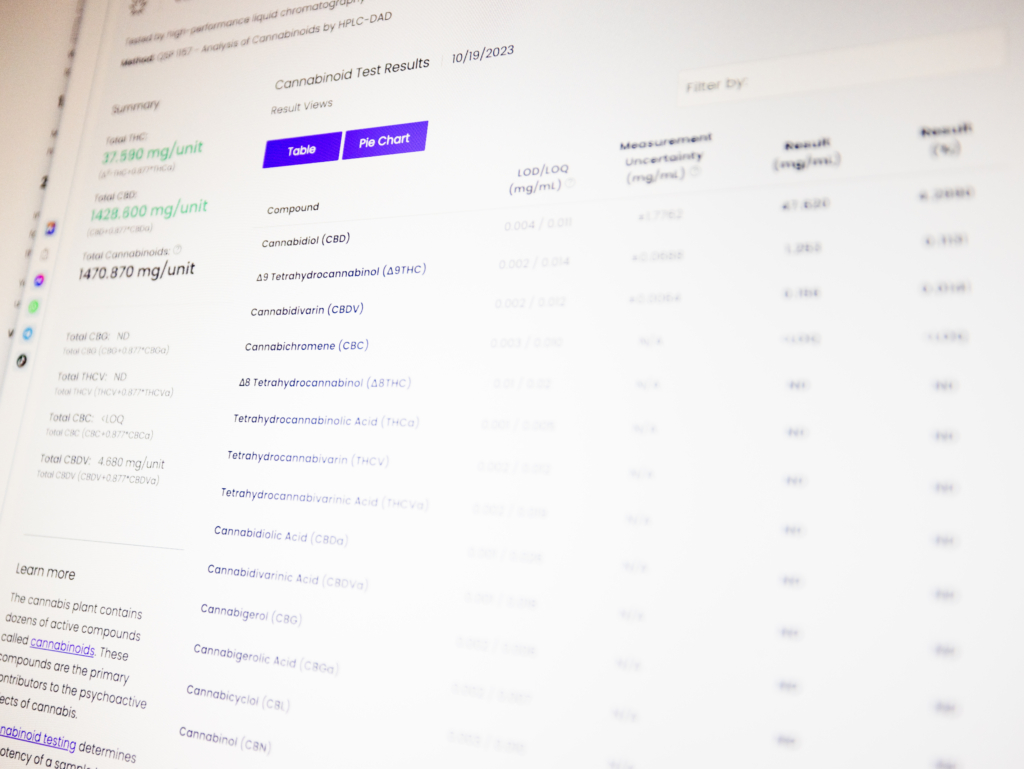 Think of a COA as a ‘passport’ for your CBD product that contains information about the product’s safety. Imagine you walk into a health store and see a bottle labeled ‘pure CBD oil.’ How can you be sure that the product inside matches the label? A COA is the answer.
A Certificate of Analysis verifies the product’s composition and safety, listing components such as:
- Cannabinoids
- Terpenes
- Pesticides
- Solvents
- Heavy metals
Let’s delve deeper into these components.
Cannabinoid Profile
The cannabinoid profile forms a vital part of the COA and lists the various cannabinoids present in the product, such as:
- CBD (Cannabidiol) – CBD, or cannabidiol, is a non-intoxicating compound found in hemp.
- CBDV (Cannabidivarin) – CBDV, or cannabidivarin, is a non-psychoactive cannabinoid.
- CBG (Cannabigerol) – CBG, or cannabigerol, is a non-psychoactive cannabinoid found in hemp, serving as a precursor to other cannabinoids.
- THC (Tetrahydrocannabinol) – THC, or tetrahydrocannabinol, is a psychoactive compound present in trace amounts.
With levels not exceeding the legal limit of 0.3%. This detailed content information is important to understand the product’s potency and potential effects on your body.
CBD is not the only cannabinoid found in hemp. The COA should list both common and lesser-known cannabinoids, such as:
- THCV (Tetrahydrocannabivarin) – THCV, or tetrahydrocannabivarin, is a psychoactive compound distinct from THC with its own molecular structure.
- CBC (Cannabichromene) – CBC, or cannabichromene, is a non-psychoactive cannabinoid.
- CBN (Cannabinol) – CBN, or cannabinol, is a compound in hemp that forms as THC ages.
In a full spectrum product, these “other” cannabinoids, along with CBD, contribute to the ‘entourage effect,’ where they work together to enhance each other’s positive effects.
The content of THC is also displayed; this is the psychoactive cannabinoid linked to marijuana’s ‘high.’ THC content in a COA is typically shown as “Total THC,” including variations like THCV, THCA, and THCVA.
THC concentrations are reported in mg/g (Milligrams per Gram) to ensure the product’s compliance with federal legal THC limits. Hence, a COA is a handy tool to ensure you know exactly how much THC and CBD you’re consuming with your CBD product.
Terpene Profile
Terpenes give your full-spectrum and broad-spectrum CBD products a unique aroma and flavor. Common terpenes you’ll find in a lab report are:
- Myrcene – Myrcene is a terpene in hemp that delivers a herbal, earthy aroma, playing a key role in the plant’s distinctive fragrance profile.
- Pinene – Pinene is a terpene found in hemp that gives it a characteristic pine scent, contributing to the plant’s aromatic diversity and appeal.
- Limonene – Limonene is a citrus-scented terpene found in hemp, responsible for its refreshing lemon-like aroma and contributing to the plant’s aromatic complexity.
- Linalool – Linalool is a floral-scented terpene present in hemp, known for imparting a lavender-like fragrance that enhances the plant’s natural aroma profile.
The terpene profile in a CBD product helps shape your overall experience, offering diverse aromas and contributing to the entourage effect alongside cannabinoids.
While information about the terpene profile is not mandatory on a COA, it adds considerable value to the CBD product. It provides an in-depth understanding of the product’s potential effects and therapeutic attributes. So, the next time you’re purchasing CBD products, remember to check the terpene profile on the COA.
Heavy Metal and Pesticide Analysis
Hemp is a versatile material used to create many products. However, it readily absorbs harmful substances from the soil, such as heavy metals and pesticides. This poses a risk of contaminating products made from hemp, including CBD products.
Testing the raw materials before they are made into consumable products is an absolute necessity to ensure the safety of CBD products. Hazardous substances, such as glyphosate, must be checked to ensure they are not in harmful amounts. Additionally, toxic metals like:
- Lead,
- Arsenic
- Cadmium, and
- Mercury can also be detected in CBD products.
It is important to highlight the significance of third-party laboratory testing for CBD products. By performing comprehensive tests for pesticides and harmful metals, CBD products can be certified as safe and healthy. Overall, you can be confident that your products are secure and appropriate for your requirements. You can request the full panel test results for the raw materials from the company’s products you’re interested in trying.
Understanding CBD Potency and Concentrations
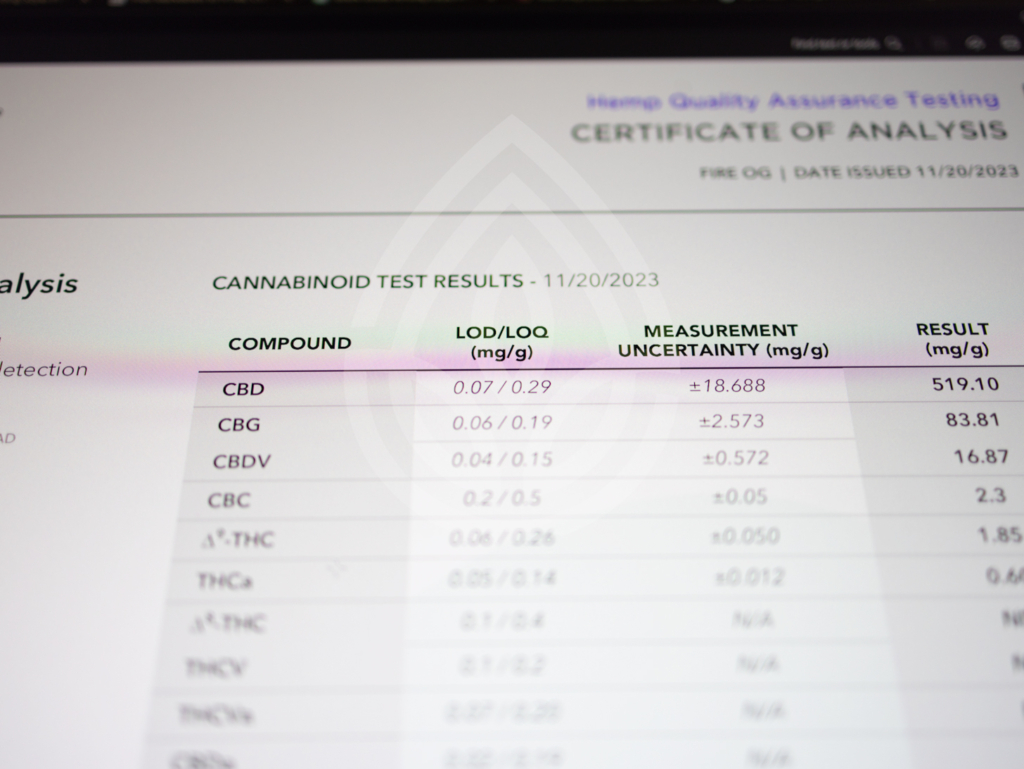 Certificates of Analysis (COAs) offer important details about the concentration of cannabinoids like CBD and THC. The potency of CBD in a product is indicated by the concentration per gram or milliliter (mg/g or mg/ml). The percentage column translates the cannabinoid concentrations into percentage weights for easier understanding.
The ratio of THC to CBD in a product can influence its effects. Products with a higher CBD-to-THC ratio are favored by those looking to get the least effects of THC.
Certified 3rd Party Third-Party Lab Testing: Why It Matters
Independent 3rd party labs are considered more trustworthy because they offer impartial, precise, and reliable results.
Third-party lab testing offers transparency and validates the complete range of a product’s components, ensuring the safety of consumers and establishing trust by making the results publicly available.
Third-party lab testing is currently the primary way of ensuring the safety, legality, and accuracy of CBD product labeling since the FDA does not regulate such products. Third-party lab reports play a crucial role in identifying and preventing the sale of substandard or mislabeled CBD products, which helps protect consumers from harm.
Identifying Reputable 3rd Party Third-Party Labs
Identifying a certified third-party lab for CBD testing involves several key steps to ensure the credibility and reliability of the lab’s services. First, look for labs that hold ISO/IEC 17025 accreditation, which indicates that they meet international standards for testing and calibration laboratories.
This accreditation is crucial as it demonstrates a lab’s competence to perform tests accurately and reliably. Secondly, check for state or federal licenses and certifications specific to cannabis and hemp testing, as regulatory requirements can vary by location.
It’s also important to review the lab’s reputation within the industry; look for reviews, testimonials, and any history of regulatory compliance issues. Transparency is another critical factor; reputable labs will openly share their testing methodologies, certification details, and sample reports.
By thoroughly vetting a lab’s credentials, reputation, and transparency, you can confidently select a CBD product that upholds high standards of quality and integrity in CBD testing.
Accessing Your CBD Product’s COA
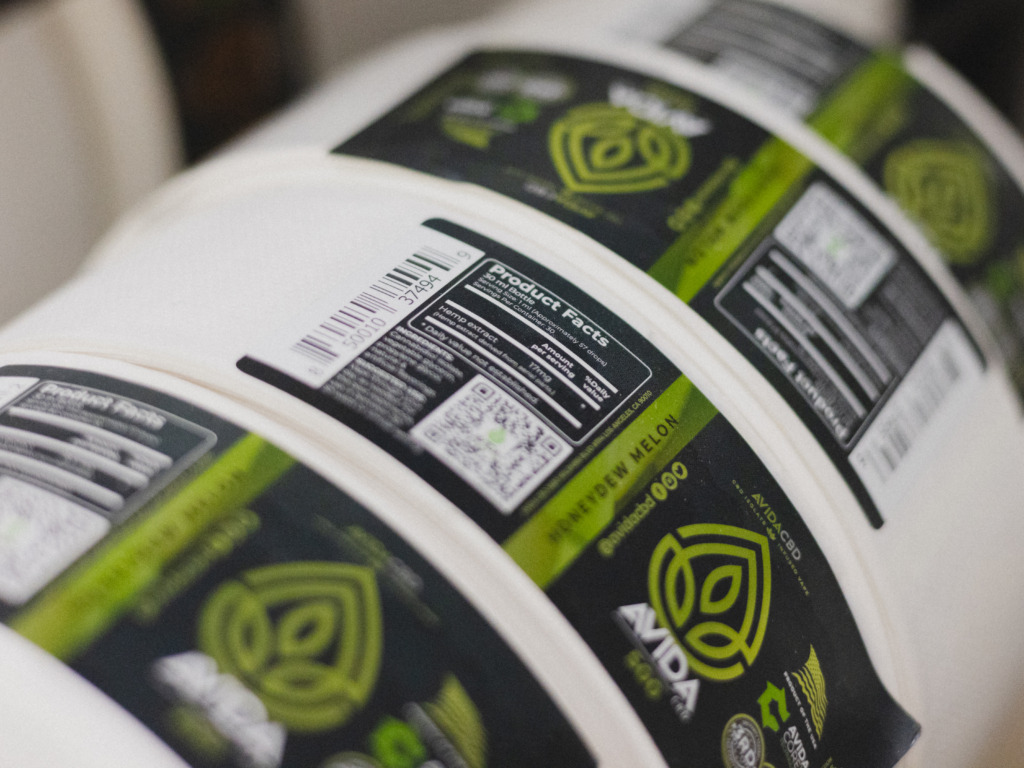
You can access COAs for most CBD products either through the manufacturer’s website or by scanning the QR code on the packaging. This allows you to:
- Verify the quality and contents of the product.
- Confirm a COA’s authenticity by checking that the batch number on the certificate matches the one on the product.
- Ensure that the product description on the COA corresponds with the product.
It is important to have an up-to-date report on a product’s Certificate of Analysis (COA) to ensure that the breakdown reflects the current batch of the product. Outdated lab results may not provide an accurate representation of the product. These reports are typically good for two years from the product manufacturers’ dates.
Trustworthy Brands and Transparent Practices
Trustworthy CBD brands prioritize transparency and quality by rigorously testing their products through reputable third-party laboratories.
These brands understand the importance of consumer trust and regulatory compliance, so they invest in comprehensive testing that covers potency, purity, and safety. This includes analysis for cannabinoid profiles (confirming CBD, THC levels, and other cannabinoids), as well as screening for pesticides, heavy metals, solvents, and microbial contaminants.
Once testing is completed, these companies make the lab results easily accessible to consumers, often by batch, through clear links on their websites or by providing QR codes directly on the product packaging.
This practice allows consumers to verify the contents and safety of their CBD products before purchase, ensuring an informed and confident buying experience.
By committing to such transparency, these brands not only adhere to industry best practices but also build a foundation of trust with their customers, distinguishing themselves as reliable and consumer-focused in the competitive CBD market.
Summary
As the CBD industry constantly evolves, it’s important to ensure your products are safe, legal, and high-quality. A Certificate of Analysis (COA) is a reliable and trustworthy guide to help you make an informed decision. It confirms that the CBD product has undergone comprehensive testing.
So, the next time you buy a CBD product, take a moment to review the COA. Remember, it’s not just about following the rules; it’s about selecting the best product for you.
Frequently Asked Questions
What is a COA for CBD?
A Certificate of Analysis (COA) for CBD is a detailed report from a reputable laboratory. The report outlines the chemical composition of a CBD product, ensuring its quality and safety. Typically, each batch of CBD product is tested separately, and a COA is generated for every run.
How do you read a Certificate of Analysis for CBD?
To read a Certificate of Analysis for CBD, check the following.
- Cannabinoid types
- Weight percentage
- Concentration
- Heavy metal and
- Pesticide analysis, along with the presence of full-spectrum products.
What is COA in gummies?
COA in gummies refers to a certificate of analysis that provides information about the potency, terpene concentration, and contaminants present in the product. This ensures transparency and safety for consumers.
Why is the cannabinoid profile important for a COA?
The cannabinoid profile of a COA is important because it provides crucial information about the presence and concentration of cannabinoids, including CBD and THC levels, which helps in understanding the product’s potency and potential effects.
What are some red flags to look out for in a CBD lab report?
Ensure you’re vigilant about inconsistencies between what is claimed and what the lab report reveals. Other red flags are:
- Deceptive advertising.
- The lack of a Certificate of Analysis (COA) and the
- Reluctance to provide a CBD lab report upon request.
Always be cautious of these warning signs and ensure you have access to the lab report for transparency and accuracy.
