

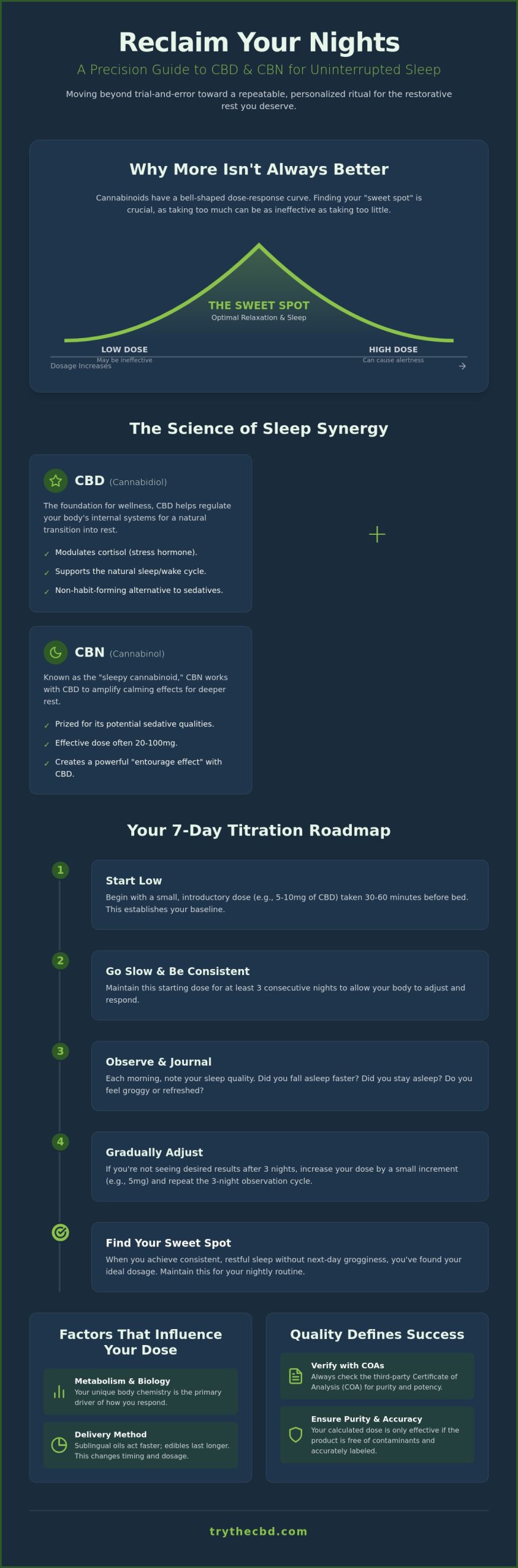
The 3 AM wake-up call isn’t a failure of willpower; it’s often a failure of precision in your nightly routine. You’ve likely felt the frustration of morning grogginess from heavy sedatives or the confusion of trying to measure a tincture dropper while exhausted. Finding the best cbd dosage for sleep shouldn’t feel like a guessing game that leaves you restless and searching for answers in the dark. We’re here to help you reclaim your nights by using a personalized titration method backed by 2026 cannabinoid science. You’ll discover how to calculate a dosage that works for your unique biology, moving beyond trial and error toward a repeatable ritual. This guide explores the critical synergy between CBD and CBN, explains how to navigate the new federal 0.4 milligram total THC limits, and provides a clear roadmap for falling asleep faster. By focusing on purity and verified standards, you can finally achieve the uninterrupted sleep cycles you deserve.
Key Takeaways
- Learn why higher doses aren’t always more effective for rest by understanding the unique bell-shaped dose-response curve of cannabinoids.
- Explore the synergy of the entourage effect and how pairing CBD with specialized CBN can amplify your body’s natural sleep signals.
- Use our structured seven-day titration method to safely navigate toward the best cbd dosage for sleep without the risk of next-day grogginess.
- Identify how your unique metabolism and choice of delivery method, such as sublingual oils versus edibles, change your ideal milligram requirements.
- Discover how to verify product integrity through third-party COAs to ensure your calculated dose is accurate and free from contaminants.
Understanding CBD Dosage for Sleep: Why One Size Does Not Fit All
Finding the best cbd dosage for sleep is rarely a linear journey. Unlike standardized pharmaceuticals, where a single pill often serves a broad demographic, cannabinoids interact with your body on a highly individualized level. In this context, a dosage is defined as the specific mass of milligrams of cannabidiol required to successfully trigger your internal sleep receptors. For some individuals, this might be a modest 25mg dose. For others, it could reach closer to 150mg to achieve the same result. It’s a matter of biology, not just volume.
One of the most critical concepts to grasp is the Bell-Shaped Dose-Response curve. In the world of cannabinoid science, more is not always better. There is a specific sweet spot where CBD promotes relaxation and sedation. If you exceed this point, the effects may actually reverse, leading to alertness rather than rest. This is why 2026 research consistently points toward personalized titration as the only reliable way to achieve consistent results. It’s a methodical process of starting low and building up until you find your unique therapeutic window.
The Role of the Endocannabinoid System in Rest
Your body maintains a complex internal network known as the Endocannabinoid System (ECS). This system uses CB1 and CB2 receptors to regulate vital functions and maintain homeostasis. For a comprehensive overview of cannabidiol and how it supports these functions, it’s helpful to look at how these plant-based compounds mimic our own internal signaling. CBD helps modulate cortisol, the primary stress hormone that often keeps your mind racing at night. By lowering these levels, your body can naturally transition into a state of rest. The ECS acts as the body’s internal thermostat for sleep.
CBD vs. Traditional Sleep Aids
Traditional over-the-counter sedatives often rely on heavy chemistry to force the body into unconsciousness. This frequently leads to a hangover effect characterized by morning grogginess and mental fog. CBD offers a non-habit-forming alternative that works with your biology rather than overriding it. Because high-purity, Colorado-grown hemp extracts like those found in CBD oils and tinctures support the natural sleep cycle, users typically wake up feeling refreshed. You won’t feel the heaviness associated with synthetic pills. While CBD is a powerful tool for wellness, you should always consult a physician if you are dealing with chronic insomnia or taking other medications. Finding the best cbd dosage for sleep requires patience, but the reward is a clear, repeatable nightly routine that leaves you energized for the day ahead.
The Science of Sleep Synergy: Why CBN and CBD Work Better Together
While cannabidiol is the foundation of many wellness routines, it often performs best when it isn’t acting alone. This collaborative effort is known as the entourage effect. It describes how cannabinoids, flavonoids, and terpenes work in concert to produce a result more significant than any single compound could achieve on its own. When you’re searching for the best cbd dosage for sleep, you must consider the synergy of these elements. High-purity full-spectrum CBD oil is often favored because it retains the natural profile of the hemp plant, providing a more robust interaction with your endocannabinoid system.
Central to this synergy is CBN, or cannabinol. Often called the “sleepy cannabinoid,” CBN is a minor compound that forms as THC ages and breaks down over time. It doesn’t produce a high, but it’s highly regarded for its potential sedative qualities. Research from 2026 indicates that for many adults, a dosage of 20 to 100mg of CBN is the threshold for noticeable sleep support. This is particularly effective when CBD doses remain below 50mg. If your current routine feels incomplete, incorporating a specialized CBN Oil could be the missing piece of the puzzle.
Aromatic terpenes like Myrcene and Linalool also play a vital role in your nightly rest. Myrcene, often found in hops and lemongrass, is known for its earthy scent and relaxing properties. Linalool, the primary terpene in lavender, contributes to a deep sense of calm. These compounds don’t just add flavor; they actively influence how your body processes cannabinoids. Seeking out expert advice on CBD dosage can help you understand how these botanical nuances affect your specific biological needs.
What is CBN and How Does it Aid Sleep?
CBN targets specific receptors in the body that influence sleep duration and quality. Unlike CBD, which focuses on overall homeostasis, CBN appears to have a more direct relationship with physical sedation. It’s a natural byproduct of the agricultural lifecycle of hemp, representing the plant’s transition into a more grounded, restful state. By including this minor cannabinoid in your nightly ritual, you’re leveraging the full biological potential of the plant to help quiet a racing mind.
Full Spectrum vs. Broad Spectrum for Nighttime Use
Choosing between these formats often comes down to your comfort with trace THC and your local regulations. Full-spectrum products contain trace amounts of THC, though new 2026 federal rules now limit all hemp-derived products to a maximum of 0.4 milligrams of total THC per container. This tiny amount acts as a catalyst for the sedative effects of CBD. If you live in a state like California, where 2026 regulations require zero detectable THC in general retail products, broad-spectrum or isolate options are your path forward. Both can be effective, but those seeking the strongest entourage effect typically lean toward full-spectrum blends. To find a formula that aligns with your local laws and lifestyle, you can explore our verified collection of high-purity extracts.
Calculating Your Starting Point: Key Factors for Your CBD Sleep Routine
Many people assume that their body weight is the primary metric for determining their initial dose. While mass plays a role, your metabolic rate and internal chemistry are far more influential factors. Individual body chemistry can vary dose needs by up to 300%, meaning two people of the same weight might require vastly different amounts to achieve the same level of rest. When searching for the best cbd dosage for sleep, you must look beyond the scale and consider how your body processes cannabinoids. Your previous experience with hemp products also creates a baseline; those with an existing tolerance will likely need a higher starting concentration than a complete newcomer.
A critical distinction often missed in general guides is the difference between sleep onset and sleep maintenance. If your primary struggle is a racing mind that prevents you from falling asleep, you are dealing with an onset issue. If you fall asleep easily but wake up in the early hours of the morning, your focus should be on sleep maintenance. Addressing these two different challenges requires a strategic choice in product format and timing to ensure the cannabinoids remain active in your system when you need them most.
Bioavailability and Timing: When to Take Your Dose
Bioavailability refers to the percentage of CBD that actually enters your bloodstream. CBD oil tinctures offer high bioavailability because they are absorbed sublingually, typically taking effect within 20 to 40 minutes. This makes them ideal for those struggling with sleep onset. Conversely, CBD edibles must pass through the digestive system, resulting in a delayed release that can take up to two hours to peak. This slow-release profile is often better for sleep maintenance, helping you stay asleep throughout the night. For the best results, we recommend taking your chosen dose 30 to 60 minutes before your intended bedtime.
Dosage Chart by Weight and Severity
While everyone is different, establishing a framework helps you navigate the initial stages of your journey. You can categorize doses into three general tiers based on the intensity of your sleep needs:
- Low Dose (10-20mg): Best for mild restlessness or those new to cannabinoids.
- Medium Dose (20-50mg): Ideal for moderate sleep interruptions and consistent nightly use.
- High Dose (50mg+): Often required for severe sleep issues or individuals with higher metabolic resistance.
Severe sleep challenges typically require higher initial concentrations to effectively trigger the body’s internal receptors. Seeking expert advice on CBD dosage can provide additional perspective on how to balance these tiers with your specific lifestyle. Remember that these numbers are just a starting point; the goal is to find the minimum effective dose that provides the best cbd dosage for sleep for your unique biology.

The Step-by-Step Titration Method: Finding Your Sleep “Sweet Spot”
The most effective way to determine the best cbd dosage for sleep is through a process called titration. This methodical approach follows the “Start Low, Go Slow” philosophy, which remains the gold standard for cannabinoid wellness. Because everyone’s endocannabinoid system responds differently, jumping into a high dose can bypass your therapeutic window entirely. By gradually increasing your intake, you allow your body to adjust while you carefully observe the subtle shifts in your rest patterns. This partnership with the plant ensures you find the minimum effective dose required to achieve a full night of recovery.
Identifying your “Sweet Spot” is a matter of tracking how you feel the following morning. The ideal dose is one that helps you fall asleep within 20 to 30 minutes and allows you to wake up feeling refreshed, rather than heavy or lethargic. If you experience minor side effects like a dry mouth or unexpected daytime sleepiness, it’s a clear signal from your body that your current dose may be too high. In these instances, simply dial back to your previous milligram count for several days. Patience is your greatest tool during this phase, as the cumulative effects of CBD often take two to three weeks to fully manifest within your system.
A 7-Day CBD Sleep Dosing Schedule
A structured routine removes the guesswork from your nightly ritual. Follow this incremental plan to discover your baseline:
- Days 1-3: Begin with 15-20mg of CBD approximately 45 minutes before bed. Focus on your ability to quiet your mind and the speed of sleep onset.
- Days 4-6: If you are still experiencing frequent wake-ups, increase your dose by 5-10mg. Observe if this change improves your sleep maintenance without causing morning grogginess.
- Day 7+: Evaluate your progress. If you find yourself needing a significantly higher volume of oil to reach your goals, it may be more efficient to switch to a higher potency option like the tincture found in our CBD oil starter kit.
Tracking Your Results: The Sleep Log
Data is the bridge between confusion and clarity. We recommend keeping a simple bedside log to track three specific metrics: the time it takes to fall asleep, the number of times you wake up during the night, and your energy levels upon waking. Consistency is vital because your ECS thrives on a predictable rhythm. Taking your dose at the same time every night helps stabilize your internal clock, making the titration process far more accurate. To begin your journey with lab-verified, Colorado-grown extracts, you can browse our full range of sleep-focused CBD products and start your 7-day schedule tonight.
Quality and Consistency: Why Pure Sourcing Defines Your Dosage Success
Your mathematical calculations for the best cbd dosage for sleep are only as reliable as the extract in your dropper. In an industry where oversight can vary, label inaccuracy remains a significant challenge for consumers. A product claiming to offer a 10mg dose might actually contain 0mg of active cannabinoids or an unintended 20mg if the manufacturing process lacks rigor. This variance makes it impossible to maintain a consistent titration schedule. At Try The CBD, we address this by utilizing only Colorado-grown, non-GMO hemp. This commitment to agricultural integrity ensures that the concentration you measure is the concentration you receive, night after night.
Label inaccuracy isn’t just a minor inconvenience; it’s a barrier to achieving the homeostasis your endocannabinoid system requires for rest. If your product’s potency fluctuates between batches, you’ll never find your “sweet spot.” Choosing a provider that prioritizes transparency through rigorous testing is the only way to ensure your nightly ritual remains effective. By starting with a high-purity foundation, you can trust that your adjustments during the titration process are based on accurate data rather than guesswork.
How to Read a COA for Sleep Products
A Certificate of Analysis (COA) is a document from an accredited third-party laboratory that verifies the contents of your hemp extract. When reviewing a COA for sleep-focused products, your first priority is the cannabinoid profile. You should confirm that the milligrams of CBD and specialized compounds like CBN match what is advertised on the packaging. This document also serves as a safety report, ensuring the extract is free from heavy metals, pesticides, and residual solvents. Third-party testing is the only way to guarantee milligram precision and long-term safety.
Choosing the Right Potency for Your Needs
Bottle potency significantly influences both your daily experience and your long-term budget. While a 500mg bottle is an excellent starting point for those new to cannabinoids, it may require you to use a large volume of oil if your titration leads you to a higher dose. Conversely, a 5000mg tincture provides a much higher concentration per drop, making it the ideal choice for individuals who require 50mg or more each night. Choosing a higher potency bottle often lowers your cost per milligram and simplifies your routine by requiring less liquid.
If you’re still deciding which format best supports your needs, our CBD Bundles offer an affordable way to test different potencies and delivery methods simultaneously. For those ready for a curated experience designed specifically for rest, we invite you to explore the Relaxing CBD Starter Kit. This kit provides the high-purity tools you need to finally achieve the best cbd dosage for sleep and reclaim your nights with confidence.
Reclaiming Your Rest with Precision and Purity
Achieving a full night of recovery is no longer a matter of chance once you apply the titration principles we’ve explored. By focusing on the synergy between CBD and CBN and respecting the unique needs of your endocannabinoid system, you can move past the cycle of 3 AM wake-up calls. Finding the best cbd dosage for sleep is a journey that requires consistency and high-purity extracts that provide exactly what is promised on the label. We’ve helped over 10,000 happy sleepers find their balance using our Colorado-grown hemp that is always third-party lab tested for your peace of mind.
You don’t have to settle for morning grogginess or inconsistent results any longer. It’s time to establish a nightly routine that works with your biology to provide the deep, uninterrupted rest you need to thrive. Find Your Perfect Sleep Routine with Try The CBD’s COA-Verified Oils. Your journey to better sleep starts with a single, measured step toward a more rested and energized version of yourself.
Frequently Asked Questions
Can I take too much CBD for sleep?
You can exceed your ideal therapeutic window, but it doesn’t result in a traditional overdose. Instead, cannabinoids often follow a bell-shaped dose-response curve where taking too much can actually lead to alertness or mild side effects like dry mouth and lethargy. It’s far more effective to find the minimum amount that triggers your sleep receptors rather than assuming a higher volume will lead to deeper rest.
How long before bed should I take my CBD dosage?
We recommend taking your chosen formula approximately 30 to 60 minutes before your intended bedtime. This window allows the cannabinoids to enter your system and begin interacting with your endocannabinoid receptors as you start your evening wind-down. If you are using edibles or gummies, you may need to take them up to two hours before bed to account for the slower digestive process.
Will CBD for sleep make me feel groggy the next morning?
CBD typically doesn’t cause the “hangover effect” or morning grogginess associated with traditional over-the-counter sedatives. Because it supports your natural sleep-wake cycle rather than forcing unconsciousness, most users wake up feeling refreshed and alert. If you do feel sluggish, it’s a clear sign that your current dose is slightly too high for your metabolism and should be adjusted downward during your next session.
Is it better to use CBD oil or gummies for insomnia?
The choice depends on whether you struggle with falling asleep or staying asleep throughout the night. Tinctures are absorbed sublingually and work faster, making them ideal for those who need immediate help with sleep onset. Gummies take longer to process but provide a sustained release that is often better for sleep maintenance. Many people find the best cbd dosage for sleep by using a combination of both formats.
Can I mix CBD with other sleep supplements like melatonin?
CBD can be safely paired with other natural supplements like melatonin, L-theanine, or chamomile to enhance its calming effects. Many specialized sleep formulations actually include these ingredients to create a multi-faceted approach to rest. However, you should always monitor how these combinations affect your morning alertness and consult with a healthcare professional if you are currently taking any prescription medications for chronic health conditions.
Does CBD dosage for sleep change if I take it every night?
Consistency is the key to a successful routine because your endocannabinoid system thrives on a predictable rhythm. Taking your dosage at the same time every night helps stabilize your internal clock and improves the cumulative benefits of the hemp extract over time. While most users find their “sweet spot” remains stable, others may need to slightly adjust their intake over several months as their body chemistry and tolerance evolve.
How do I calculate the mg of CBD in a single drop of oil?
To find the potency of a single drop, divide the total milligrams in the bottle by the number of milliliters, then divide that result by 20. For example, a 30ml bottle containing 1000mg of CBD has approximately 33.3mg per milliliter. Since a standard dropper contains about 20 drops, each individual drop provides roughly 1.6mg of CBD. This precision is vital for following a strict titration schedule and ensuring dosage accuracy.
Is CBD for sleep legal in all 50 states?
Hemp-derived CBD is federally legal under the 2018 Farm Bill, but state laws have become increasingly specific in 2026. For instance, California now requires products sold outside of dispensaries to have zero detectable THC, effectively banning full-spectrum options in general retail. Additionally, a 2026 federal rule limits all hemp products to 0.4mg of total THC per container. Always check your local guidelines to ensure you are selecting the best cbd dosage for sleep within your legal jurisdiction.
