

A Social Equity Applicant’s Story of Hope, Legalization, and Loss
In a matter of weeks, I’ll lock the door to my family’s farmhouse for the last time and walk away.
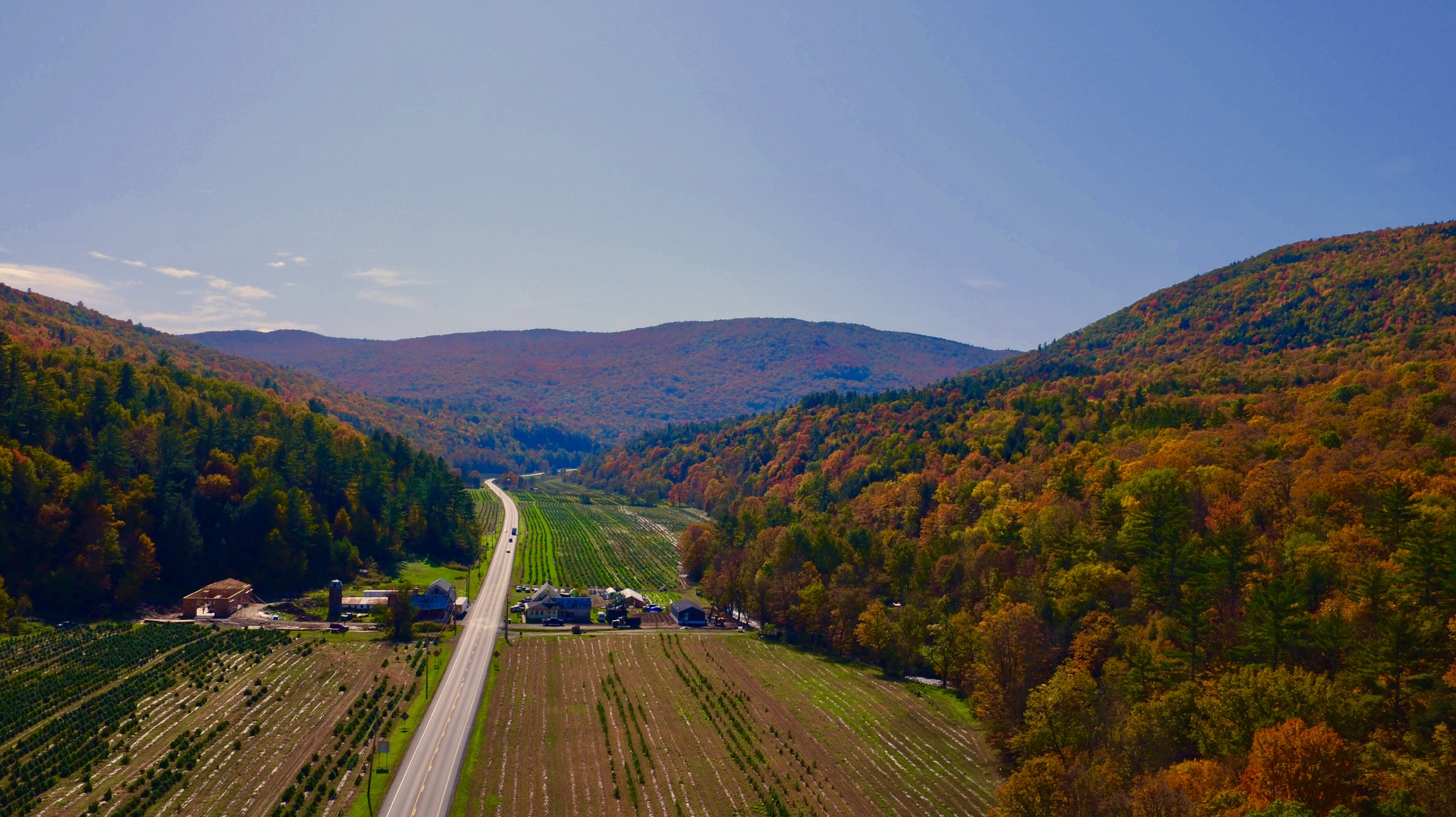
My great-great-grandfather, Bial, bought this Vermont farm in 1909. For 117 years, five generations of my family lived, worked, and died here. The old slate roof still rests on hand-hewn timber beams cut by hand long before power tools existed. Antique farm implements still sit tucked away in the corners of fields where generations left them. The river still winds through the woods beneath an old wooden bridge that has been my favorite place since I was a child. Even today, it feels as though the generations who came before me are still there.

This isn’t just a farm. It’s my family’s history. It’s where my grandparents raised their family. It’s where I cared for my grandmother, grandfather, uncle, mother, and father through hospice until each took their last breath. My mother is buried on the hill overlooking the property.
She had a green thumb unlike anyone I’ve ever known. She taught me how to grow certified organic vegetables from the same soil that had sustained our family for generations. Years later, after I returned home from prison, I taught her how to grow cannabis during her battle with cancer, and she used it throughout her treatment.
Every spring, my son and I would plant acres of crops together, just as generations of my family had done before us. I always believed my son would become the sixth generation to call this place home. Instead, I’ll be the generation that loses it. I didn’t lose this farm because I stopped farming. I didn’t lose it because I stopped working. I lost it because I believed Vermont’s legal cannabis industry could save it.


Cannabis Was Never Just a Crop
Before cannabis became politics, business, or legalization, it was my father’s medicine. My father served in the U.S. Navy during Vietnam. When he came home, he carried wounds nobody could see. PTSD wasn’t something people talked about then. They simply just watched him deluge himself with alcohol.
By the time I was a kid, he was consuming nearly half a gallon of cheap vodka every day. Trash bags full of empty plastic and glass half-gal bottles covered our porch and filled closets and cabinets throughout our tiny apartment. At sixteen years old, I bought my first car by returning those empty bottles for the deposit money.
Some nights I’d wake to the sound of him screaming. I’d stand in his bedroom doorway and watch him thrash in his sleep, soaked in sweat, arms flailing as though he were still fighting a war that had ended years earlier, making sure he wouldn’t fall out of bed.
Most of the time during these episodes, he’d violently throw up and fall back asleep. As I got older, I noticed something. Whenever he had cannabis, he drank far less—sometimes almost nothing at all. When we couldn’t afford to buy cannabis, I was thirteen years old and decided to put the lessons my mother had taught me to use. I taught myself how to grow it. I wasn’t trying to become a criminal. I wasn’t trying to start a business. I was just trying to help my father.
What started as a way to help my father didn’t stay that simple. Over the years, cannabis became more than medicine in our household. It became a way to keep the lights on, put food on the table, help support my family, and survive financially. As time went on, I became deeply involved in the illegal cannabis market.
Years later, that decision led to a federal conviction for conspiracy to distribute cannabis. I served my sentence and paid dearly for it. The story of how I got there—and everything that happened afterward—is almost unbelievable. It’s one I’ll tell another day.


The Second Chance Vermont Promised
When Vermont later legalized cannabis and created a Social Equity Program for people with prior cannabis convictions, I believed I had finally been given a second chance. Not to get rich. To save my family’s farm.
Years earlier, my grandfather had asked me if I wanted to take over the farm. At the time, I had another career. I traveled the country as a professional turntablist, performing at major sporting events, fashion shows, clubs, weddings, and alongside artists like Slick Rick, members of Wu-Tang Clan, Collie Buddz, Wale, Junior Reid, and many others.
Then my grandfather got sick. I knew he wasn’t doing well, so I walked away from the career I had built, came home, and devoted myself to caring for him and the farm for the rest of his life.
Later, I picked up his favorite lunch—a ham salad sandwich from the Lincoln General Store and a chocolate milk. We sat on the tailgate of my pickup truck beside the old silo, ate together, talked about the future, and shook hands. It was the last real meal we ever shared together.
There were no contracts. No lawyers. Just a promise. After he passed away, I bought the farm from my family. Before he died, he gifted me one-third of its value, and I purchased the remaining interests from my mother and aunt because preserving this farm mattered more to me than anything else.
It wasn’t an investment. It was a promise I intended to keep. By then, the farm had already begun to fade. After my grandmother passed away in 1995, much of it sat dormant. Barns that had once been full of life slowly began to lean and crumble. Every season seemed to take another piece of it. It never felt like it was mine. It always felt like it was my grandfather’s place. I was simply taking care of it until one day it belonged to my son.
When Vermont announced hemp, it was promoted as the next “Green Rush.” Like many others, I believed it. I raised roughly $800,000 from investors and planted forty-two acres of hemp. I wasn’t dreaming about luxury cars or expensive vacations. I just wanted to restore the old barns, bring cattle back to the fields, hire local people, rebuild a certified organic dairy and beef operation, and one day host farm-to-table weddings that celebrated Vermont agriculture.
Instead, the hemp market collapsed. Oversupply flooded the market. Then COVID hit. Contracts disappeared. The financial damage exceeded $1.2 million. Most people would have walked away. I couldn’t. I believed adult-use cannabis could still save the farm.
I invested even more money, built a compliant cultivation facility, converted tractor trailers into portable grow rooms, and constructed a large light-deprivation greenhouse. Despite his declining health, my father helped with everything he possibly could.
Then one afternoon, while I was caring for him in hospice inside the farmhouse, my attorney called. I’d been approved as one of Vermont’s first licensed cannabis cultivators. The first person I told was my father. He didn’t jump up. He didn’t celebrate. He simply smiled. Later, standing inside the cultivation facility we had built together, he quietly looked around and said,
“I never thought I’d see this.”
Neither did I.
I truly believed we’d saved the farm.

When the Green Rush Repeated Itself

Week after week, I watched new cultivation licenses continue to be approved. At the same time, many cultivators—including me—spoke during Cannabis Control Board meetings, warning that the market was already saturated and that continuing to issue cultivation licenses would push many small growers out of business. From where I stood, those warnings were not reflected in the pace of licensing, while the economics for small cultivators continued to worsen.
Those warnings began in 2023. The application window for most new cultivation licenses wasn’t temporarily closed until September 2024. Retailers stopped returning calls. Wholesale prices collapsed. Inventory sat unsold.
I had lived through this once before. The hemp market had followed a similar path—rapid expansion, oversupply, collapsing prices, and small farmers left holding the bag. As I watched it happen again, I couldn’t believe they were repeating the same mistakes that had completely devastated Vermont’s hemp market.
I’m not saying Vermont alone cost me the farm. The hemp-market collapse, COVID, debt, the financial strain of keeping a fifth-generation family farm alive, and my own decision to keep investing all played a role. But I believe the state had every reason to recognize the warning signs. Vermont had already watched its hemp market become oversaturated and fail. Officials shaping the adult-use rollout also had the benefit of seeing what had happened in other legal states, particularly when cultivation capacity outpaced a limited retail market.
I believed legalization would be my family’s last opportunity to recover from the hemp collapse. Instead, I watched the same cycle repeat itself. When Vermont’s cannabis market became oversaturated too, I couldn’t refinance, couldn’t keep the business operating, and ultimately lost the farm.
The business I believed would preserve five generations of my family’s history slowly became impossible to sustain. I shut down my final cultivation in 2025. Today, the farm is under contract. By the time this story is published, it will belong to someone else—a stranger from out of state, someone with no connection to the generations who lived, worked, and died here.


What Disappears With a Family Farm
After the closing, I won’t have a home. I’ll have my truck. My DJ equipment. And a lifetime of memories. The hardest conversation I’ve ever had wasn’t with a banker, an investor, or a regulator. It was with my eight-year-old son. As I write this, my son and I are packing up his bedroom. He knows I won’t have a home after the closing. He knows he’ll have to live with his mother full-time, two hours away. He knows our time together will be dramatically reduced because a homeless father can’t provide the kind of home every child deserves. For the past year, we’ve packed, sold, and even burned pieces of my family’s history together.
For his entire life, we walked these fields together. He learned to drive a tractor here when he was three years old. Every spring, we would plant acres of crops together, just as generations of my family had done before us.
I’d point across the pastures, over the mountains, and into the woods and tell him, “Someday, all of this will be yours.” Then I’d ask him what he wanted to do with it. He’d tell me about all the farm animals he wanted to raise and proudly show me the chicken coops he had drawn for the farm he thought would one day be his. Now I have to explain why it won’t be.
Vermont had a once-in-a-generation opportunity to help preserve family farms by creating a legal cannabis market where small cultivators could build sustainable businesses. Instead, from my perspective, the rollout prioritized rapid market expansion over the long-term viability of the very people it was intended to help. I believe that approach contributed to the loss of my family’s 117-year-old farm.
It didn’t have to end this way. I don’t tell this story because I’m looking for sympathy. I tell it because I don’t believe my family will be the last to lose everything because of decisions made by people who will never have to live with the consequences.
Somewhere in Vermont tonight, another farmer is betting everything on the same promise I once believed. I hope they’re right. I hope their children grow up walking the same fields their grandparents walked. I hope they never have to pack up a child’s bedroom, sell their family’s heirlooms, burn generations of history, or lock the door to a farmhouse that has been home for more than a century for the very last time.
Because when a family farm dies, you don’t just lose the land. You lose your past. You lose your future. And somewhere deep inside, a piece of you dies with it.
Images provided by Randy Russell and used with permission.
Editor’s Note: This is a contributed first-person essay by Randy Russell. It reflects his account of his family farm, his participation in Vermont’s hemp and adult-use cannabis markets, and his belief that the state’s licensing approach contributed to the farm’s loss. Russell also identifies the hemp-market collapse, COVID-19, debt, and his own decision to continue investing as contributing factors. This essay should not be read as an independent High Times finding that Vermont policy caused the sale. High Times reviewed supporting materials for key factual claims and contacted the Vermont Cannabis Control Board for comment. The views and conclusions expressed are Russell’s own.
