
Close Menu
  • Home
  • News
  • Lifestyle
  • Law
  • Business
  • Education

Subscribe to Updates

Get the latest creative news from FooBar about art, design and business.

What's Hot

How to Share a Buzz Without Killing the Vibe

August 16, 2026

How to Give CBD Oil to a Cat: A Stress-Free Guide

August 16, 2026

The Death of a Fifth-Generation Vermont Farm

August 15, 2026
Facebook X (Twitter) Instagram
Monday, August 17
  • Home
  • Contact
  • Privacy Policy
  • Terms & Conditions
Facebook X (Twitter) Instagram LinkedIn VKontakte
Smoke Professional
  • Home
  • News

    More Than 1,000 Arrested in Sweep of U.K. Weed Grows

    July 8, 2023

    Scotland Calls On UK To End ‘Failed’ Drug War With Decriminalization And Harm Reduction Approach

    July 8, 2023

    Germany’s draft law for first phase of cannabis reform

    July 8, 2023

    High Times Cannabis Cup Illinois: People’s Choice Edition 2023 Kicks Off

    July 8, 2023

    Pennsylvania Committee Advances Expansion to State Medical Cannabis Program

    July 7, 2023
  • Lifestyle

    ‘I Want to go Home’: The Time Blink-182 Got Stupid High With Cypress Hill Before a Show

    August 13, 2026

    Why Growers Keep Talking About Crop Steering

    August 12, 2026

    Thailand Cannabis Ban 2026: Inside Bangkok’s Shops After the Medical-Only Law

    August 11, 2026

    The Convenience Revolution Has Finally Reached Cannabis

    August 7, 2026

    Cannabis in Germany: Club Licenses Stall While Medical Access Shrinks

    August 6, 2026
  • Law

    Massachusetts Election Officials Reject Latest Challenge of Legalization Repeal Question

    July 23, 2026

    Democratic Candidate for Iowa Gov. Releases Adult-Use Legalization Plan

    April 23, 2026

    Virginia Gov. Sends Adult-Use Cannabis Sales Bill Back to Lawmakers With Requests

    April 15, 2026

    IRC 280E Still Applies to Your Marijuana Business, Unfortunately

    February 24, 2026

    Oklahoma Campaign to Legalize Adult-Use Cannabis Will Begin Collecting Signatures Next Month 

    July 29, 2025
  • Business

    How to Share a Buzz Without Killing the Vibe

    August 16, 2026

    The Death of a Fifth-Generation Vermont Farm

    August 15, 2026

    ‘I Was Kind of High for a Lot of This’: Kristen Stewart and Alia Shawkat on Getting Stoned to Make ‘The Wrong Girls’

    August 14, 2026

    Can Jamaica’s Cannabis Permits Help Legacy Growers?

    August 14, 2026

    Australia Bans ‘Halloween’ Video Game Over Weed, Not Its Brutal Violence

    August 13, 2026
  • Education

    How to Give CBD Oil to a Cat: A Stress-Free Guide

    August 16, 2026

    2026 Guide to Feline Calm

    August 15, 2026

    Managing Pet Separation Anxiety with CBD: A 2026 Research-Based Guide

    August 14, 2026

    Colombia Wants to Spray Illicit Crops Again. The ’80s Offer a Warning 

    August 14, 2026

    CBD Dosage for Dogs by Weight: 2026 Safety Guide

    August 13, 2026
Smoke Professional
You are at:Home»Business»8 Products to Optimize Your Grow
Business

8 Products to Optimize Your Grow

adminBy adminMarch 4, 2024No Comments7 Mins Read
Facebook Twitter Pinterest LinkedIn Tumblr Email
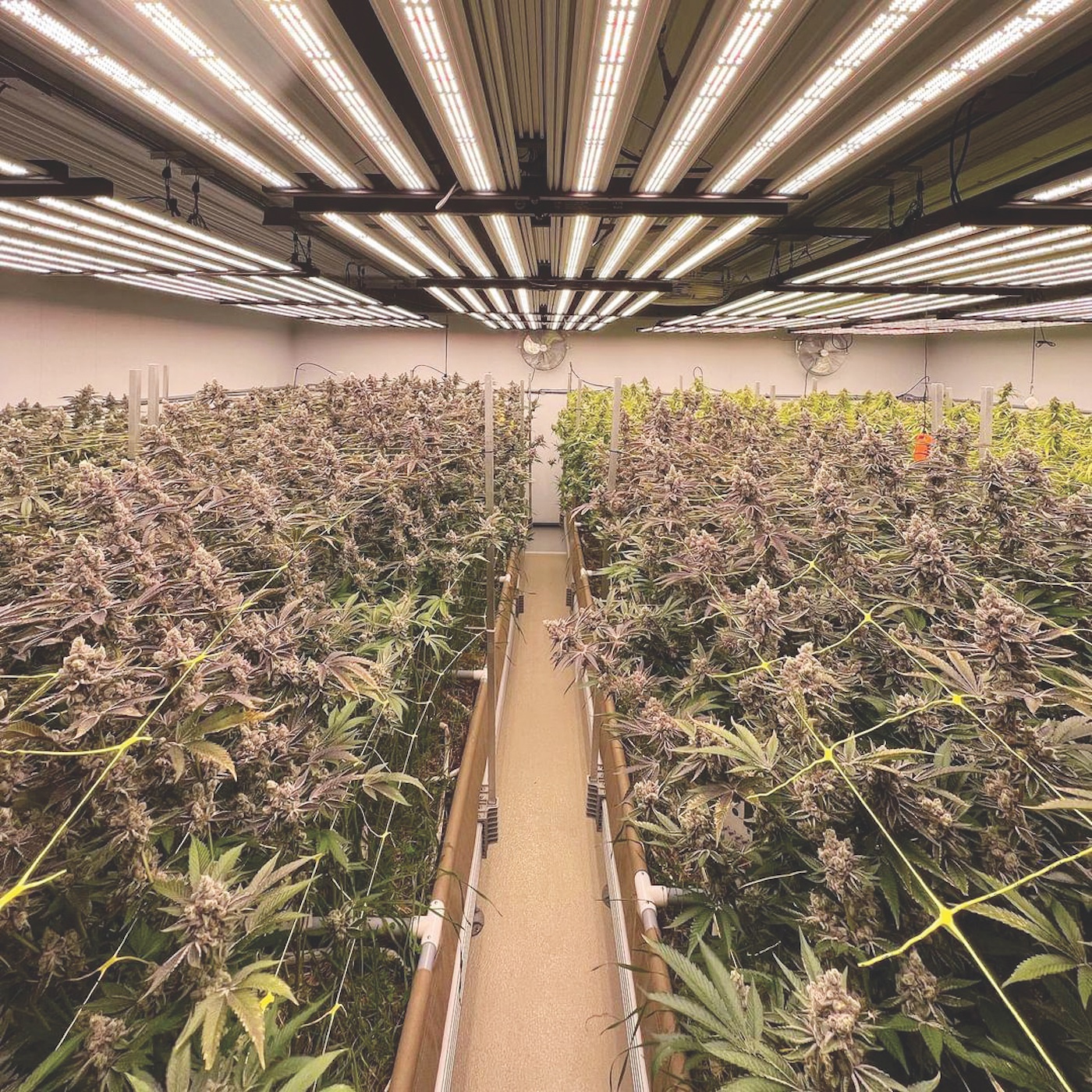
indoor grow lights
Share
Facebook Twitter LinkedIn Pinterest Email

Grow lights are the cornerstone of any indoor or light-assisted greenhouse cultivation facility. After all, light is the driving force behind photosynthesis, which creates all the energy within a plant.

Grow lights are available in a variety of power requirements and color spectrums to help plants reach their maximum potential. Matching the light spectrum and intensity to your goals is crucial when designing a facility. Factors to be considered include the stage of growth planned for the space and whether plants will be grown under a single setup throughout their cycle. A clearly defined cultivation plan will impact lighting selection.

Lighting types

Traditionally, indoor cultivators have employed metal halide (MH) or high-pressure sodium (HPS) lights capable of producing a high amount of photosynthetic active radiation (PAR) over a large footprint. Many facilities have transitioned to using light-emitting diode (LED) lights thanks to advancements in diode technology that allow LED fixtures to match the amount of PAR produced by traditional bulbs.

HPS and MH bulbs produce unique spectrums of light that are best suited for different stages of plant growth. The bulb is connected to a ballast, which provides the proper operational wattage. Both HPS and MH setups must be monitored closely, because they produce significant heat.

LED lights consist of LED chips mounted onto a heat sink and wired to a driver. The driver controls how much power is delivered to the diodes and can be either mounted to the fixture or wired outside the grow room. Drivers dim the lights as well as adjust their spectrum. Many different grades of LED lights and drivers are available, so it’s essential to know what parts manufacturers use to build their fixtures and systems.

Sensors such as PAR meters are used to monitor how much photosynthetic light is available for the canopy, allowing growers to adjust the light intensity and spectrum. This can be helpful in spaces with lower ceilings, as light intensity should be decreased as plants grow taller and closer to the fixtures. Lights with dimming capabilities typically are controlled using a zero- to ten-volt electrical signal capable of adjusting the intensity and on-off schedule.

Choose the right light

The number of options can make choosing the best setup for a facility seem overwhelming. Begin the process by determining the goals for the space. Clones and seedlings require very little photosynthetic energy. As plants mature, they require more energy, and therefore light, to help them sustain growth and produce large, resinous colas.

Ensuring the light spectrum matches the stage of growth also is important. Plants in the vegetative stage perform best under lights that produce a heavy blue spectrum. When plants switch to flowering, they prefer a red spectrum.

Next, look at the footprint. The goal is to cover the canopy as evenly as possible. Lighting manufacturers typically supply a light map with their fixtures showing the wavelengths produced by the fixture and sometimes the dimensional footprint of the lights with the amount of light energy available at different heights. This information reveals how much vertical space is needed for even coverage.

Growing with their tops too close to a light source can damage plants’ cells and cause slow or abnormal growth. If vertical space is an issue and you cannot move the light source away from the plants, you’ll likely want to use controllers to dim the lights. Controllers adjust intensity or spectrum based on cultivator input. Some controllers integrate with specialized sensors to make changes automatically based on growth cycle or preprogrammed commands. Controllers allow growers to place lights closer to the plants and adjust the intensity to match growth stage.

Don’t forget to consult an electrician. Grow lights can consume more than three amps of electricity, and knowing what kind of power each electrical circuit can handle will help determine whether more power should be installed.

One final consideration is how lights may affect the environment. Lights produce heat, which must be removed from the grow room. Removing heat requires an exchange of air, which affects the humidity in the space and alters the vapor pressure deceit (used to determine how a plant is respiring and how water is moving from the roots into the growing environment). In addition to these parameters, carbon dioxide also should be monitored closely.

For plants to reach their full potential, they must have enough CO₂ available to aid in creating glucose—the building block in all new plant growth. Because the lights push the plant into photosynthetic overdrive, utilizing a CO₂ injection system will ensure plants have enough raw material to keep up with increased growth.

With so many types of lighting devices on the market, choosing the most appropriate system for your grow’s unique needs requires an investment of time and effort. It’s important to know what stages of plant growth will occur in the space, how much power is available, the amount of canopy, and what wavelength and intensity will best suit your goals. Once you can answer these questions, choosing a grow light will be easier.

Here are eight grow lights for cannabis to consider.

Grandmaster LED

  • Programmable spectrum control, full-spectrum
  • 120V to 240V


Grandmaster LED

Grandmaster LED boasts an impressive lineup of light fixtures for growing spaces of any size. The brand offers numerous products to suit a variety of footprints, spectrums, and power outputs. Its newest fixture offers a programmable spectrum function that allows more than 900 custom wavelength settings.

Fluence

  • Broad R3, R4, R6, and R8; dual R9B high-efficacy, dual R5B
  • 120V to 480V


Fluence

Fluence manufactures an array of LED lights for use in indoor spaces or greenhouses. The company offers lights with optimized spectrums and a controller capable of adjusting light output and scheduling. The catalog presents lights for every stage of growth, from propagation to flowering.

Horticulture Lighting Group

  • Plant-centric white spectrum with deep red
  • 120V to 240V


Horticulture Lighting Group

HLG offers made-in-the-USA lights for both home-growers and commercial cultivators. The company’s lineup includes lights with spectrums designed for optimized vegetative growth and flower production. HLG also offers light kits, allowing customers to purchase individual components and build their own LED fixtures.

TSRgrow

  • White, vegetative, and “flower-power” spectrums
  • 120V to 240V, HVDC


TSR Grow
TSRgrow’s LED fixtures utilize drivers placed outside the grow room to help prevent excess heat buildup within indoor and greehouse spaces. The company’s proprietary environmental-monitoring-and-control software provides precision spectrum and light-intensity control.

California Light Works

  • Programmable spectrum control, full-spectrum
  • 90V to 277V


California Lights Work
California Light Works manufactures LED lights for both greenhouses and indoor growing. The company offers a specialty line of commercial lights that use a proprietary system called Megadrive, which allows for control of multiple light fixtures with one central driver. The driver can be located outside the grow space to help prevent excess heat generation.

Gavita

  • Full-spectrum
  • 120V to 480V


GavitaProRS2400e
Gavita offers options for traditional HPS lights and reflectors as well as LED fixture options. The company’s LED grow lights feature an unusual lens technology that helps create even coverage across the canopy. The fixtures can integrate with a controller to vary the light output based on growth stage.

Kind LED

  • Full-spectrum, tunable spectrum
  • 120V to 277V


Kind LED
Kind LED offers lighting for indoor and greenhouse growing. The brand’s fixtures feature tunable spectrum control to provide optimal wavelengths to match the stages of plant growth. The lights use an extremely efficient diode capable of producing large amounts of PAR.

Philips

  • Efficient white, broad white, efficient broad white
  • 120V to 480V


Philips
Philips offers a line of LED grid fixtures designed for vertical, greenhouse, and indoor growing. The company also offers a controller capable of setting light schedules based on the plant’s growth stage and the grower’s production goals. Philips also manufactures HPS and MH bulbs.

Source link

Grow Optimize Products
Share. Facebook Twitter Pinterest LinkedIn Tumblr Email
Previous ArticlePew Research Center: Most Americans Live in County with at Least One Cannabis Dispensary
Next Article Michigan Distributes $87M from Cannabis Taxes to 269 Municipalities
admin
  • Website

Related Posts

How to Share a Buzz Without Killing the Vibe

August 16, 2026

The Death of a Fifth-Generation Vermont Farm

August 15, 2026

‘I Was Kind of High for a Lot of This’: Kristen Stewart and Alia Shawkat on Getting Stoned to Make ‘The Wrong Girls’

August 14, 2026

Comments are closed.

Our Picks

How to Share a Buzz Without Killing the Vibe

August 16, 2026

How to Give CBD Oil to a Cat: A Stress-Free Guide

August 16, 2026

The Death of a Fifth-Generation Vermont Farm

August 15, 2026

2026 Guide to Feline Calm

August 15, 2026
  • Facebook
  • Twitter
  • Pinterest
  • Instagram
  • YouTube
  • Vimeo
Don't Miss
Business

How to Share a Buzz Without Killing the Vibe

By adminAugust 16, 20260

Weed etiquette used to begin and end with puff, puff, pass. Now that cannabis shows…

How to Give CBD Oil to a Cat: A Stress-Free Guide

August 16, 2026

The Death of a Fifth-Generation Vermont Farm

August 15, 2026

2026 Guide to Feline Calm

August 15, 2026

Subscribe to Updates

Get the latest creative news from Smoke Unlimited about Weed & CBD vaping.

From Our Partners
About Us
About Us

Get all the current news stories, latest trends and legislation regarding cannabidiol, products, usages and its benefits. So don’t miss out any buzz and stay tuned! We offer a minute to minute updates regarding Marijuana industry.

Facebook X (Twitter) Instagram Pinterest
Our Picks

How to Share a Buzz Without Killing the Vibe

August 16, 2026

How to Give CBD Oil to a Cat: A Stress-Free Guide

August 16, 2026

The Death of a Fifth-Generation Vermont Farm

August 15, 2026
Sponsors
Copyright © 2026. SmokeProfessional
  • Home
  • Contact
  • Privacy Policy
  • Terms & Conditions

Type above and press Enter to search. Press Esc to cancel.