

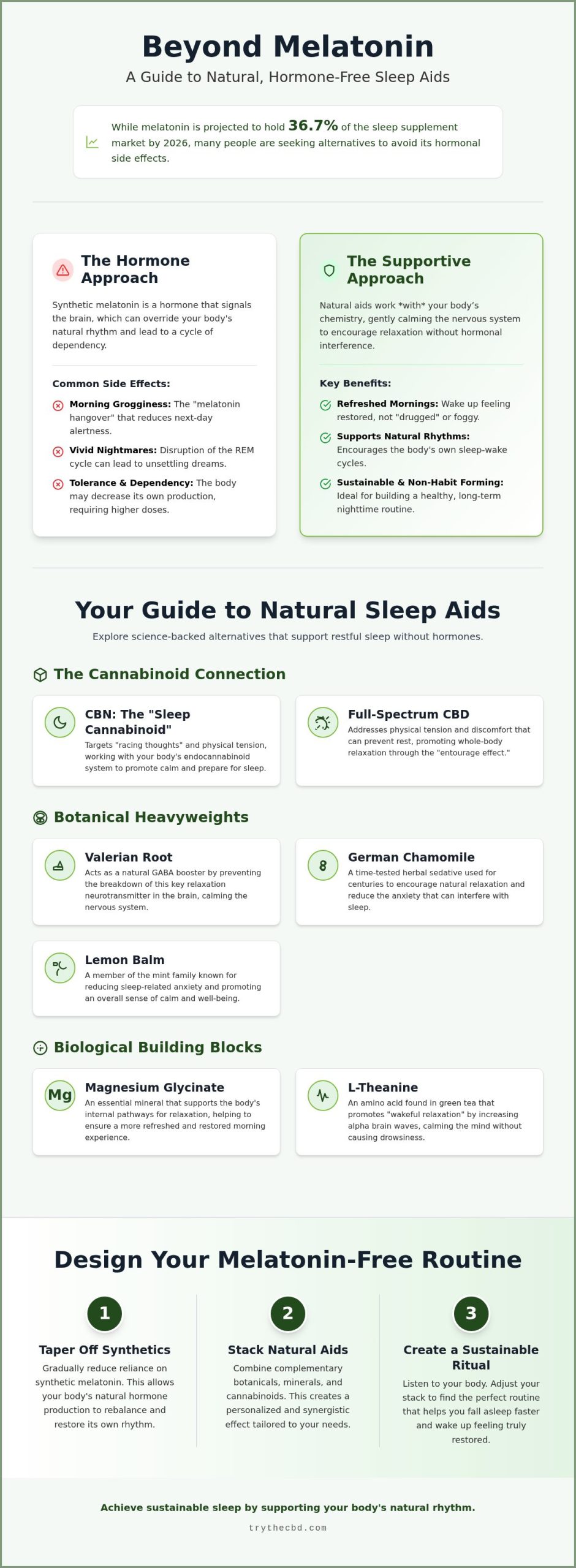
What if the very hormone you’re taking to find rest is actually the reason you’re waking up feeling like you’ve been drugged? It’s a common frustration for many who rely on supplements to bridge the gap between a busy day and a quiet mind. While melatonin is expected to hold about 36.7% of the sleep supplement market in 2026, an increasing number of people are searching for natural alternatives to melatonin to avoid the “hangover” effect and vivid nightmares. You aren’t alone in wanting a solution that helps you drift off without the fear of dependency or morning grogginess.
We believe that sustainable sleep is achieved by supporting your body’s internal pathways rather than overriding them with external hormones. This article promises to reveal the most effective botanical, mineral, and cannabinoid-based aids designed to help you fall asleep faster and stay asleep through the night. We’ll examine nine science-backed options, including the targeted “sleep cannabinoid” CBN and the relaxation benefits of magnesium glycinate. By the end, you’ll have a clear roadmap to a refreshed, hormone-free routine that respects your body’s natural rhythm and helps you wake up feeling truly restored.
Key Takeaways
- Understand why melatonin functions as a hormone rather than a traditional sedative, which helps clarify the origins of next-day grogginess and vivid dreams.
- Explore the calming properties of botanical heavyweights like Valerian Root and German Chamomile that have been used for centuries to encourage natural relaxation.
- Learn how to utilize natural alternatives to melatonin like CBN and full-spectrum CBD to address the “racing thoughts” and physical tension that often prevent rest.
- Identify the essential minerals and amino acids, such as Magnesium Glycinate, that support your body’s internal pathways for a more refreshed morning experience.
- Discover a practical method for tapering off synthetic hormones while stacking natural aids to create a personalized, sustainable nighttime routine.
Understanding the Shift: Why Seek Natural Alternatives to Melatonin?
Melatonin is often treated as a simple herbal supplement, but it’s actually a potent hormone that signals your brain to prepare for darkness. It doesn’t work like a traditional sedative that forces the body into a state of rest. Instead, it adjusts your internal clock. As we move through 2026, more people are recognizing that while melatonin holds a 36.7% share of the sleep supplement market, it isn’t always the right fit for long-term wellness. If you’ve been struggling with consistent rest, reading a comprehensive overview of insomnia can help you understand the various triggers that might be keeping you awake, many of which melatonin cannot address.
The primary reason for the growing interest in natural alternatives to melatonin is the desire to support the body’s own chemistry rather than overriding it. Many users report a specific next-day grogginess often called the “melatonin hangover,” which happens because the synthetic hormone can remain in the system long after the sun comes up. This can interfere with morning productivity and leave you feeling “drugged” rather than restored. Shifting your focus toward supporting neurotransmitters like GABA (gamma-aminobutyric acid) offers a more grounded approach to relaxation that doesn’t involve the same hormonal risks.
The Difference Between Hormones and Herbal Support
Hormones like melatonin act as messengers that tell your organs how to behave, whereas herbal supports typically work by gently calming the central nervous system. When you take high doses of melatonin, you risk confusing your body’s internal regulation. The hormonal feedback loop occurs when the brain detects high levels of supplemental melatonin and responds by decreasing its own internal production of the hormone. This can lead to a cycle of dependency where you need more of the supplement just to reach your baseline. In contrast, botanical options and cannabinoids like CBN oil work with your existing systems to encourage a state of ease without triggering a shutdown of your natural hormone production.
Common Side Effects of Synthetic Melatonin
One of the most disruptive side effects of synthetic melatonin is the occurrence of vivid, often unsettling nightmares. Because melatonin influences the REM cycle, it can cause the brain to stay in a high-activity dream state for too long. This often leads to:
- Morning Brain Fog: A lingering sense of confusion or heaviness that makes starting the day difficult.
- Tolerance Issues: The need for escalating doses to achieve the same initial effect.
- Disrupted Cycles: Difficulty falling asleep naturally on nights when you don’t take the supplement.
By choosing natural alternatives to melatonin, you can avoid these pitfalls and build a nighttime routine that feels sustainable and supportive of your long-term health goals.
The Botanical Heavyweights: Time-Tested Herbal Sedatives
Botanical extracts represent some of the most reliable natural alternatives to melatonin because they work with your body’s existing chemistry rather than attempting to replace it. Long before synthetic hormones were available, plants served as the primary tools for restoring balance to the nervous system. Lemon Balm, for instance, is a member of the mint family that’s been utilized since the Middle Ages to reduce sleep-related anxiety and promote a sense of calm. Similarly, tart cherry juice has gained popularity as a food-based source of tryptophan and procyanidins. These are precursors that help the body regulate its own sleep-wake cycles naturally. These plant-based options provide a foundation for rest that feels grounded and sustainable.
Valerian Root: The GABA Booster
Valerian root is widely considered the “original” natural sedative. Its primary mechanism involves preventing the breakdown of gamma-aminobutyric acid (GABA) in the brain, which is the neurotransmitter responsible for signaling relaxation. By maintaining higher levels of GABA, valerian helps the nervous system transition from a state of high alert to one of quiet readiness. While traditional use dates back to ancient Greece, modern clinical evidence supports its role in improving sleep quality without the heavy “hangover” feel of pharmaceuticals. It’s generally safe for most adults, though you should avoid combining it with alcohol or other sedatives to prevent excessive drowsiness.
Chamomile and Passionflower: Gentle Relaxation
If you find that your main obstacle to rest is a “racing mind,” chamomile and passionflower offer a specialized approach to tranquility. German Chamomile contains a unique antioxidant called apigenin, which binds to specific receptors in the brain to decrease anxiety and initiate sleepiness. Passionflower works in a complementary way, specifically targeting the mental chatter that often keeps people awake. Many people find success using these as natural home remedies for sleep, often in the form of a warm tea or a more concentrated tincture for deeper effects.
Choosing the right botanical is often a personal journey of discovery. For those looking to integrate these heritage ingredients into a modern lifestyle, exploring premium plant-based formulations can help you find the exact balance your body requires. Whether you choose the intensity of valerian or the subtle lift of chamomile, these natural alternatives to melatonin provide a path to rest that feels both ancient and advanced.
The Cannabinoid Connection: How CBN and CBD Support Sleep Cycles
While botanical extracts offer a traditional path to rest, modern science has uncovered a sophisticated category of natural alternatives to melatonin within the hemp plant. Cannabinoids, specifically CBN and CBD, interact with the body’s endocannabinoid system (ECS) to maintain internal balance and support a healthy sleep-wake cycle. Unlike melatonin, which dictates the timing of sleep through hormonal signaling, cannabinoids help create the physical and mental environment necessary for sleep to occur naturally. For those seeking targeted support, exploring high-quality CBD Oil and Tinctures can be a transformative step toward a more consistent nighttime routine.
The effectiveness of these compounds lies in their ability to address the root causes of wakefulness rather than just masking the symptoms. By engaging with receptors throughout the central nervous system, cannabinoids can help quiet a busy mind and relax the body. This approach provides a reliable foundation for rest that doesn’t rely on synthetic hormones or heavy sedatives, making it a preferred choice for many wellness enthusiasts in 2026.
CBN vs. Melatonin: A Modern Comparison
CBN, or Cannabinol, is rapidly gaining recognition as the “sleep cannabinoid” because of its non-hormonal approach to relaxation. It provides a grounded sense of ease that addresses the restlessness many people experience when trying to switch off at night. Because CBN has a shorter half-life in the body compared to some synthetic hormone formulations, users often report waking up with a clearer head. It’s one of the most promising natural alternatives to melatonin for those who want to avoid the “melatonin hangover.” CBN is formed from the aging and oxidation of THC over time, which transforms the compound into a potent relaxant that lacks the psychoactive high of its precursor.
Full-Spectrum CBD for Nighttime Calm
CBD supports sleep by addressing the underlying physical barriers like muscle tension and daily stress. When you choose full-spectrum products, you benefit from the “entourage effect,” where cannabinoids and terpenes work in synergy to enhance each other’s properties. Terpenes such as Myrcene, known for its sedative qualities, and Linalool, which is also found in lavender, provide a multifaceted approach to calm. Isolates focus on a single molecule, but they lack the complex chemical map that makes hemp so versatile. A Full Spectrum CBD Oil is often the preferred nighttime choice for those who want the complete profile of the hemp plant to support their rest.

Biological Building Blocks: Magnesium, L-Theanine, and Amino Acids
While botanicals and cannabinoids provide external support, your body also requires specific nutritional foundations to manufacture its own sleep-inducing chemistry. These biological building blocks represent some of the most effective natural alternatives to melatonin because they address the physiological needs of the nervous system. Instead of overriding your hormones, minerals and amino acids provide the raw materials necessary for deep, restorative rest. By supporting your body’s natural processes, you can achieve a state of calm that feels effortless rather than forced.
Magnesium: The Relaxation Mineral
Estimates suggest that approximately 50% of Americans are deficient in magnesium, a critical mineral involved in over 300 biochemical reactions. It acts as the nervous system’s “off switch” by regulating neurotransmitters that calm the brain and body. When choosing a supplement, Magnesium Glycinate is widely considered the gold standard for sleep. Unlike Magnesium Citrate, which is often used for its laxative effects, the glycinate form is highly bioavailable and gentle on the digestive tract. It effectively binds to GABA receptors to reduce physical tension and quiet the mind, making it an essential component of a hormone-free sleep strategy.
L-Theanine and Glycine: Calming the Nervous System
Amino acids offer a targeted way to influence brain activity without the heavy sedation of pharmaceuticals. L-Theanine, an amino acid primarily found in green tea, is unique because it can cross the blood-brain barrier to promote “Alpha” brain waves. This state is characterized by relaxed wakefulness, which helps reduce the “racing thoughts” that often prevent people from falling asleep. It’s a reliable tool for those who feel “tired but wired” at the end of the day.
Glycine works through a different but equally important mechanism by helping to lower your core body temperature. A slight drop in temperature is a biological requirement for the initiation of sleep. When you combine glycine with L-Tryptophan, an essential precursor to serotonin, you create a powerful internal environment for rest. Stacking these amino acids with botanical extracts can enhance their overall efficacy. If you’re ready to build a more comprehensive nighttime routine, you can shop our full range of high-quality wellness products to find the perfect match for your needs.
Designing Your Melatonin-Free Sleep Routine for 2026
Transitioning away from synthetic hormones requires a thoughtful approach that prioritizes your body’s long-term equilibrium. While melatonin has served as a quick fix for many, the shift toward natural alternatives to melatonin is about reclaiming your natural circadian rhythm. Success depends on a combination of timing, environment, and the strategic stacking of supplements that support your unique physiology. For those looking for a simplified way to start, exploring CBD Bundles provides a curated selection of tools to help you navigate this change with confidence.
Timing is just as critical as the ingredients themselves. Most botanical and mineral aids require about 30 to 60 minutes to interact with your system, so consistency in your evening schedule is vital. By aligning your supplement intake with your body’s natural wind-down period, you allow these compounds to work in harmony with your internal clock rather than forcing a sudden shift in state.
The 3-Step Melatonin Detox
If you’ve been using high doses of melatonin, stopping abruptly can lead to rebound wakefulness. A gradual 14-day reduction plan is often the most effective way to reset your system. During the first week, reduce your current melatonin dose by half while introducing a “stack” of non-hormonal supports like magnesium or full-spectrum CBD oil. In the second week, further decrease the melatonin to a quarter dose or take it only every other night. By monitoring your sleep quality daily, you can adjust your intake of botanical aids to fill the gap, ensuring you feel supported throughout the transition without the risk of a hormonal crash.
Optimizing Your Sleep Environment
A successful routine isn’t just about what you take, but how you prepare your surroundings. We recommend the 3-2-1 rule to signal to your brain that the day is done: no heavy food 3 hours before bed, no work-related tasks 2 hours before, and no digital screens 1 hour before sleep. You can enhance this wind-down period by incorporating CBD Topicals into a nighttime massage ritual to release physical tension in the neck and shoulders. Creating a sensory association between these habits and rest helps your body transition into sleep mode more efficiently. If you’re ready to commit to a sustainable, hormone-free evening, you can Shop the Relaxing CBD Starter Kit to begin your journey toward truly refreshed mornings.
Reclaiming Your Natural Rest
Achieving deep, restorative sleep in 2026 doesn’t have to depend on synthetic hormones that leave you feeling groggy. By shifting your focus toward botanical heavyweights, essential minerals like magnesium, and targeted cannabinoids like CBN, you support your nervous system’s natural “off switch.” Exploring these natural alternatives to melatonin allows you to build a sustainable nighttime routine that respects your body’s chemistry. You’ve learned how a structured transition and a calm sleep environment can transform your mornings from a struggle into a refreshed start.
We invite you to take the next step in your wellness journey with our expertly formulated sleep support. Our products are crafted from organic, non-GMO hemp grown in Colorado and are 3rd-party lab verified with accessible COAs for your peace of mind. If you’re ready to experience the difference of pure, high-quality extracts, discover our Colorado-grown CBN and CBD sleep solutions today. Your path to better rest is a personal journey, and we’re here to provide the reliable, transparent tools you need to succeed. Sweet dreams are well within your reach.
Frequently Asked Questions
Is it safe to switch from melatonin to CBD or CBN immediately?
Switching immediately is generally safe; however, a gradual transition is often more comfortable for your system. Since melatonin is a hormone, stopping it abruptly might cause a temporary disruption in your sleep cycle. Introducing CBD or CBN during a two-week taper allows your body to adjust to these non-hormonal supports. Always consult with a healthcare professional before making significant changes to your supplement regimen, especially if you have underlying health conditions.
What is the best natural alternative to melatonin for children?
Gentle botanical options like German Chamomile or Lemon Balm are often preferred for children because they support relaxation without hormonal interference. While many adults use cannabinoids, our products are intended for adult use only. For children, focus on establishing a consistent 3-2-1 wind-down routine and consult a pediatrician before introducing any new supplements. Magnesium-rich foods like pumpkin seeds can also serve as excellent dietary supports for a child’s rest.
Does magnesium glycinate work as well as melatonin for falling asleep?
Magnesium glycinate and melatonin serve different biological functions. Melatonin signals the brain that it’s dark, while magnesium acts as a physical relaxant by regulating neurotransmitters that quiet the nervous system. For many people, magnesium is one of the most effective natural alternatives to melatonin because it addresses the physical tension and racing thoughts that prevent sleep. It helps you drift off by creating a state of ease rather than forcing a hormonal shift.
Can I take valerian root and CBD together for sleep?
Yes, combining valerian root and CBD is a common practice known as “stacking.” Valerian root works by preventing the breakdown of GABA in the brain, while CBD interacts with the endocannabinoid system to manage stress and physical discomfort. Together, they provide a multifaceted approach to relaxation. Start with lower doses of each to see how your body responds, as the combination can produce a more pronounced sedative effect than taking either supplement alone.
How long does it take for natural sleep alternatives to start working?
The timeline varies depending on the specific aid you choose. Botanical extracts like valerian or chamomile and cannabinoids like CBN typically take 30 to 60 minutes to interact with your system. In contrast, biological building blocks like magnesium may take several weeks of consistent use to correct a deficiency and produce noticeable improvements in sleep quality. Consistency is key when using these options to support your body’s internal pathways for long-term rest.
Will natural alternatives to melatonin help with jet lag?
While melatonin is specifically used to reset the circadian clock, natural alternatives to melatonin can help manage the physical and mental stress of travel. Options like L-Theanine or CBD can quiet the anxiety associated with a new environment and help your body relax in a different time zone. They are particularly useful for avoiding the “hangover” effect of synthetic hormones, allowing you to wake up feeling refreshed and ready to explore your destination.
Are there any side effects to taking CBN oil for sleep?
CBN oil is generally well-tolerated, but some users may experience mild side effects like dry mouth or slight daytime drowsiness if the dose is too high. Unlike melatonin, it doesn’t typically cause vivid nightmares or a heavy morning “fog.” To ensure the best experience, choose high-quality products that are 3rd-party lab verified for purity. Starting with a small dose allows you to find the right balance for your body’s specific needs.
Why does melatonin give me nightmares but herbal aids don’t?
Melatonin is a hormone that directly influences the architecture of your REM sleep, which is the stage where most dreaming occurs. High doses can intensify this phase, leading to vivid or unsettling nightmares. Herbal aids like passionflower or chamomile work differently by gently calming the central nervous system and supporting GABA levels. This results in a state of relaxation that encourages sleep without overstimulating the brain’s dream-producing centers during the night.
